
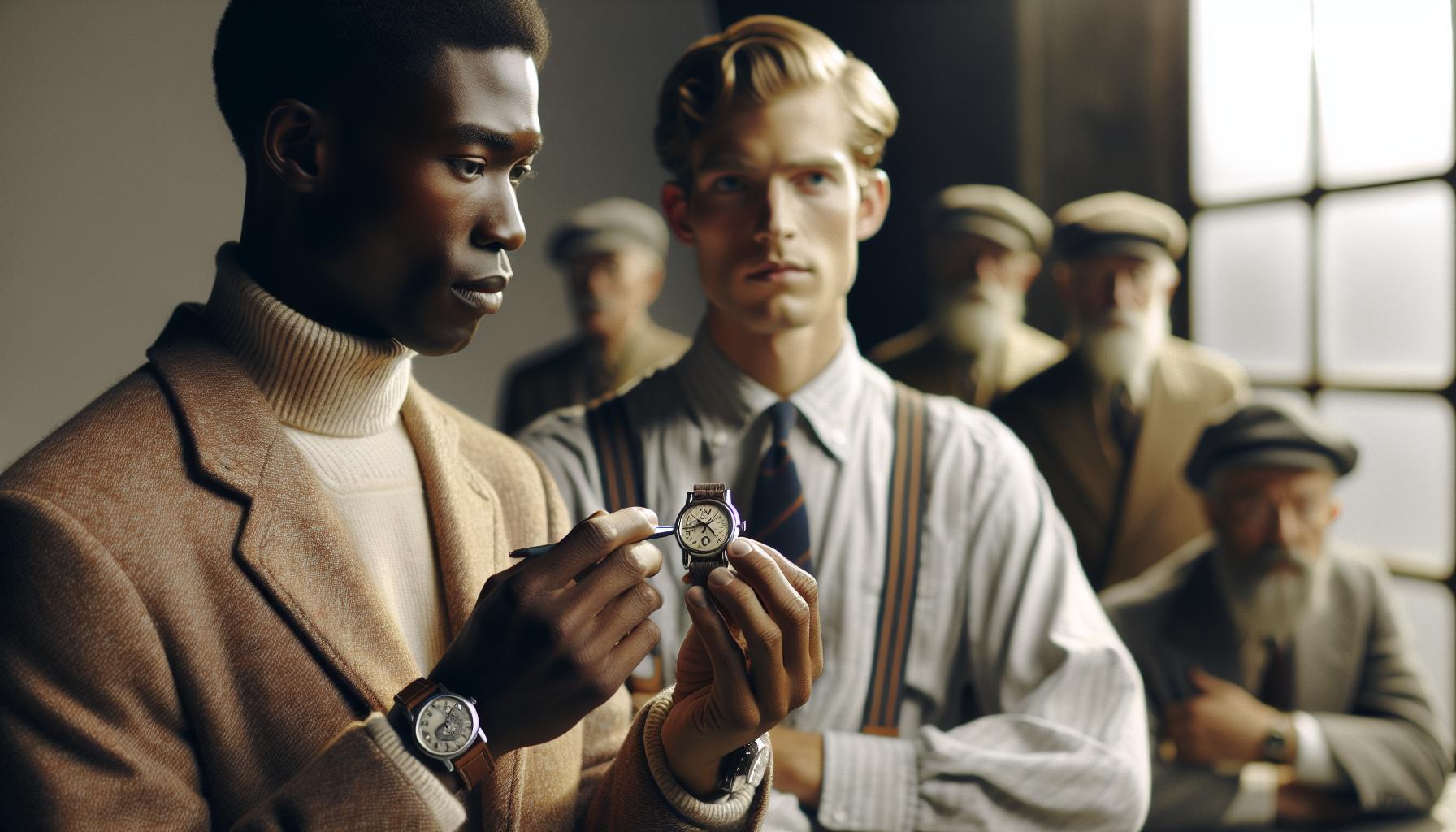
Davoch Watch Collection: Vintage Soviet Horology Explored
Did you know that vintage Soviet watches, long overlooked by mainstream collectors, hold a unique blend of robust mechanics adn intriguing history that rivals their Swiss counterparts? The Davoch Watch Collection dives into this fascinating world, showcasing rare mechanical movements, classic automatic calibers, and bold designs born from a diffrent era of watchmaking. Whether you’re a seasoned collector or new too horology, exploring these pieces offers fresh perspective on craftsmanship that balances durability, style, and affordability. this collection not only highlights the ingenuity behind Soviet-era calibers and complications but also invites you to appreciate horological artistry beyond the usual luxury brands. join us as we unpack detailed specs, wearability, and value retention of these vintage treasures-revealing why Davoch timepieces are essential for anyone passionate about mechanical watches with a story.
Contents
- Davoch Watch Origins and Historical context
- Key Vintage Soviet Movements Behind Davoch Watches
- Iconic Davoch Models and Their Unique Features
- Design Aesthetics and Craftsmanship of Davoch Watches
- Mechanical Performance and Movement Innovations Explained
- Davoch Watches Compared to Other Soviet Brands
- Collecting Davoch: Authenticity, Rarity, and Valuation
- Maintenance Tips and Servicing Vintage Davoch Timepieces
- Davoch Watch Market Trends and Investment Potential
- How to spot Fakes: Davoch Authentication Guide
- Styling and Wearability for Modern Collectors
- Preserving Soviet Horology: Davoch’s Legacy Today
- Frequently asked questions
- Q: How do Davoch watches fit into the broader vintage Soviet watch collecting community?
- Q: What are the most effective ways to care for and preserve vintage Davoch watches?
- Q: Why do Davoch watches attract both casual wearers and serious horology collectors?
- Q: How can collectors differentiate between genuine and counterfeit Davoch watches in the current market?
- Q: What role do Davoch watches play in understanding Soviet horological innovations?
- Q: When did Davoch watches experience their peak production or popularity in Soviet history?
- Q: How do Davoch watches compare in value appreciation with other Soviet brands today?
- Q: What are the key design elements that make Davoch watches distinctively soviet yet timeless?
- The Conclusion
Davoch Watch Origins and Historical context
One of the most fascinating facets of vintage Soviet watch collecting lies in uncovering brands like Davoch,whose timepieces reflect not only mechanical ingenuity but also the geopolitical and social surroundings of their time. Emerging amid the Soviet Union’s determined push for technological self-reliance, Davoch watches represent a chapter of horological history often overshadowed by Western luxury brands but no less rich in craftsmanship and narrative. These watches were crafted during an era when soviet factories aimed to combine durability,functional precision,and affordability for the everyday citizen-a philosophy that shaped much of Davoch’s design language and technical choices.
Davoch’s origins trace back to mid-20th century Soviet watchmaking centers such as the First Moscow Watch factory and later collaborations with second-tier factories focusing on accessible, robust watches ideal for both military and civilian use. The brand stands as a testament to how the USSR mastered the production of reliable mechanical movements, often based on the tried-and-tested calibers developed in-house or derivative of classic designs like the Poljot 2609 series or Raketa mechanisms.Unlike Swiss or Japanese contemporaries, Soviet watches-including davoch-affirmed utilitarianism over luxury, creating pieces that performed admirably under rugged conditions while staying surprisingly elegant in dial design and finishing for their price.
Collectors often appreciate Davoch for its blend of Soviet industrial philosophy and approachable craftsmanship. These watches weren’t just mass-produced gadgets; they were engineered to be serviceable, long-lasting, and accessible to the millions of Soviets who needed dependable timekeepers without vanity-label price tags. Many Davoch models carry subtle design cues that reflect Soviet iconography or commemorative motifs, providing a tangible link to the era’s broader cultural aspirations and technological ambitions.
- Historical Context: Produced during the Cold War period when the USSR sought to demonstrate self-sufficiency in technology, Davoch watches encapsulate 1950s-1980s Soviet values-unpretentious, durable, and practical.
- Manufacturing Origins: Tied to state-run factories where watches were assembled with a focus on mechanical simplicity and repairability, often using in-house calibers tailored for mass production.
- Value Proposition: Positioned as affordable yet reliable mechanical watches, Davochs were the workhorses of Soviet everyday life-ideal entry points for collectors seeking well-engineered vintage timepieces without luxury premiums.
Appreciating Davoch means looking beyond the “luxury watch” stereotype and valuing them as cultural artifacts and mechanical achievements. new collectors can take comfort in knowing these watches often feature straightforward movements like manual wind or early automatics, making them easier to service and maintain over decades, even if original parts can sometimes be scarce.As heritage pieces, Davoch watches invite us to celebrate a horological legacy rooted in resilience and design honesty-a perspective that enriches any vintage watch collection.
Key Vintage Soviet Movements Behind Davoch Watches
Vintage Davoch watches owe much of their charm and reliability to the robust mechanical movements powering them-calibers that reflect both the engineering priorities and resource realities of the Soviet era.These movements were designed with pragmatic goals: simplicity, durability, and ease of maintenance. For collectors keen to understand what makes a davoch tick, examining the core vintage Soviet calibers behind these timepieces reveals a fascinating story of technical ingenuity crafted under unique constraints.
At the heart of many Davoch models lie manual-wind movements derived from well-established Soviet workhorses such as the Poljot 2609 series and variants of the Raketa movements. The Poljot 2609, as a notable example, is a hand-wound caliber famed for its straightforward 17-jewel setup and hacking seconds feature, prized for precision setting.Similarly, Raketa movements are known for their sturdy construction and functional versatility. While Davoch’s calibers were not haute horlogerie, they exemplify mechanical art at its most unpretentious-a movement built to be serviced easily with readily available parts, supporting decades of use without fuss.
Design Philosophy behind the Movements
Soviet engineers prioritized pragmatic innovation over luxury complications. The movements favored in Davoch watches generally eschewed complex features like chronographs or perpetual calendars in favor of reliable timekeeping and robust shock resistance. Many feature simple date complications, a practical addition absent in many contemporaneous Western counterparts of similar price and purpose.
- Manual Wind vs. Automatic: most vintage Davoch timepieces use manual-wind calibers, requiring daily winding. This simplifies assembly and maintenance, appealing to Soviet ideals of self-reliance and repairability.
- Jewel Count: Typically 15-17 jewels,enough to ensure smooth gear operation and reduce wear,but not extravagantly jeweled to keep production costs affordable.
- Durability: Many movements include hacking seconds (stop-second),allowing for precise time setting-a detail appreciated by military and professional users.
Why these Movements Matter to Collectors
Beyond their functionality, these calibers embody the stories of a watchmaking industry constrained by Cold War pressures but committed to producing quality instruments. For collectors, the ease of servicing these movements is a key attraction-spare parts, while not always abundant outside Russia, are generally more obtainable than for many Western vintage watches of similar vintages. This accessibility helps preserve davoch watches as wearable heritage pieces.
| Movement | Type | Jewels | Functions | Notable Features |
|---|---|---|---|---|
| poljot 2609 | manual wind | 17 | Time only (often hacking seconds) | Simple, reliable, precision setting |
| Raketa 2609 | Manual wind | 17 | Time and date | Robust build, popular in military use |
Collectors transitioning from Swiss or Japanese watches will find a refreshing change in Davoch calibers. Instead of complex electronics or lavish complications, these movements offer a tactile connection to mid-century industrial watchmaking-a machine built to serve faithfully as a tool. Appreciating these Soviet movements means embracing their no-nonsense efficiency and the historical context that birthed them.
In practical terms, owning a davoch watch means more straightforward upkeep. Winding daily (if manual) becomes part of the ritual, and repairs, while sometimes requiring a bit of specialized knowledge, are definitely feasible. This accessibility enhances their appeal for new collectors eager to learn traditional watch maintenance without the intimidation factor of ultra-luxury mechanisms.
Ultimately, the key vintage movements behind Davoch watches are mechanical testimonies to a time when horology served function with steadfast reliability. For anyone drawn to the story of soviet craftsmanship, understanding these calibers deepens thankfulness beyond aesthetics-highlighting the enduring legacy of practical, honest mechanical watchmaking.
Iconic Davoch Models and Their Unique Features
Davoch watches occupy a distinctive niche in Soviet horology, where function meets understated style. Among the collection, several models have cemented their status as icons-each representing a facet of Soviet industrial design, mechanical reliability, and pragmatic aesthetics. These watches stand out not just for their robustness but also for their unique features that collectors appreciate, ranging from dial layouts and case shapes to movement variations.
The Davoch “Classic 2609” is perhaps the most recognizable, powered by the hand-wound Poljot 2609 caliber. Its charm lies in simplicity: a clean dial with bold hour markers, frequently enough accented by a subtle “hacking seconds” complication, enabling precise time setting. The straightforward three-hand layout-no date clutter-and modest 34-36mm stainless steel case size provide great wearability for modern collectors. This model typifies the Soviet ethos of durable, repairable mechanical watches designed to endure without fuss.
Another noteworthy model is the Davoch “Raketa Date,” incorporating the rugged Raketa 2609 movement. Unlike the Classic, this watch adds practicality with a date complication, a feature not always standard in Soviet-made timepieces of this era. The date window is generally positioned at 3 o’clock and framed subtly to maintain clarity and balance on the dial. Collectors prize this model for its slightly sportier appeal and versatility as an everyday watch-a no-nonsense tool that marries function with modest flair.
Distinctive Design Elements Across the Range
- Case Styles: From rounded to angular cushion shapes, Davoch’s cases offer variety. The cushion-shaped cases,while modest in size,deliver a more contemporary vintage appeal,setting these watches apart from the typical round designs common in Soviet watches.
- Dial Finishes: matte versus glossy dials, color variations from deep black to muted champagne, and understated indexes-often simple stick or Arabic numeral markers-are common. The dial’s legibility was paramount to design, reflecting the watch’s utilitarian heritage without extravagant decoration.
- Hands and Markers: Broad dauphine or sword hands are favored,and many models employ luminescent paint for night readability,though Soviet lume differs from Swiss counterparts in brightness and longevity.
The mechanical heart of these iconic models ties directly to their enduring appeal. Whether manual wind or automatic variants, the movements prioritize robustness and ease of maintenance over elaborate complications. Collectors transitioning from Swiss or Japanese watches often find this straightforward engineering refreshing-a tactile, reliable machine rather than a complex spectacle. This also translates into affordable servicing costs and relatively easy access to replacement parts.
Value and Collectability Insights
While Davoch watches lack the flash of highly collectible Swiss marques, they attract a dedicated following who value historical significance and mechanical honesty. Prices for vintage Davoch models typically remain accessible,frequently enough under a few hundred dollars,depending on condition and rarity. This affordability makes them excellent entry points for collectors interested in Soviet horology or mechanical watches in general. Variants with original box and paperwork,or rarer dial colors,command higher premiums.
Prospective buyers should look for:
- Original crowns and untouched dials to maximize value;
- Movement condition, ideally serviced within the last few years;
- Consistent case finishing without heavy polishing or corrosion.
Such details influence both daily wearability and investment potential. Though upside in value is modest compared to vintage Swiss classics, Davoch watches offer excellent storytelling and a genuine connection to a historic era of watchmaking.
In essence, these models exemplify the craftsmanship that defined Soviet watches-reliable, no-frills mechanical timekeepers that remain practical and wearable today. For the collector eager to explore beyond mainstream horology, Davoch’s iconic models deliver a compelling blend of history, function, and character.
| model | Movement | Complications | Case Size | Typical Price Range (USD) |
|---|---|---|---|---|
| Davoch Classic 2609 | Poljot 2609 (manual wind) | Time only (hacking seconds) | 34-36 mm | $100 – $250 |
| Davoch Raketa Date | Raketa 2609 (manual wind) | Date window at 3 o’clock | 35-37 mm | $120 - $280 |
Design Aesthetics and Craftsmanship of Davoch Watches
Few vintage watches marry utilitarian design with a quietly confident aesthetic quite like Davoch timepieces. These watches embody a Soviet-era philosophy where function shaped form, resulting in timepieces that are as robust as they are understated. Their design language resonates today, offering collectors an appealing blend of simplicity, durability, and subtle stylistic flair without veering into ostentation.Whether you’re drawn to vintage military watches or appreciate minimalist layouts, Davoch’s aesthetic invites a closer look at how purposeful restraint can speak volumes.
Davoch cases predominantly favor stainless steel, typically sized between 34mm and 37mm-perfect for modern wrists without appearing oversized. One of the most intriguing case shapes is the cushion style, which breaks away from the common round watch profile, lending these vintage pieces a distinctive visual identity. This form factor balances vintage charm with a touch of mid-century modern sportiness,making it a versatile choice for everyday wear. The finishing tends to be matte or lightly brushed, avoiding flashy polish that would detract from the watch’s earnest character. Such practical finishing also makes scratches less conspicuous, a boon for collectors who actually wear their pieces.
dial Design and Legibility
Davoch dials showcase a dedication to clarity and function. They typically feature matte or softly glossy backgrounds in muted tones-think deep black, charcoal gray, or champagne-supporting excellent legibility without demanding attention. Hour markers are usually straightforward stick indices or Arabic numerals painted with Soviet-style luminescent paint, which, while less radiant than Swiss lume, provides an authentic vintage glow at night. Hands lean toward broad dauphine or sword shapes, proportioned to maximize readability and clad with matching luminescence. Notably absent are flashy decorations or excessive text clutter; instead, the dials prioritize telling time efficiently and clearly.
Craftsmanship That Emphasizes Practicality
If you appreciate mechanical watches as tools, Davoch exemplifies craftsmanship rooted in straightforward engineering. Their movements-frequently enough well-known Soviet calibers like the Poljot 2609 or Raketa 2609-aren’t haute horlogerie masterpieces but rather are robust,easy to service,and designed for longevity. The workmanship extends beyond mechanics to how components fit and finish, with solid case backs, reliable crowns, and practical dial printing that has often stood the test of time without fading. For collectors, this means acquiring watches that can be maintained affordably and enjoy daily wear without fretting about fragility.
When comparing these details to other soviet brands, Davoch sits comfortably between overly utilitarian models and those with more decorative ambitions. This makes them particularly appealing for anyone interested in vintage pieces that convey honest mechanical heritage wrapped in tasteful presentation. Whether you pair a Davoch with a classic leather strap or a rugged NATO band, its aesthetic versatility aligns with both casual and semi-formal styles effortlessly.
- Case finishes: Matte or brushed stainless steel, less prone to scratches.
- Dial colors: Muted and practical-black, gray, champagne.
- Hands: Dauphine or sword-shaped with vintage-style lume.
- Size: Generally 34-37 mm, wearable for modern collectors.
- Movement aesthetics: Well-executed Soviet calibers reliable in service.
Understanding these design and craftsmanship elements helps collectors appreciate why Davoch watches go beyond mere timekeeping-they are authentic artifacts balancing industrial efficiency with discreet vintage charm. For an accessible price, you get a mechanical watch that respects the past and remains stylishly relevant today.
Mechanical Performance and Movement Innovations Explained
Few things capture the essence of vintage Soviet watchmaking quite like the mechanical heart beating inside a Davoch timepiece. These watches harness movements developed during an era when robustness and functional simplicity were paramount.Rather than chasing flashy complications, Davoch focused on well-proven calibers that balanced reliability with ease of service - a philosophy that makes them enduring favorites among enthusiasts who appreciate honest mechanical engineering.
Most vintage Davoch watches rely on classic hand-wound calibers like the widely-used Poljot 2609 and Raketa 2609 movements. These calibers are known for their simplicity, using a traditional lever escapement and a frequency around 18,000 vibrations per hour, which helps extend the longevity of the parts while maintaining reasonably accurate timekeeping. While they lack features such as automatic winding or complications like chronographs or date functions, their movements are straightforward to maintain, minimizing repair costs and downtime. This mechanical purity means the watchmaker’s craft shines brightest through the dependable ticking and the tactile pleasure of daily winding.
Innovations Rooted in Practicality
Though these movements may seem modest compared to modern or Swiss automatic calibers, Soviet engineers introduced features aimed at durability. Shock protection systems, such as the “Incabloc” style balance jewel mounts, helped Davoch watches withstand the rigors of daily wear, including the often harsh environments typical of Soviet life. The robust construction supported water resistance and reliable power reserves of around 40 hours, ensuring the watches didn’t merely survive-they thrived where others might falter.
Mechanically savvy collectors appreciate how the straightforward engineering leads to greater longevity. Unlike complex high-beat movements, these calibers reduce wear and simplify servicing. For example, the Poljot 2609 uses fewer components and embraces a traditional Swiss-inspired architecture, making parts interchangeable with other Soviet watches and spares accessible – an crucial consideration when hunting down vintage pieces today.
movement Comparisons and Value Insights
When stacking Davoch calibers against other Soviet movements, it sits strongly in the mid-range tier – more refined than basic models like the Vostok 2409 but less elaborate than chronographs from Strela or Poljot-specific automatics. Their focus on practicality rather than adornment echoes the brand ethos: clean reliability over flashy complexity. This anoints Davoch as a collector’s pick for those who value mechanical honesty and wearability over hype.
| Movement | Type | Frequency (vph) | Power Reserve | Key Features | Maintenance | approximate Value |
|---|---|---|---|---|---|---|
| Poljot 2609 | Hand-wound | 18,000 | ~40 hrs | Shock protection, simple lever escapement | Easy, parts readily available | $100-$200 (vintage market) |
| Raketa 2609 | Hand-wound | 18,000 | ~40 hrs | Robust design, moderate finishing | Affordable servicing | $80-$150 (vintage market) |
For new collectors or vintage enthusiasts, these calibers offer an accessible entry point into mechanical watches.They neither intimidate with complexity nor disappoint in reliability-a balance seldom found outside of Soviet-era productions.
Maximizing Mechanical Enjoyment
To get the most out of your Davoch watch, regular winding at the same time each day preserves movement health and accuracy. Avoid over-winding by feeling the slight resistance as the mainspring reaches full tension. While these movements don’t have the fancy ejectors or elaborate finishes of Swiss luxury watches, their understated mechanical charm lies in their functional performance and the satisfying connection between wearer and timekeeper.
In the realm of vintage soviet horology, Davoch movements embody the proud philosophy of utilitarian engineering-proving you don’t need to be extravagant to be extraordinary. Whether you’re looking for a reliable daily wearer or a mechanically meaningful addition to your collection, these watches deliver timeless performance through engineering designed to endure.
Davoch Watches Compared to Other Soviet Brands
Few Soviet watch brands capture the essence of practical mechanical watchmaking quite like Davoch, carving out a distinctive niche with its blend of reliability, straightforward movements, and understated design. While giants like Poljot,Vostok,Raketa,and Slava frequently enough steal the spotlight due to their high-profile military associations or complex chronographs,Davoch quietly earned respect by focusing on well-engineered,utilitarian timepieces that appeal to collectors who appreciate functional minimalism over ornate complications.
Mid-Tier Caliber with Solid Appeal
Davoch watches predominantly feature hand-wound movements like the Poljot 2609 or Raketa 2609 calibers-workhorses valued for their simplicity and robustness. Compared to the Vostok 2409, known for its ruggedness and broad military use, Davoch calibers generally offer a smoother, slightly more refined operation thanks to better finishing and reliable shock protection. Meanwhile, highly complex chronographs from brands like Strela or luxury-grade Poljot automatics address a different audience, often prioritizing prestige and collectability over day-to-day wearability. Davoch strikes a compelling balance, appealing to those who want honesty in mechanical engineering without unnecessary frills or inflated prices.
Design and Craftsmanship: Subtle But Strong
Visually, Davoch watches tend to embrace modest, clean lines with functional dials, contrasting with the often bold, military-inspired designs of Vostok or the sometimes flashy art deco styling found on select Slava models. This restrained aesthetics approach aligns with the brand’s ethos: durability and legibility prioritized for everyday users. Collectors often note that Davoch’s focus on pragmatic beauty means you won’t find exotic dial materials or intricate guilloché, but rather dependable craftsmanship where every functional element serves a purpose.
Key Differentiators to Consider
- Movement Access & Serviceability: Davoch’s reliance on widely-used calibers like the Poljot 2609 means spare parts are easier and more affordable to source compared to some less common Soviet movements.
- Value proposition: These watches tend to command modest prices-generally $80-$200-making them ideal entry points into Soviet horology without the steep premiums that Strela chronographs or pristine Poljot automatics demand.
- Wearability: Their moderate case sizes and uncomplicated crowns improve comfort and ease of use, standing apart from the oversized dive watches of Vostok or the sometimes bulky military pieces.
| Brand | Movement Focus | Design Style | Price Range (Vintage Market) | Notable Strength |
|---|---|---|---|---|
| Davoch | Hand-wound Poljot/Raketa 2609 | Functional, minimalistic | $80 – $200 | Reliable, easy to service |
| Vostok | Automatic and hand-wound military calibers | Rugged dive/military | $50 – $150 | Durability, water resistance |
| Poljot | Chronographs, automatics | Bold, technical | $150 – $500+ | Complications, prestige |
| Raketa | Various hand-wound calibers | Varied, frequently enough robust | $80 – $180 | Versatile, robust movements |
For collectors stepping into Soviet watch collecting, choosing between Davoch and better-known brands often comes down to priorities: do you want a flashy chronograph with a storied history (Poljot) or a robust dive watch with military bona fides (Vostok)? Or would you prefer a deceptively simple, mechanically honest watch like Davoch-one that feels less like a statement piece and more like a reliable companion? Many find Davoch offers a refreshing contrast: a vintage watch with genuine mechanical charm that fits seamlessly into daily life without screaming “collector’s item.”
This positioned reliability, combined with approachable pricing and easy maintenance, has steadily raised Davoch’s profile among enthusiasts who prize horological authenticity over hype. While it may lack the blockbuster names or high complications seen elsewhere in Soviet horology, its watches embody the philosophy that mechanical excellence need not be flashy to be cherished.
Collecting Davoch: Authenticity, Rarity, and Valuation
Davoch watches, while not as universally recognized as some Soviet counterparts, hold a quietly compelling place in vintage horology-particularly for collectors who value straightforward mechanics, practical design, and genuine historical context. authenticity here hinges largely on verifying the watch’s mechanical heart and dial markings, since Davoch’s understated style means subtle details often distinguish originals from later replicas or frankenwatches. The brand’s use of widely employed calibers like Poljot 2609 or Raketa 2609 gives collectors an advantage: established service records and ample replacement parts make spotting authenticity easier when you understand the nuance of Soviet movements.
Rarity is a mixed bag for Davoch. Unlike highly sought-after military-issue Vostoks or iconic Poljot chronographs, Davoch’s production runs were moderate and frequently enough regionally focused, placing many examples in lesser-known estates or secondhand markets rather than prominent auctions.This translates to a steady, if modest, supply but also means certain dial variants or case styles-especially early models in pristine condition-are prized finds that quietly fuel collector enthusiasm. Preservation state heavily influences value; a well-maintained, untouched dial with original crown and crystal can command pleasant premiums within the $100-$250 range, reflecting both desirability and accessibility for newcomers exploring Soviet watchmaking beyond the usual marquee names.
Spotting Genuine Davoch Pieces
- Movement Matching: Authentic Davoch watches sport mid-tier Poljot or Raketa hand-wound calibers, frequently enough identifiable by their distinct bridge shapes, shock protection springs, and clean finishing consistent with 1960s-80s Soviet tooling.
- Dial and Logo Variations: The absence of flamboyant branding means subtle discrepancies can indicate non-original dials; watch for consistent Cyrillic script, even spacing, and minimal patina-excessive gloss or poorly detailed lettering often signals aftermarket replacements.
- Case Back Markings: Genuine Soviet cases usually bear factory codes, serial numbers, and occasionally metal hallmarks; absence or printing that looks modern can raise red flags.
Valuation and Market Realities
Compared to the auction frenzy surrounding Poljot chronographs or rare Raketa complications, Davoch remains a solid, value-oriented choice with less dramatic price swings. University students, mechanical-watch beginners, or those who want a mechanical daily driver at an affordable price often gravitate here. The sub-$200 price bracket doesn’t mean compromised quality-in fact, many collectors cherish Davoch for delivering rugged reliability and period charm with fewer headaches.
| Aspect | Description | Collector Impact |
|---|---|---|
| Movement Type | Hand-wound Poljot/Raketa 2609 calibers | Easy servicing; reliable beats with historical machine craft |
| Dial Condition | Original dials command premiums; replaced/refinished dials lower value | strong driver of resale price and authenticity |
| Case & Crown | Original manufacturer stamping; correct crown size | Authenticity confirmation; impacts desirability |
| Price range | Generally $80 – $250 for well-kept examples | Attractive entry point; manageable investment risk |
Patience pays. Many Davoch watches surface on forums, vintage markets, and mid-tier auctions, frequently enough underpriced relative to their mechanical merit. Collectors willing to do light servicing or source authentic parts find this brand rewarding without the hype or bidding wars. it’s a brand where love for mechanical art shines through, not bling or status signals. For a mechanical enthusiast who respects craftsmanship from all echelons-whether a $150 Davoch or a $50,000 Hublot-this understated Soviet gem offers an inviting gateway into the world of vintage horology.
In short, owning Davoch means embracing honest mechanical work, a modest but rich history, and the thrill of unearthing nuanced variations in a less-traveled soviet brand.Focus on condition, verify movement and dial details, and don’t shy away from negotiating within the $80-$200 band where quality examples routinely appear. This approach makes assembling a balanced collection rich in character and mechanical integrity completely achievable.
Maintenance Tips and Servicing Vintage Davoch Timepieces
Watches like those from Davoch embody robust Soviet engineering that frequently enough runs smoothly well past their original production years, but their vintage nature requires respectful, informed care. The hand-wound Poljot or Raketa 2609 calibers powering many Davoch models are celebrated for their simplicity and durability, yet even reliable workhorses benefit greatly from regular maintenance to keep time accurately and preserve mechanical integrity. Unlike modern quartz pieces, mechanical watches rely on a delicate dance of tiny components that demand gentle handling and periodic servicing.
Most Davoch enthusiasts find servicing intervals of around 3 to 5 years ideal, depending on use and storage conditions. This involves disassembling the movement, cleaning all parts, oiling with the correct lubricants, and readjusting settings for optimal accuracy. Doing this professionally protects against wear caused by dried oils or dust ingress-a common issue for vintage Soviet watches due to aged gaskets and cases. If worn daily, the crown’s winding action should feel smooth yet firm; any grit or stiffness might signal the need for attention before damage occurs.
Practical Maintenance Tips for Everyday Wear
- Manual Winding: Since Davoch models usually have hand-wound movements, develop a routine: wind the crown gently once daily, preferably at the same time, stopping when you feel resistance to avoid overwinding that stresses the mainspring.
- Avoid Moisture: Many vintage Soviet watches, Davoch included, lack modern water resistance. Keep them away from water and humidity, and if the watch does get wet, seek servicing immediately to prevent rust.
- Safe Storage: When not in use, store your Davoch in a dry, dust-free environment ideally with some temperature stability. Soft watch pouches or dedicated boxes protect against scratches and accidental shocks.
- Crystal and Case Care: Acrylic crystals can scratch easily but polish well with mild abrasives. Clean the case gently with a soft cloth, avoiding harsh chemicals that could damage metal finishes or dial paint.
when and How to Service Your Davoch
Not all watchmakers have experience with Soviet calibers, so finding a technician familiar with Poljot or Raketa movements ensures quality service and original parts sourcing. When budgeting for servicing (typically $75-$150), ask for a full overhaul rather than quick fixes-this includes disassembly, ultrasonic cleaning, lubrication, timing, and regulation. Maintaining factory correct components preserves value and reliability.
For those cozy opening cases, carefully check inside for dirt, corrosion, or signs of past amateur repairs, which can complicate servicing. Movement bridges with traditional “Lyre” shaped designs or recognizable shock protection springs should be kept intact, and replacements sourced cautiously to avoid mismatched parts that degrade authenticity.
| Maintenance Step | Recommended Frequency | Notes |
|---|---|---|
| Manual Winding | Daily | Wind gently at same time, stop at resistance |
| water Exposure Check | After any moisture contact | Immediate servicing to prevent rust |
| Preventive Servicing | every 3-5 years | Full disassembly, cleaning, lubrication |
| General Cleaning | As needed | Soft cloth, avoid abrasives on dial/case |
Ultimately, Davoch watches reward owners who embrace their mechanical nature with patience and care. Approaching servicing as part of your watch’s story-not just maintenance-is key. Whether you treasure a flawlessly preserved dial or a timeworn patina that tells a tale, giving your Davoch a respectful mechanical tune-up helps secure its charm and function for years to come. This respectful stewardship of Soviet horology bridges the passion of vintage collecting with practical watchmaking wisdom.
Davoch Watch Market Trends and Investment Potential
Few vintage brands blend history and mechanical grit quite like Davoch. These watches, with their roots firmly planted in Soviet-era engineering, have quietly captured growing interest among collectors who appreciate resilience wrapped in nostalgia. Unlike flashier Swiss watches, Davoch appeals to those who value honesty in design and movement – typically hand-wound calibers like the raketa 2609 or Poljot 2209 – that offer straightforward reliability without unnecessary complexity. Understanding market trends around Davoch means balancing this modest heritage against increasing demand coupled with limited availability.
As awareness of Soviet horology expands globally, Davoch watches are steadily climbing from mere curiosity items to niche collectibles with genuine investment potential.Many vintage Davoch pieces remain undervalued today, often priced between $100-$300 on secondary markets-an accessible entry point for novice collectors.However, rarer models with preserved dials, original crowns, and well-maintained movements can command higher prices. with collectors paying a premium for watches exhibiting unique dial variations or models produced in limited runs,Davoch’s incremental price appreciation mirrors that of better-known Soviet brands like Vostok or Slava,albeit with less speculative hype.
Key Investment Considerations
- Movement Quality and Originality: Vintage mechanical calibers like Poljot 2209 or Raketa 2609 are prized for their durability and straightforward servicing. Watches maintaining original components, especially movements free from extensive aftermarket modifications, hold value better.
- condition and Provenance: Intact dials, well-preserved cases, and working hand-wound mechanisms elevate desirability. Documented history or connection to notable Soviet contexts adds collector appeal, enriching the story behind the watch.
- Market Visibility: Davoch’s relative obscurity means less speculative volatility. While this reduces quick-flip opportunities common with hyped Swiss or Japanese brands, it attracts steady interest from dedicated vintage enthusiasts who prefer lasting appreciation over flash-in-the-pan trends.
For those eyeing long-term growth, patience is paramount.Unlike automatic watches with date complications,Davoch’s straightforward movements emphasize longevity over novelty-qualities sought by collectors who cherish mechanical art over brand prestige. Combined with modest pricing and a new cadre of Eastern European horology fans, prices for Davoch watches are expected to trend upward gradually as supply tightens and examples free of damage become rarer.
| Factor | Impact on Value | Notes |
|---|---|---|
| Original Movement & Parts | High | Servicing with factory components preferred |
| Condition (Dial & Case) | Medium to high | Pristine or lightly patinated dials command premiums |
| Rarity (Model & Variant) | High | Limited editions or unique features boost interest |
| Market Demand | Growing | Increasing awareness drives desirability steadily |
| Documentation & History | Medium | Provenance enriches narrative and collector appeal |
Tips for Collectors Considering Davoch for investment
- Buy what you love, but think condition first. Patina can be charming, but damaged or corroded parts hurt value more than they add character.
- Seek informed sellers who can verify authenticity and service history. Trustworthy sources reduce risk of acquiring improperly repaired examples.
- Consider servicing costs as part of your acquisition budget; mechanical watches thrive with regular care, especially hand-wound types like Davoch.
- Track market sales data on platforms like Chrono24 or specialized vintage auctions for realistic pricing insights.
- Diversify by mixing Davoch with other Soviet brands to establish a well-rounded collection reflecting the breadth of Eastern Bloc horology.
Ultimately, Davoch watches offer an intriguing blend of industrial history, mechanical simplicity, and emerging collector interest. they occupy a sweet spot where historical significance meets attainable collectibility. Whether you cherish the understated charm or seek modest investment returns amid a burgeoning Soviet watch resurgence, Davoch models stand ready as authentic ambassadors of a uniquely mechanical era-quietly ticking toward increased appreciation.
How to spot Fakes: Davoch Authentication Guide
Authenticating a vintage Davoch watch can feel like detective work – but with a keen eye and a bit of knowledge, you can confidently separate the genuine article from clever copies. Because Davoch watches originally featured robust, hand-wound movements like the Raketa 2609 and Poljot 2209 calibers, these mechanical hearts are often the first place to start examining authenticity. Genuine Davoch timepieces rarely incorporate automatic movements or modern electronic parts, so a watch claiming to be vintage but running on a quartz or unfamiliar caliber should raise red flags.
A key giveaway lies in the dial and case details. Soviet-era watches didn’t rely on flashy branding, but every genuine Davoch dial has consistent printing quality and signature elements-like cleanly applied Cyrillic script, even lume plots (if applicable), and correct logo placement. Replicas frequently enough miss these subtle nuances: blurry fonts, mismatched serial numbers, or inconsistencies in dial design. The case itself usually reflects the straightforward, industrial design ethos of Soviet watchmaking-think utilitarian but durable. If you spot overly polished cases, inconsistent lug shapes, or unusual crown designs not documented in known davoch references, take note; these might indicate aftermarket alterations or counterfeits.Movement examination is a crucial and rewarding step.Opening the watch to view the caliber should reveal recognizable parts consistent with Raketa or Poljot movements. Authentic Davoch movements frequently enough bear factory markings and show signs of vintage mechanical construction such as visible screws, jewel placement, and specific bridge layouts. Beware of generic or unbranded movements substituted in, which some fakeers use to mimic the original look.If you’re not comfortable opening the case yourself, seek out trusted watchmakers or knowledgeable sellers who can verify the movement’s identity for you.
- Check the serial numbers and casebacks. authentic examples usually have manufacturer stamps or engravings that align with production years. Missing or suspiciously shallow engravings should be investigated further.
- Compare to trusted references. Use high-quality photographs from reputable collector communities or auction listings to spot differences in dial fonts, handset shapes, or case finishing.
- Feel the movement’s operation. Hand-wound calibers like the Raketa 2609 invite a certain tactile smoothness when winding and a consistent tick. Erratic winding resistance or irregular ticking patterns may hint at problematic or replaced internals.
- Beware of “too good to be true” listings. Davoch watches frequently enough trade in the $100-$300 range. Sudden offers at steep discounts or suspiciously pristine pieces accompanied by vague provenance warrant caution.
| Authentication Factor | What to Look For | Common Red Flags |
|---|---|---|
| Movement Type | Original hand-wound Raketa 2609 or Poljot 2209 caliber | Quartz or generic Asian movements; unmarked or poorly finished parts |
| Dial Printing | Sharp Cyrillic text, consistent lume/uniform dial color | Blurry fonts, misspellings, uneven lume, incorrect logo placement |
| Case & Crown | Robust, straightforward finish; manufacturer markings; original crown | Overly polished cases, aftermarket crowns, inconsistent lug design |
| Engravings & Serial Numbers | Clear, well-placed numbers aligned with known production dates | Missing, shallow, or mismatched engravings |
When in doubt, engage with the growing network of Davoch enthusiasts and Soviet watch collectors online.Forums and social media groups can provide detailed visual comparisons, personal experience reports, and even authentication help from seasoned experts. Trustworthy dealers, who understand the brand’s mechanical heritage and can substantiate provenance, are an invaluable resource.This approach combines community wisdom with careful technical analysis, ensuring you acquire a true piece of Soviet horological history rather than a cleverly disguised imitation.
Authenticity isn’t just about preserving value – it’s about honoring the unique mechanical artistry embedded in every Davoch watch.whether you’re a first-time buyer or a longtime collector, developing a sharp eye for the brand’s signature traits will deepen your appreciation and safeguard your investment in these resilient timekeepers. After all, the charm of Davoch lies in its honest, unpretentious craftsmanship – a stark, rewarding contrast to today’s overblown luxury market hype.
Styling and Wearability for Modern Collectors
Davoch watches carve out a unique space in a modern collector’s rotation, blending vintage Soviet robustness with understated utilitarian style. Their clean lines and compact cases typically measure between 34mm and 38mm-a size that’s a sweet spot today for those who appreciate something modest yet purposeful. Unlike oversized watches trending in recent years, Davoch’s moderate dimensions offer excellent wearability on smaller to average wrists, making them versatile companions for daily use or special occasions. The classic hand-wound movements, such as the Raketa 2609 or Poljot 2209 calibers, add tangible charm, inviting wearers to engage actively with their timepiece through the ritual of winding-offering a tactile connection often lost in quartz or automatic watches.
- Mixing Vintage and Modern: Davoch’s pared-back designs make them surprisingly adaptable. Pairing a vintage Davoch with casual denim creates an effortless, authentic look, while swapping straps to leather or a subtle NATO gives it a more refined or sporty edge. this versatility is part of the collection’s appeal; it complements everything from a laid-back weekend outfit to smarter office wear.
- Comfort and Case Design: The cases frequently enough embody a robust but no-nonsense aspect of Soviet watchmaking-thick lugs, durable steel, and straightforward crowns mean these watches wear comfortably and hold up well to regular use.Many collectors note the appeal of a balanced wrist presence without the bulk, a refreshing alternative in an era of oversized, flashy watches.
- Unique visual Identity: Features like sharp Cyrillic dial fonts and simple, purposeful indexes give Davoch watches a quiet but undeniable character. The lume request, if present, tends to be modest but functional under low light, reinforcing the utilitarian ethos rather than luxury glamor.These details ensure the watch wears with a subtle Eastern European flair that stands out once you know what to look for.
Practical Styling Tips for Collectors
- Strap Swaps: Experiment with different materials-classic brown leather enhances vintage appeal; black leather suits formal settings; canvas or NATO straps add a rugged, everyday vibe. Because the vintage lug widths are usually standard (often 18mm),you have plenty of affordable options for customization.
- Layering with Wristwear: For those who enjoy the modern trend of stacking bracelets and watches, Davoch’s slim profile leaves room without feeling bulky or overdone. Think minimalist metal bracelets or simple leather bands to maintain a balanced aesthetic.
- Day-to-Night Versatility: Thanks to their industrial heritage, Davoch watches function well as conversation starters-wear one with a casual outfit during the day, then switch to a leather strap for a night out. The watch’s history and mechanical roots add storytelling depth beyond standard fashion accessories.
| Aspect | Details | Why It Matters |
|---|---|---|
| Case Diameter | 34-38mm typical | Comfortable size for most wrists, timeless wearability |
| Movement Type | Hand-wound Raketa 2609 / Poljot 2209 | Engages wearer, avoids bulky automatics |
| Dial Design | Clean, Cyrillic script, modest lume | Authentic vintage Soviet character |
| Strap Options | Leather, NATO, canvas, metal bracelets | Easy customization to match personal style or occasion |
What makes Davoch watches especially endearing for modern collectors is their honest functionality paired with a legacy few other brands deliver at comparable price points (generally in the $100-$300 range). Unlike flashier Swiss counterparts or hyper-engineered modern pieces,Davoch steps lightly into wristwear with quiet confidence and a fascinating heritage. The daily interaction with a hand-wound movement adds a ritualistic sense of care, while the clean design ensures they remain unobtrusive yet notable.
for anyone eager to explore something beyond mainstream vintage watches, Davoch offers a fresh narrative, marrying Soviet-era durability with a timeless style ethos that’s surprisingly compatible with today’s collector sensibilities. Whether you’re a seasoned enthusiast or stepping into vintage horology for the first time, these watches invite you to experience the charm of mechanical watches as functional art, not just status symbols.
Preserving Soviet Horology: Davoch’s Legacy Today
Few watch collections embody a rich slice of horological history quite like those preserving the legacy of Soviet-era craftsmanship, and Davoch watches are prime examples. rooted in decades-old mechanical traditions, these timepieces are more than just vintage curiosities-they are living artifacts of a distinct approach to watchmaking defined by durability, simplicity, and reliability. For collectors and enthusiasts alike, caring for and valuing these watches extends beyond the mechanics; it’s about sustaining the cultural and technological heritage they represent.
Davoch models almost invariably feature classic Soviet calibers like the Raketa 2609 or Poljot 2209, manual-wind movements prized for their robustness and relative ease of service. Keeping these watches running smoothly today means understanding the subtleties of their construction. Unlike modern automatic or quartz mechanisms, these hand-wound calibers invite regular interaction-winding daily not only powers the watch but also connects the wearer to decades of horological tradition. Maintaining them requires more than just routine servicing.Watchmakers experienced with vintage Soviet movements can source or fabricate parts otherwise scarce, preserving authentic functionality rather than resorting to modern replacements that dilute the character.
- Supporting Skilled Craftsmanship: Seek out technicians familiar with Raketa or Poljot movements for servicing. Their unique escapements and gear trains demand specific knowledge,ensuring longevity and genuine performance.
- Authenticity matters: Retain original components when possible. The dial fonts, Cyrillic inscriptions, and modest lume application are not mere aesthetics but cultural signatures. Avoid over-polishing or replacing these details to maximize historical and collector value.
- Storage and Wear: Store vintage Davoch watches away from magnetic fields and extreme moisture, and wear them regularly to keep lubricants properly distributed. This helps maintain movement integrity over decades.
legacy Preservation through Community and Education
The resurgence of interest in Soviet horology owes much to passionate collectors sharing knowledge freely-forums, watch fairs, and online communities ensure that Davoch’s story extends beyond museum cases to daily wear. These platforms are invaluable for newcomers and veterans alike, providing detailed restoration advice, authentication tips, and honest market insights. They fuel a positive cycle whereby collectors respect not just the watch’s movement or design but its broader historical context.
Despite being accessible in price (often around $100-$300), Davoch watches offer an excellent entry point into appreciating mechanical watchmaking as functional art. They stand as counterpoints to mass-produced or overly commoditized vintage watches saturated with hype. Their sober industrial design and sturdy construction tell a story that resonates today-balancing utility with a quietly defiant elegance.Preserving this legacy means not only repairing and wearing these pieces but embracing their role as ambassadors for a fascinating yet frequently overlooked chapter in horology.
| area | Best Practices | Why It Counts |
|---|---|---|
| Movement Care | Regular servicing by specialists in Raketa/Poljot calibers; gentle winding practices | Maintains accuracy,extends lifespan,honors craftsmanship |
| Component Preservation | Retain original dials,hands,and lume; avoid aggressive polishing | Protects collector value and historical authenticity |
| Community Engagement | Join forums and vintage watch groups focused on Soviet watches | Access expertise,validate authenticity,enrich collecting experience |
| Wear and Storage | Regular wear to keep lubricants active; avoid moisture and magnetism | Prevents damage and keeps movement healthy |
Ultimately,supporting Davoch’s enduring presence in both collections and on wrists worldwide reflects a broader appreciation for horological heritage where value is measured not only by rarity or price but by the stories and skills that keep these mechanical marvels ticking. Whether you’re an experienced collector or just discovering the allure of Soviet-era watches, investing time and care into Davoch models pays dividends in connection, craftsmanship, and legacy.
Frequently asked questions
Q: How do Davoch watches fit into the broader vintage Soviet watch collecting community?
A: Davoch watches hold a unique place among vintage Soviet timepieces due to their distinctive design and reliable mechanical movements. Collectors appreciate them for their rarity and craftsmanship compared to brands like Poljot or Raketa. Exploring collecting Davoch: authenticity and valuation deepens insight into their niche appeal and investment potential.
Q: What are the most effective ways to care for and preserve vintage Davoch watches?
A: Regular servicing by a skilled watchmaker familiar with Soviet calibers is essential to preserving Davoch watches. Avoid moisture exposure and wind manually if the watch isn’t worn daily. For detailed guidance, see our maintenance tips and servicing vintage Davoch timepieces section to maximize longevity and value.
Q: Why do Davoch watches attract both casual wearers and serious horology collectors?
A: Davoch watches blend vintage Soviet authenticity with robust mechanical craftsmanship, appealing to diverse audiences. their understated design suits everyday wear, while enthusiasts treasure their historical movement innovations. Learn more on styling and wearability for modern collectors to balance fashion and function.
Q: How can collectors differentiate between genuine and counterfeit Davoch watches in the current market?
A: Authenticity checks focus on movement caliber markings, dial fonts, and caseback engravings unique to Davoch. Counterfeits frequently enough overlook small mechanical details. Refer to our comprehensive Davoch authentication guide for key spotting techniques and avoid costly mistakes.
Q: What role do Davoch watches play in understanding Soviet horological innovations?
A: Davoch exemplifies Soviet-era mechanical ingenuity,showcasing unique calibers and movement innovations that contributed to the USSR’s watchmaking heritage. Studying their movements sheds light on technological progress and design philosophy, further explained in mechanical performance and movement innovations.
Q: When did Davoch watches experience their peak production or popularity in Soviet history?
A: davoch’s peak production occurred in the mid-1960s to early 1970s, aligning with Soviet industrial focus on advancing watch technology. This era produced many iconic models prized today. Explore Davoch watch origins and historical context for deeper historical framing.
Q: How do Davoch watches compare in value appreciation with other Soviet brands today?
A: Davoch watches generally show steady value appreciation due to their scarcity and strong collector demand, frequently enough outperforming more common Soviet brands. Investment potential and market trends are discussed in detail in our Davoch watch market trends and investment potential section.
Q: What are the key design elements that make Davoch watches distinctively soviet yet timeless?
A: Davoch watches feature minimalist dials, bold indices, and robust mechanical cases reflecting Soviet industrial design with timeless elegance.** Their craftsmanship balances utilitarianism and aesthetic appeal, detailed further in design aesthetics and craftsmanship of Davoch watches.
For more in-depth details and expert insights,explore the linked sections in our main article to unlock the full story behind the Davoch Watch Collection and enhance your vintage Soviet horology journey.
The Conclusion
Exploring the Davoch Watch Collection reveals the rich heritage and mechanical ingenuity behind vintage soviet horology-automatic calibers, durable designs, and distinctive in-house movements offer both collectors and newcomers accessible entry points to a fascinating segment of watchmaking history. Whether drawn to classic complications or appreciating robust, practical timepieces, these watches provide genuine value and enduring appeal, typically at approachable price levels that reward both passion and investment.
For deeper insights, explore our detailed comparisons of vintage calibers and how Davoch models stand alongside contemporaries from other notable Eastern European brands.Interested in leveraging this knowledge? Sign up for our newsletter to receive exclusive analyses and upcoming valuations or browse our product pages to find curated selections tailored to diverse collector preferences. Have questions or personal experiences with Soviet watches? Share your thoughts below-we love fostering a community grounded in honest appreciation, free from hype or elitism.
Continue your journey with related content on mechanical watch maintenance and the evolution of automatic movements to enrich your horological understanding. your next favorite timepiece might be just a click away from discovery.


