
How Many Rolex Datejust Are Made a Year: Production Numbers
Rolex produces around 1.2 million watches annually, with the Datejust model holding a meaningful share of this output due to its iconic design and versatile appeal. Understanding how many Datejust pieces are made each year sheds light on the balance Rolex strikes between exclusivity and accessibility-key concerns for collectors and enthusiasts alike. This insight helps buyers gauge availability, anticipate market trends, and assess the modelS value retention.
The Datejust isn’t just a watch; it represents Rolex’s pioneering approach to automatic (self-winding) movements with the reliable in-house caliber that blends precision and durability. Whether you’re a seasoned collector or new to horology, knowing the production numbers enriches your appreciation for the craftsmanship behind its classic dial, signature date complication, and timeless style. Join me as we explore detailed production figures, what drives these volumes, and how this impacts the watch’s desirability and investment potential. by the end, you’ll have a clearer picture of how the Datejust fits into the broader Rolex universe and why it remains a cornerstone of modern watchmaking.
Contents
- Rolex Datejust Annual Production Estimates Explained
- Factors Influencing Datejust Production Numbers
- Evolution of Datejust Manufacturing Over Decades
- Rolex Caliber Movements Powering Datejust Models
- Limited Editions and Special Datejust Releases
- Comparing Datejust Production with Other Rolex Models
- Impact of Production Volume on Datejust Value and Collectibility
- Global Demand and Supply Trends for Datejust Watches
- Rolex Datejust quality Control and Craftsmanship Insights
- how Production Numbers Affect Datejust Availability worldwide
- Future Outlook: Rolex Datejust Production Trends and Forecasts
- Q&A
- Q: How does Rolex estimate the annual production volume of Datejust models? A: Rolex does not publicly disclose exact Datejust production numbers, but industry analysis estimates annual output based on serial number trends, market supply, and Rolex’s overall manufacturing capacity. These estimates help collectors gauge scarcity and inform value assessments. For deeper insights, see the section on *Rolex Datejust Annual Production Estimates Explained*. Q: What role do market demands play in the yearly Datejust production figures?
- Q: Are ther specific Datejust versions more frequently produced than others annually?
- Q: How can a buyer use Rolex serial numbers to estimate Datejust production year and volume?
- Q: Why do Rolex Datejust production numbers vary between regions or markets?
- Q: What impact does Rolex’s in-house caliber advancement have on Datejust production capacity?
- Q: How does Rolex maintain quality while managing high annual production numbers for Datejust?
- Q: When does Rolex adjust Datejust production numbers, and what triggers these changes?
- The Way Forward
Rolex Datejust Annual Production Estimates Explained
Rolex produces approximately 1 to 1.24 million watches annually, with the Datejust representing one of the brand’s cornerstone models and a significant portion of this output. While Rolex does not disclose exact model-specific production figures, industry analysis and collector insights suggest that the Datejust accounts for a substantial share-likely hundreds of thousands of pieces each year. This volume helps maintain its position as an enduring symbol of classic luxury and accessibility within Rolex’s lineup.
Understanding Production Estimates for the Datejust
Estimating annual Datejust production involves piecing together clues from overall Rolex manufacturing data, market availability, and ancient trends. Rolex’s total output was estimated at about 1 million timepieces yearly for many years, rising to roughly 1.24 million watches in 2023-an increase driven by innovations and strong global demand[[1]](https://www.bobswatches.com/rolex-blog/editorial/how-many-rolexes-are-made-a-year.html?srsltid=AfmBOooZEU3hgxjfRctNaIOkZ9XPlti4U1bS_umkbApaCowi4SlF6TWA)[[2]](https://wristcheck.com/discover/marketcheck/crowning-glory-rolex-breaks-all-records-with-sales-worth-dollar10-billion-in-2023?srsltid=AfmBOoo94UVJtW81TS0-70oTR-QWce5iDIslc_-4opShFOx3hkhBMK_W). The Datejust’s versatility as both a daily wear and dress watch has kept it a consistent bestseller, supported by a variety of dial, bezel, and bracelet options.
Rolex ofen shifts production emphasis based on collector trends, supply chain factors, and evolving design preferences. For example, fluctuations in demand for precious metal versus steel variants or for specific dial colorways can influence annual Datejust manufacturing numbers. This dynamic production strategy means that while estimates are reliable, exact figures remain rolex’s well-kept secret.
How This Affects Buyers and Collectors
For collectors, understanding these production estimates offers practical insight into the Datejust’s availability and potential market value. A higher annual production generally means easier acquisition and more stable pricing compared to ultra-limited models like the Daytona.However, certain Datejust variants-such as vintage references or unique dial combinations-may have much lower production runs, increasing collectibility.
Here are a few practical points to keep in mind:
- Inventory and wait times: Popular Datejust models, especially steel versions with Oyster bracelets, may have longer waitlists due to high demand despite the substantial production volume.
- Investment outlook: Standard Datejust models usually hold value well but do not appreciate as rapidly as rarer Rolex sport watches; limited editions or discontinued variants frequently enough show stronger price growth.
- Customization trends: rolex’s refusal to heavily modify the Datejust line annually means buyers can expect consistent style and quality year-over-year, aiding long-term suitability and resale.
In essence, the Datejust’s relatively high production levels balance its role as an iconic, attainable Rolex with the allure of exclusivity that many collectors seek in the broader Rolex universe.
| Rolex Model | Estimated Annual Production | Notes |
|---|---|---|
| Datejust | ~200,000 – 400,000+ | Estimate based on market share within 1-1.24 million total Rolex watches/year |
| Submariner | ~300,000 – 400,000+ | Highest demand, closely rivaling Datejust numbers |
| Daytona | ~30,000 – 50,000 | Lower production, high exclusivity and demand |
This framework helps explain why the datejust remains one of the most visible and beloved models for both new buyers and seasoned collectors. Accessing a Datejust often requires patience, but the payoff is a watch with proven robust movement reliability, timeless design, and a broad evolutionary history that few others can match.
By keeping an eye on Rolex’s total output and market signals, enthusiasts can better navigate availability challenges and identify opportunities to secure a Datejust that suits both their wrist and collecting ambitions.
Factors Influencing Datejust Production Numbers
rolex’s ability to balance demand and exclusivity with consistent production is a masterclass in watchmaking strategy, especially for a model as iconic as the datejust. The number of Datejust watches produced each year isn’t governed by a simple target but by a complex interplay of factors shaping Rolex’s broader business goals and market response. These diverse influences affect production volumes and ultimately impact availability for buyers and collectors worldwide.
One primary driver is global market demand,which fluctuates with economic conditions,fashion trends,and regional preferences. For instance, steel Datejust models with Oyster bracelets enjoy persistently high demand in North America and Asia, prompting Rolex to allocate more resources to these versions. Conversely, variations with precious metal cases or complicated dial designs may see more limited runs based on shifting collector interest or luxury market dynamics. Rolex adjusts its output fluidly to meet these nuanced preferences without flooding the market or undersupplying hot sellers.Supply chain stability and manufacturing capacity also play a vital role.Even though Rolex is renowned for its vertical integration, certain components-like advanced silicon hairsprings or specific dial finishes-require specialized processes that can limit production speed. Unexpected disruptions, whether geopolitical or related to raw material sourcing, may temporarily influence how many Datejusts are built in a given year. This can partially explain why some dial colors or bezel options come and go,keeping the collection fresh but adding complexity to production planning.
Additionally, Rolex’s commitment to craftsmanship means that quality controls cannot be rushed or compromised for volume alone. The Datejust requires precise assembly, rigorous testing for water resistance and accuracy, and meticulous finishing. This dedication naturally limits how quickly watches can roll off the line without sacrificing Rolex’s hallmark reliability. It’s a reminder that behind the seemingly straightforward design lies a highly refined mechanical art.
- Collector demand shifts: New dial colors or bracelet styles may result in production being reallocated to favored variants.
- Material sourcing: Steel, gold, and Rolesor combinations rely on different supply chains affecting output balance.
- Caliber upgrades: Introduction of new in-house movements can temporarily slow production as assembly lines adjust.
- Manufacturing capacity: Despite Rolex’s scale, artisanal finishing and testing bottlenecks remain.
In essence, the Rolex Datejust production numbers reflect a blend of strategic market sensing, refined manufacturing discipline, and a commitment to timeless quality. For collectors and enthusiasts,this means that while the Datejust is widely seen and worn around the world,finding certain models or rare combinations may require patience and awareness of these behind-the-scenes factors. Understanding this helps buyers appreciate the craftsmanship and planning that ensure every datejust meets Rolex’s legendary standards while remaining an attainable icon.
Evolution of Datejust Manufacturing Over Decades
Rolex’s approach to manufacturing the Datejust has always balanced tradition with innovation,and this evolution is key to understanding how production volumes have changed over time. When the Datejust was first introduced in 1945, it featured the groundbreaking Caliber 710 movement with a pioneering automatic date-change function-a real marvel for the era. early production was necessarily limited by hand-assembly techniques and the level of vertical integration Rolex was still developing. Watches were crafted with immense care,but the pace of output was modest compared to modern standards.
As decades passed, Rolex steadily refined its processes, moving from purely manual assembly to a highly sophisticated, semi-automated production line. The launch of new in-house movements-like the famous Caliber 3035 in the late 1970s and the Caliber 3135 in the late 1980s-allowed for greater reliability and precision,which in turn supported increased production capacity. Simultaneously occurring, Rolex improved metallurgy and finishing methods, introducing materials such as Rolesor (a mix of steel and gold) and newer dial manufacturing techniques. These innovations enabled Rolex to broaden the Datejust range, meeting the tastes of a growing, global customer base.
Shifts in Manufacturing Focus Over Different Eras
- 1940s-1960s: Focus on craftsmanship with manual assembly; production limited but established the Datejust as a luxury icon.
- 1970s-1980s: Incorporation of technological advances like speedy-set date mechanisms; semi-automated assembly lines start increasing output.
- 1990s-2000s: Vertical integration deepens; Rolex begins producing almost all components in-house,improving quality control and reducing bottlenecks.
- 2010s-Present: Introduction of advanced silicon hairsprings and new calibers; digitized testing and finishing improve consistency without compromising artisanal quality.
These milestones correspond not only to technical progress but to shifts in production numbers. Early Datejusts were rarer, partly due to slower manufacturing and a less expansive market. By the late 20th century, enhanced factory capabilities and growing international demand saw production volumes increase significantly, even though Rolex has remained vigilant against oversaturation to preserve the model’s allure.
The interplay between craftsmanship and volume is also seen in the careful introduction and discontinuation of dial variations, bezel types, and bracelet styles.For example, collectors will notice that some dial colors available in the 1970s are no longer produced in large numbers today, making vintage Datejust pieces from those eras especially prized. Conversely, current production favours popular steel models with Oyster bracelets-a nod to both modern tastes and efficient manufacturing practices.
For collectors and enthusiasts, this evolving manufacturing story means two things. First, older Datejusts frequently enough have unique traits reflecting the hand-crafted spirit of their time, contributing to their collectible status. Second, modern Datejusts benefit from decades of engineering refinements, making them more robust and reliable than ever, while still carefully managed to prevent flooding the market. This balance keeps the Datejust both accessible and aspirational across generations.
| era | Key Manufacturing Advances | impact on Production Volume | Collector Insight |
|---|---|---|---|
| 1940s-1960s | Manual assembly, Caliber 710 | Limited, artisanal output | Unique vintage charm, lower numbers |
| 1970s-1980s | Quick-set date, semi-automation | Increased production | Transition pieces valued for innovations |
| 1990s-2000s | in-house components, vertical integration | Large-scale, consistent output | High reliability and uniform quality |
| 2010s-Present | Silicon hairsprings, digitized quality control | Optimized volume with craftsmanship | modern reliability, sustained desirability |
Understanding this continuum enhances appreciation for the Datejust’s timeless design and the intricate balance Rolex strikes between artisanal watchmaking and modern production efficiency. It also explains why production numbers are deliberately fluid,adapting to both technological gains and the nuances of collector and consumer demand alike.
Rolex Caliber Movements Powering Datejust Models
Few watch components define a model’s character as decisively as its movement. The heart of the Datejust has always been Rolex’s commitment to engineering robust, precise, and innovative automatic calibers that elevate both function and collector appeal.From the pioneering Caliber 710 used in the original 1945 Datejust to the cutting-edge developments powering today’s models, these movements shape production realities as much as performance.
Rolex’s in-house calibers are automatic-meaning they wind themselves using the wearer’s wrist motion-paired with a signature date complication that flips instantaneously at midnight. This quick-change date feature, introduced with models like the Caliber 3035 in the ’70s, revolutionized usability and simultaneously occurring allowed Rolex’s manufacturing to scale up production, as these more advanced calibers were easier to assemble and service without compromising legendary reliability.
Evolution of Key Calibers Driving Datejust Output
- Caliber 710 (1945-1950s): The very first Datejust engine. Manual craftsmanship limited early production numbers, but set a benchmark for automatic date functionality.
- Caliber 3035 (late 1970s-1988): Introduced the quickset date mechanism facilitating faster time adjustments and boosting production efficiency.
- Caliber 3135 (1988-2018): An industry workhorse, this movement brought enhanced shock resistance, a bigger balance wheel, and longer power reserve, supporting larger production scales while maintaining top-notch precision.
- Caliber 3235 (2018-present): Featuring Rolex’s Chronergy escapement and silicon hairspring, this modern movement raises the bar with 70-hour power reserve and superior energy efficiency, enabling Rolex to maintain high output while ensuring modern reliability and lower servicing rates.
Each of these movements incorporates Rolex’s refining touch-from anti-magnetic components to advanced finishes-all of which support sustained production capacity without sacrificing craftsmanship.As a result, the driveshaft behind annual Datejust manufacturing volumes isn’t just a mechanical assembly line but a carefully calibrated machinery of innovation and efficiency.
Why Movements Matter to Production Numbers and Collectors
The switch to calibers like the 3135 directly increased Rolex’s ability to churn out more Datejusts annually, thanks to the movement’s modular design simplifying assembly. But Rolex never lost sight of quality control; each caliber underwent extensive in-house testing to ensure watches leaving the factory could withstand daily wear for years. This balance between precision engineering and production scalability helped keep the Datejust in high demand globally-fueling steady yearly output, frequently enough estimated in the several hundreds of thousands.
For collectors and enthusiasts, understanding these calibers enriches appreciation beyond just aesthetics.Older Datejusts with caliber 710 or early 3035 movements offer a glimpse of Rolex’s mechanical evolution and artisanal roots, while modern 3235-powered Datejusts represent the peak of in-house technical mastery. The caliber thus acts as a practical gauge of a Datejust’s age, value proposition, and expected durability-factors that influence both market availability and collector preferences.
| Caliber | production Era | Key Features | Impact on Production & Value |
|---|---|---|---|
| 710 | [1945-1950s[1945-1950s | Automatic date, manual craftsmanship | Limited output, strong vintage desirability |
| 3035 | Late 1970s-1988 | Quickset date, increased build efficiency | Higher production, collectibility linked to innovation |
| 3135 | 1988-2018 | Robust, reliable, long power reserve | Mass production-ready, valued for reliability |
| 3235 | 2018-present | Chronergy escapement, 70h power reserve | Optimized for volume & precision, modern classic |
by knowing which caliber beats inside a Datejust, buyers and collectors gain insight not just into how many of a model might have been made, but into how Rolex balances production volume with ongoing mechanical innovation-an interplay central to the Datejust’s enduring legacy worldwide.
Limited Editions and Special Datejust Releases
Rolex’s approach to limited editions and special releases of the Datejust is notably restrained compared to some other watchmakers, reflecting its emphasis on timeless design and steady production rather than frequent celebratory runs. Still, these rarer variants have a distinct impact on overall production numbers and collector interest. When Rolex does introduce a special Datejust, it marries exclusivity with innovation, often creating models that stand apart through unique dial materials, precious metals, or subtle customized details-all while using the same robust automatic calibers powering regular production pieces.
special editions often emerge to commemorate anniversaries, collaborations, or to target select markets with regional exclusives. For example, limited runs incorporating gem-set bezels or rare dial textures-like meteorite or mother-of-pearl-are meticulously produced in far smaller quantities than mainstream Datejust models. These watches typically carry a premium price reflecting their bespoke finishing and lower production volumes. Because these editions use Rolex’s in-house automatic calibers (such as the Caliber 3235), they benefit from the brand’s hallmark reliability but offer collectors and enthusiasts a way to own something truly distinctive within the broader Datejust family.
How Limited Editions Influence annual Production Estimates
While Rolex doesn’t publicly disclose exact numbers, it’s clear that limited and special Datejust variants make up a small fraction of the watch’s total production-likely in the low thousands or even hundreds per year depending on the edition. This means:
- Overall production volume remains largely driven by staples like the Datejust 36 and 41, which Rolex manufactures in much higher quantities to meet global demand.
- Special releases boost collector excitement without creating surplus inventory or over-saturation, preserving the Datejust’s strong value retention.
- These runs help gauge market appetite for innovative materials or designs, influencing future mainstream releases.
For anyone considering a limited edition Datejust, understanding their scarcity relative to standard models is key. They generally command higher premiums on the secondary market but can also offer unique wearability and distinct style cues for those looking beyond the classic look.
Notable Examples of Special Datejust Releases
- Rolesor Variants with Gem-Set Bezels or Dials: Blending stainless steel with gold and diamonds, these variants are produced in small batches, elevating exclusivity.
- Meteorite dial Editions: With dials cut from genuine space rock, these Datejusts possess a natural uniqueness that Rolex carefully limits in production.
- Commemorative Anniversaries: Occasionally Rolex marks milestone years with subtle cosmetic upgrades or signature engravings, frequently enough limited geographically or by dealer networks.
These special models showcase Rolex’s ability to innovate within the Datejust’s classic blueprint while controlling production scales to maintain desirability and brand integrity.
Practical Tips for Collectors and Buyers
When hunting limited or special Datejust variants, here are a few points to keep in mind:
- Verify authenticity and provenance: Limited editions often come with unique certificates or markings-ensure these are genuine.
- Consider intended use: many special editions use precious metals or gem settings that can influence durability and daily wear comfort.
- Anticipate resale behavior: Limited edition Datejusts often hold value well but can be more niche, so liquidity may vary compared to standard models.
- Track reference numbers: Rolex reference numbers for special Datejusts frequently enough include suffixes or unique codes helpful in identifying editions and verifying rarity.
Ultimately, these releases pepper the otherwise robust, large-scale production of the Datejust with a dash of collector-focused rarity. They underline how Rolex balances accessibility with exclusivity-a rare feat in volume watchmaking that keeps enthusiasts eagerly following every new launch.
| edition Type | Key Features | Approximate production Scale | Value & Collectibility |
|---|---|---|---|
| Gem-Set Rolesor | stainless steel & gold, diamonds on bezel/dial | Low thousands per year | High premium, sought after |
| Meteorite Dial | Genuine meteorite dial, classic Datejust case & calibers | Limited batches, rare | strong niche collector appeal |
| Anniversary Editions | Special engravings or dial features, commemorative | Hundreds to low thousands | Collectible, especially if dealer/geography-limited |
These figures reflect rolex’s careful curation of scarcity to enhance desirability rather than mass producing “limited” models, a strategy that helps maintain the Datejust’s legendary status in both broad markets and collector circles alike.
Comparing Datejust Production with Other Rolex Models
Rolex’s production numbers, frequently enough shrouded in mystery, reveal interesting contrasts when examining the Datejust against other iconic models like the Submariner, GMT-Master II, or the Explorer. Understanding these differences offers valuable insight for buyers and collectors seeking to grasp not just how many Datejust watches are made each year, but how their availability and desirability compare within Rolex’s broader lineup.
The Datejust, a cornerstone of Rolex’s collection since 1945, is produced in substantial volumes annually-estimated to be in the hundreds of thousands. This figure dwarfs many sport models, especially those with tool-watch heritage like the Submariner or GMT-Master, which cater to a mix of enthusiasts and professional users. While Rolex currently produces roughly 1.2 million watches per year, about 85,000 pieces annually are Submariners alone, with Tudor making up roughly 250,000 of the total output.This places the Datejust’s production volume as one of the highest among rolex’s stable, reflective of its global appeal and versatility as an everyday luxury watch[[3]](https://www.reddit.com/r/rolex/comments/1fnfuq9/rolex_finally_publishes_production_numbers/).
Mass Appeal vs. Specialist Function
The Datejust’s broad appeal stems from its classic design, diverse size options (notably 36mm and 41mm), rolesor (steel and gold) variants, and various dial styles-all powered by Rolex’s robust in-house automatic calibers like the Caliber 3235. This blend targets a wider demographic, from first-time luxury buyers to seasoned collectors, contributing to high production scale and steady demand.
in contrast, models like the Submariner and GMT-Master II are more niche by design. While hugely popular, their features cater to specific uses-diving and travel, respectively-and their distinctive styles are less flexible for formal or everyday wear. Their production, thus, is deliberately controlled, maintaining excitement and scarcity that fuels robust resale values.Such as, certain Submariner references, especially those with ceramic bezels, have tight production runs relative to Datejust, directly impacting waiting times and secondary market premiums.
Implications for Collectors and buyers
- Availability: The Datejust offers greater availability worldwide, making it accessible without the long waits commonly seen for coveted Sport models.
- Value Retention: Sport models frequently enough outperform Datejust in resale premiums due to constrained supply and high collector demand, despite the Datejust’s enduring popularity.
- Diversity of Models: The Datejust family’s size and material variations create a wide model range, offering more entry points but diluting rarity compared to more narrowly produced lines.
This dynamic means the Datejust is a strong choice for those valuing classic style, day-to-day wearability, and steady Rolex quality, while Sport models appeal to collectors chasing exclusivity and high-performance tool watches.
| Rolex Model | Approximate Annual Production | Movement | Typical Starting Retail Price (USD) | Resale market Notes |
|---|---|---|---|---|
| Datejust (36 & 41mm) | high 5-figure to 6-figure range | Caliber 3235 (automatic) | $8,000 – $14,000 | Strong value, widely available, modest premiums on rare variants |
| Submariner (No-Date & Date) | ~85,000 | Caliber 3230 / 3235 | $9,000 – $15,000+ | High demand, strong premiums, waitlists common |
| GMT-Master II | Lower 5-figure range | Caliber 3285 (automatic) | $10,000 – $16,000+ | Strong collector interest, limited availability drives up pricing |
| Explorer & Explorer II | Low to mid 5-figure range | Caliber 3230 / 3285 | $7,000 - $10,000 | Moderate demand, stable prices |
Why These Differences Matter
Rolex’s strategy to keep Datejust production relatively high but controlled balances supply with global demand, ensuring new buyers can access this emblematic model without prohibitive waiting periods.Meanwhile,sportier pieces are intentionally produced in more limited quantities,building cachet and exclusivity over time.
For enthusiasts and collectors, this means understanding your priorities is key. Those seeking a classic,versatile Rolex with proven movement technology and multiple aesthetic options will appreciate the Datejust’s abundance and refinement. On the other hand, fans of iconography and rarity often lean towards sport models, accepting scarcity and markup as trade-offs for owning a watch with immediate aftermarket clout.
rolex’s diversified production approach illustrates a nuanced interplay between volume, exclusivity, and long-term value-proof that even within one brand, varying strategies shape the collector and wearer experiences profoundly.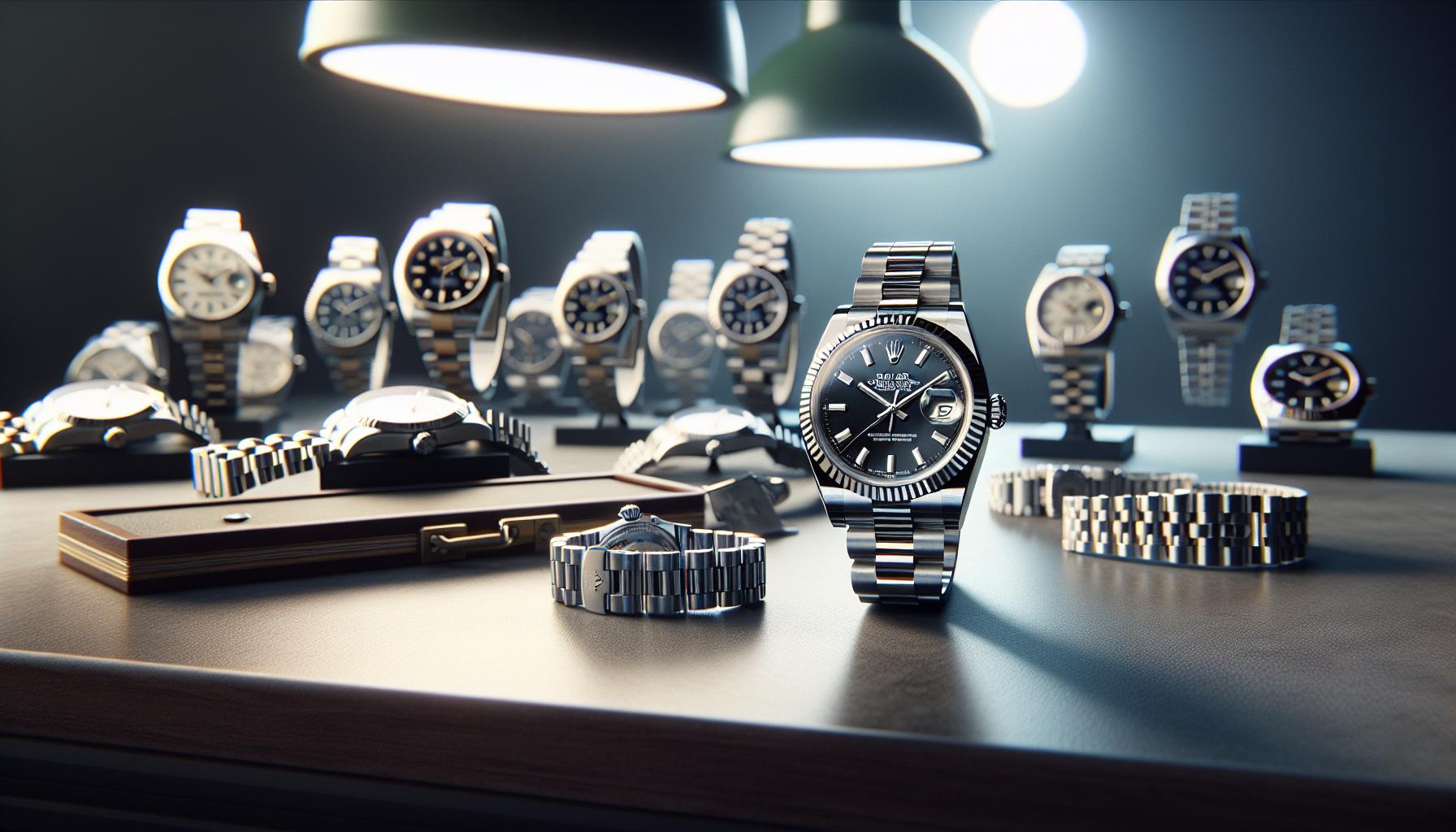
Impact of Production Volume on Datejust Value and Collectibility
A watch’s production volume often serves as one of the key factors shaping its market value and level of collectibility, and the Datejust offers an excellent case study in this dynamic. Unlike Rolex’s sport models-such as the Submariner or GMT-Master II-where scarcity is carefully cultivated through selective annual output, the Datejust is manufactured in considerably higher volumes, ranging from high five-figure to six-figure units each year. This broader production makes the Datejust more accessible to buyers worldwide but naturally impacts its rarity and, by extension, its value trajectory.
Despite being produced in larger numbers, the Datejust maintains strong appeal due to its timeless design, technical sophistication, and Rolex’s in-house automatic movements like the recent Caliber 3235-an efficient, reliable engine with a 70-hour power reserve and Chronergy escapement.These factors contribute to a healthy baseline of demand that sustains stable resale values. Though, as so many Datejust examples exist with a wide variety of dial options, sizes (36mm and 41mm being most common), and metal combinations (steel, Rolesor, gold), its collectibility is generally more diffuse compared to more specialized, limited-production lines.
Balancing Accessibility and Exclusivity
The abundant supply means waiting lists are typically shorter for the Datejust, and enthusiasts can select from a diverse selection without the premium premiums associated with ultra-scarce sport models. For example, while a Submariner might command a hefty markup and long wait thanks to controlled production runs (~85,000 pieces yearly), Datejust prices tend toward modest premiums except for particularly rare or vintage variants. Some collector gems do exist, such as rare dial colors, discontinued models, or early Oysterquartz Datejusts-production of which totaled only about 20,000 to 25,000 pieces in the late 1970s to early 2000s-adding a layer of focused scarcity within the broader Datejust family[[2]](https://goldammer.me/blogs/articles/rolex-oysterquartz-datejust-guide?srsltid=AfmBOool6OCL3Hbl_Gw9k1_oc2X__AWcTqUu_3RGJiYNriNqJ29iJplL).
- For collectors: The multitude of Datejust variants means identifying truly rare models requires attention to provenance, limited editions, or discontinued references rather than relying solely on production volume.
- For buyers: The solid secondary market and relative availability make the Datejust a highly attractive entry point into Rolex ownership with dependable value retention.
- For investors: Long-term appreciation is more likely to be nuanced, favoring exceptional or historically vital Datejust pieces over standard production models.
How Production Volume Shapes Market Perception
Because Rolex produces the Datejust in larger quantities to meet global demand, it underscores the watch’s role as a versatile, everyday luxury instrument rather than a scarce collectible trophy. This strategy aligns with Rolex’s broader goal: maintaining prestige while supporting a healthy dealer and aftermarket ecosystem. Buyers get the benefit of proven craftsmanship, robust in-house calibers, and timeless aesthetics without the frustration of extended waitlists or speculative price inflation found with some sport models.
Here’s a simplified comparison highlighting how Rolex production and market factors affect value and collectibility:
| Rolex Model | Estimated Annual Production | Primary Movement | Availability on Retail/Secondary Market | Typical Resale Premium | Collectibility Notes |
|---|---|---|---|---|---|
| Datejust (36 & 41mm) | ~100,000+ units | caliber 3235 (automatic) | Generally good availability | moderate,except rare editions | Wide appeal,variant-dependent rarity |
| Submariner (Date & No-Date) | ~85,000 units | Caliber 3230/3235 (automatic) | Limited,waitlists common | High,often significant premiums | Strong collector demand and cachet |
| GMT-Master II | Lower 5-figure range | Caliber 3285 (automatic) | Limited,selective distribution | high collector premiums | Sought-after for unique colorways and rarity |
ultimately,the Datejust’s blend of high production volumes with Rolex’s commitment to quality and classic design delivers an approachable luxury watch that is loved worldwide. While it generally won’t command the astronomical premiums or mystique of sportier siblings, its stable demand, rich model diversity, and solid engineering make it a consistently wise choice for collectors who appreciate mechanical artistry-without paying a premium for scarcity alone.
Whether you’re a newcomer securing your first Rolex or a seasoned collector diversifying your lineup, understanding how production volume influences value illuminates the distinct spaces each Rolex model inhabits within the vibrant horological ecosystem[[3]](https://www.reddit.com/r/rolex/comments/1fnfuq9/rolex_finally_publishes_production_numbers/).
Global Demand and Supply Trends for Datejust Watches
One of the fascinating dynamics with the Rolex Datejust lies in how its widespread production balances against global demand, creating a watch that is both accessible and prestigious. Unlike some of Rolex’s sportier sibling models-where limited supply and strict production runs generate long waiting lists-the Datejust is crafted in the realm of roughly 100,000 units annually. This scale satisfies diverse consumer appetites across continents without forcing extreme scarcity, which keeps entry-level pricing comparatively stable and accessible for a luxury timepiece powered by Rolex’s in-house automatic Caliber 3235. The movement’s technical edge, including a 70-hour power reserve and the Chronergy escapement for energy efficiency, adds tangible value that resonates worldwide.
Demand for Datejust watches remains strong and steady,fueled by collectors seeking timeless design,ease of wear,and robust engineering. The model’s availability across multiple sizes (notably 36mm and 41mm), along with a rich array of dial styles and metal combinations from stainless steel to Rolesor and solid gold, means that customers around the globe can find versions that match their personal style and budgets. This breadth also means dealers generally maintain healthier inventories than seen with ultra-scarce Rolex sport models, drastically shortening wait times and enabling more immediate fulfillment. For buyers, this reduces the frustration often associated with luxury watch launches tied to hype and waitlists.
Regional Preferences Influence Supply Flow
global demand for the Datejust displays interesting regional nuances. For instance, in markets like North America and Europe, the Datejust’s versatile dress-sport aesthetic perfectly suits everyday luxury wear, so supply is usually well matched with strong, steady demand.Meanwhile, in Asia-especially China and Japan-collector interest in Rolex continues to boom, creating bursts of demand that can pressure supply chains temporarily. rolex’s production strategy, while high-volume, is still tightly controlled and designed to avoid market glut, aiming for a steady flow rather than surges. This management helps prevent sharp depreciations and fosters a enduring aftermarket where resale values remain solid, albeit with less dramatic premiums than limited-edition sport models.
Collectors and enthusiasts should also note that the Datejust’s large production scale complicates pinpointing rarity but creates pockets of exclusivity within the model’s wide family tree. Variants limited by geography, dial color, or materials can emerge as coveted pieces. The secondary market responds accordingly, with certain discontinued or unique dial versions commanding significant interest, even if the base model remains widely available.
- Be open to variations: As the datejust comes in many configurations, flexibility with size or dial choice can frequently enough shorten wait times and lower entry price.
- Watch for market dips: Rolex occasionally adjusts its production volumes or recalls models, creating buying windows where supply briefly exceeds demand-ideal for savvy buyers.
- Consider pre-owned: Given the datejust’s strong resale activity, certified pre-owned watches often represent a great value proposition with immediate availability.
Ultimately, the Datejust’s global supply-demand balance exemplifies Rolex’s broader approach: create watches that are aspirational yet attainable, blending consistent excellence with practical accessibility. For collectors and new buyers alike, this translates into an iconic everyday luxury watch that’s ready to be worn and enjoyed, not just hoarded as an investment or status symbol.
| region | Demand Characteristics | Supply Impact |
|---|---|---|
| North America & Europe | Steady luxury demand, favoring classic styles | Generally stable supply, consistent availability |
| Asia (China, Japan) | High collector interest, occasional demand surges | Temporary supply pressure, selective limited editions favored |
| Middle East & Others | Growing luxury market, emphasis on precious metals | Niche demand shaping metal variant availability |
Rolex Datejust quality Control and Craftsmanship Insights
Every Rolex Datejust that reaches your wrist has undergone an extraordinary journey of precision, patience, and passion.While the roughly 100,000 datejusts produced annually speak to its accessibility, each watch benefits from a level of craftsmanship that blends advanced manufacturing with human touch. Rolex is famous for marrying industrial efficiency with artisanal expertise, making every Datejust not just a mass-produced item but a true mechanical work of art.
At the heart of this process is Rolex’s commitment to 100% in-house movement production, such as the Caliber 3235 found in current Datejust models. This automatic movement is celebrated for its blend of reliability, power reserve (about 70 hours), and the innovative Chronergy escapement system, which increases energy efficiency and precision. But the mechanical complexity is just one part-the finishing, assembly, and rigorous testing forge the watch’s true identity.
Stringent Quality Control That Goes Beyond the Norm
every Datejust case,dial,and bracelet component is subjected to multiple stringent inspections. Rolex doesn’t just check for external flaws-the internal mechanism is tested in real-world conditions. The movement is carefully adjusted by expert watchmakers, who often use magnification tools to position components with micron-level precision. This ensures that every piece functions within rolex’s strict chronometric standards, famously validated by the “Superlative Chronometer” certification, which demands accuracy within -2/+2 seconds per day-double the requirement of the COSC (Swiss Official Chronometer Testing Institute).
Water resistance tests simulate pressures far beyond everyday wear. The Oyster case,iconic to Rolex,is hermetically sealed with patented Triplock crowns and gaskets,ensuring durability for years. In many ways, the quality control emphasis ensures the Datejust feels solid yet agreeable-robust enough for daily wear, but refined for formal occasions.
Craftsmanship Details Collectors and Buyers Should Appreciate
- Material Excellence: Rolex’s proprietary 904L stainless steel (Oystersteel) is harder and more corrosion-resistant than common grades, enhancing longevity and finish quality.
- Dial Craft: Dials are more than just faces; they are miniature canvases. From sunburst patterns to mother-of-pearl and diamond accents, rolex applies old-school craftsmanship alongside microscopes and lasers to create dials that age gracefully without losing luster.
- Bracelet and Clasp Engineering: The Oyster and Jubilee bracelets blend durability with wearability, featuring solid links and the Easylink extension system for comfort adjustments-rare for watches in any price bracket.
This devotion to detail impacts value and collectibility. While the Datejust is widely produced, the finishing quality and control consistency means even entry-level Datejusts offer excellent value for luxury craftsmanship. It’s not just about rarity but lasting wearability and emotional connection.
Practical Advice for Datejust Enthusiasts
If you’re exploring the market for a Datejust, consider that rolex’s quality control protocols evolve subtly year to year. This can affect not just the movement, but dial finishes, bracelet feel, and even case polish. Certified pre-owned watches aged 5-10 years may offer “vintage” allure combined with robust build quality. When purchasing, inspect the watch in natural light to appreciate dial nuances, and listen for the smoothness of winding-a sign of a well-regulated caliber.
in essence, Rolex’s mastery of quality control and craftsmanship is the keystone in the Datejust’s widespread appeal. It translates the brand’s rich heritage into a watch that balances volume production with individual excellence, making each Datejust a reliable companion for decades rather than just a momentary trend.
how Production Numbers Affect Datejust Availability worldwide
Rolex Datejust production, estimated at around 100,000 pieces annually, strikes a delicate balance between maintaining exclusivity and meeting strong global demand. While this volume is substantial for a luxury mechanical watch, it naturally creates a dynamic interplay between availability and desirability across different markets. Availability isn’t just about numbers - it’s deeply influenced by Rolex’s strategic distribution policies, regional demand fluctuations, and even model-specific popularity.
Globally, certain Datejust references and dial variations experience waiting lists that can stretch months or even years, despite steady production. For example, popular steel and two-tone models with iconic Jubilee bracelets frequently enough move faster off retailer shelves than their less requested counterparts. This mismatch between production and demand means that while a Datejust is common enough not to be rare,specific configurations can effectively feel limited in supply. For collectors and buyers, this translates to opportunities and challenges alike – the right combination of style, size, and dial can unlock immediate availability or require patience and a sharp market eye.
factors Shaping Worldwide Access
- Regional Demand Variances: Markets like Asia and North America show heightened interest in certain Datejust sizes or materials, influencing local inventories.
- Authorized Dealer Allocation: Rolex tightly controls stock movement, meaning even with ample production, availability can feel scarce depending on dealer networks and priorities.
- Model Refresh Cycles: New releases or discontinuations ripple through market supply, briefly tightening availability as collectors pivot between old and new.
For enthusiasts navigating this landscape, understanding Rolex’s meticulous quality control and production sequencing helps manage expectations. Rolex never rushes final assembly or testing to meet demand, instead opting to uphold standards that impact long-term value and wearability. This approach means even widespread production doesn’t lead to flooding the market, preserving Datejust’s cachet.
Practical Tips for Securing a Datejust
- Build a Relationship with Dealers: Regular communication with authorized retailers can definitely help catch incoming stock and preorders for popular references.
- Consider Secondary market: Certified pre-owned watches often offer near-new condition with less wait time – especially models introduced a few years prior.
- Stay Informed on Model Updates: Familiarize yourself with the latest caliber upgrades (like Caliber 3235) and design tweaks to recognize desirable features worth pursuing.
In essence,the production volume of Datejust watches ensures solid worldwide presence without sacrificing the exclusivity that fuels passion among collectors. Rolex’s intricate balance of manufacturing capacity, craftsmanship, and market management assures that while these watches are accessible to many, they still carry the allure of mechanical artistry and investment-worthy quality. This dynamic keeps the Datejust both a timeless classic and a coveted modern icon in the horological world.[1]
Future Outlook: Rolex Datejust Production Trends and Forecasts
Rolex’s production strategy for the Datejust continues to evolve with a clear focus on blending tradition, innovation, and market responsiveness. While the annual output hovers around 100,000 units,future trends point to more nuanced shifts rather than dramatic volume changes. This careful balancing act means collectors and enthusiasts will likely see steady availability that respects the model’s iconic status, rather than a flood that diminishes desirability or value.
Technologically, Rolex is expected to expand the incorporation of its latest in-house movements-like the Caliber 3235-across a broader range of Datejust references. These movements bring enhanced precision, power reserve (up to 70 hours), and durability, all driving long-term value retention. As sustainability becomes a stronger priority industry-wide, rolex may also embrace more eco-conscious manufacturing processes and materials without compromising on the hallmark robustness and luxury finish that define the datejust.
Anticipated Production Focus
- model Diversification: While classic Datejust proportions and two-tone palettes remain central, collectors can expect subtle expansions into varied dial colors, case sizes, and bracelet styles. This balances fresh appeal against timeless design identity.
- Limited and Special Editions: Exclusive releases tied to anniversaries or boutique markets might slightly reduce mass production in favor of generating buzz and collector interest.These special editions act as “halo” pieces that reinforce datejust’s stature without impacting availability of mainline models.
- Regional Demand Impact: Growth in affluent markets like Asia and continued enthusiasm in Europe and North America will shape where production is channeled most heavily. Rolex’s tight dealer allocations will remain key to managing waitlists and pricing stability.
Practical Tips for Future Buyers
For those planning a purchase in the years ahead, patience combined with proactive dealer engagement will remain valuable. Developing rapport with authorized dealers can uncover near-real-time insights on incoming stocks, especially for in-demand steel or two-tone Jubilee bracelet models. Additionally, keeping an eye on certified pre-owned markets offers opportunities to snag recent Datejusts with updated calibers at a more accessible price point, often avoiding extended wait times.
Rolex’s mastery at balancing production volume with market demand ensures the Datejust will stay a watch you can aspire to own-without eternal waiting-while maintaining the rarity that enthusiasts prize.As the brand integrates advanced engineering and richer design options, Datejust watches will continue to shine as accessible mechanical masterpieces offering centuries of heritage paired with 21st-century innovation.


