

How to Change Time on Rolex Lady Datejust: Women’s Guide
Changing the time on your Rolex Lady Datejust is a simple yet essential skill that ensures your watch stays accurate and ready for every moment. This guide helps you confidently adjust the time on one of Rolex’s most elegant automatic models-celebrated for its precise in-house caliber, classic design, and versatile wearability. Whether you’ve just picked up your Lady Datejust or are fine-tuning it after travel, knowing how to set the time correctly safeguards both its delicate mechanics and your investment.
Many watch owners hesitate to adjust their luxury timepieces, worried about damaging the movement or misusing the crown. Here,we break down the process clearly-step by step-showing how the winding crown’s positions work,what to watch out for with its date complication,and how to avoid overwinding. By demystifying these details,this guide aims to empower women who appreciate fine watchmaking without the usual jargon or gatekeeping. understanding how your Lady Datejust ticks opens up a deeper gratitude for Rolex’s blend of precision engineering and timeless style-making sure it’s perfectly on time for your every occasion. Let’s explore how to handle your watch with confidence and keep it performing beautifully for years to come.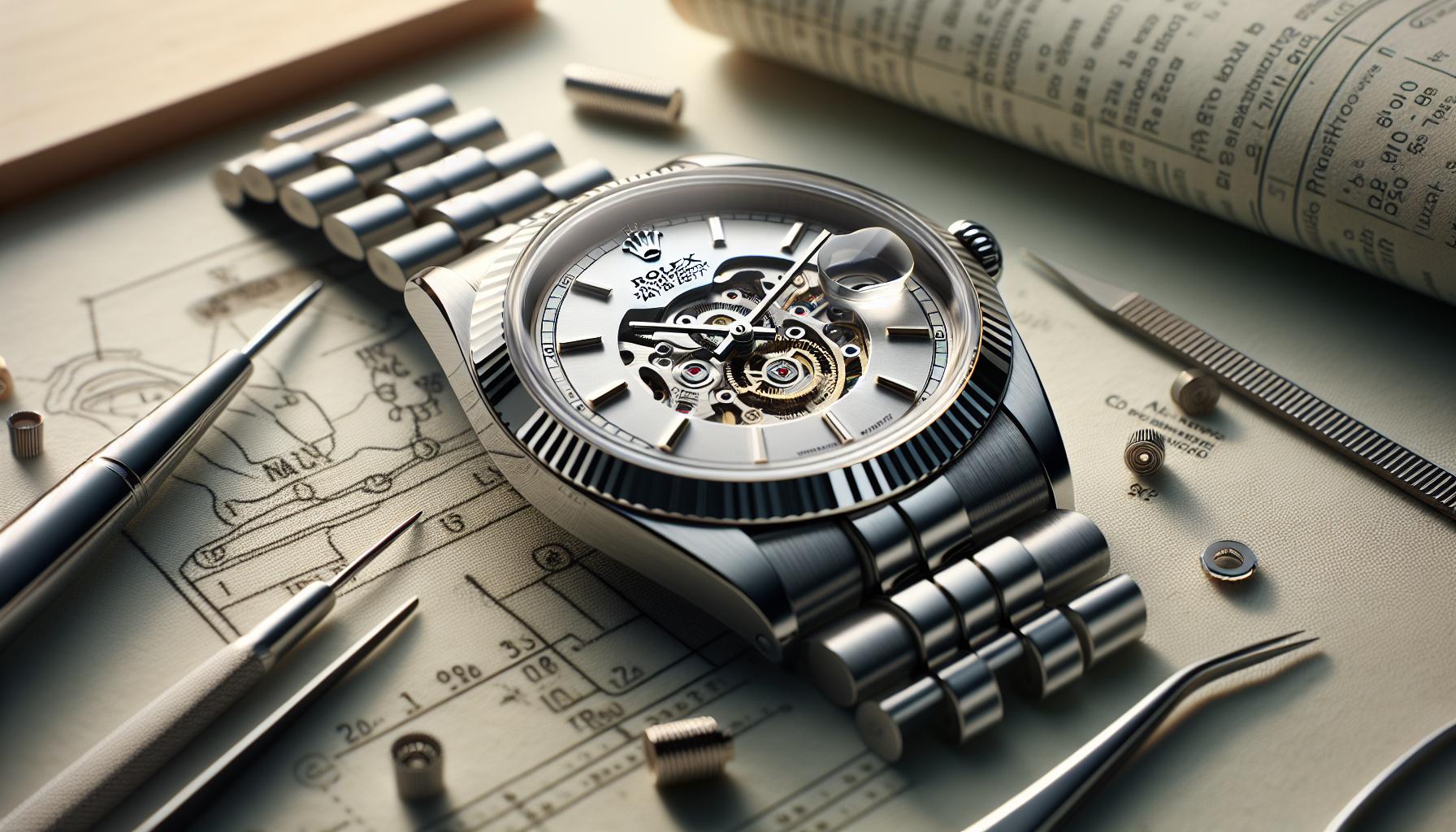
Contents
- Understanding the Rolex Lady Datejust Movement and Timekeeping Features
- Step-by-Step Guide to Changing Time on Your Lady Datejust
- How to set the Date Correctly on Lady Datejust Models
- Common Mistakes to Avoid When Adjusting Your Rolex Watch
- Tips for maintaining Accuracy After Time Adjustment
- How to Handle Different Crown Positions on Lady Datejust
- Troubleshooting Time Change Issues with Your Rolex Lady Datejust
- Comparing Time Setting on Lady Datejust vs. Other Rolex Models
- Care and Precautions When Adjusting Vintage lady Datejust Watches
- Expert Advice on Preserving Your Lady datejust’s mechanical Integrity
- FAQ
- Q: How often should I adjust the time on my Rolex Lady Datejust?
- Q: Can I change the time on my Rolex Lady Datejust while it’s wet or underwater?
- Q: What is the best time of day to change the time on a Rolex Lady Datejust?
- Q: How do I know if my Rolex Lady Datejust has an in-house movement?
- Q: Can I use a knock-off Rolex Lady Datejust to practice changing time?
- Q: Why is the crown position important when setting the time on my Lady Datejust?
- Q: What should I do if my Rolex Lady Datejust isn’t keeping accurate time after adjustment?
- Q: How does changing the time on a Lady Datejust differ from other Rolex models?
- To Wrap It Up
Understanding the Rolex Lady Datejust Movement and Timekeeping Features
One of the most captivating aspects of the Rolex Lady Datejust lies in its movement-a compact marvel of precision engineering designed specifically to combine elegant femininity with rugged reliability. At the heart of these watches, you’ll typically find Rolex’s in-house automatic movements, such as the Caliber 2236. Known for their robustness and remarkable accuracy, these self-winding mechanical movements utilize Rolex’s patented Syloxi silicon hairspring, which improves resistance to shocks and magnetic fields, ensuring your watch keeps impeccable time whether worn daily or on special occasions.The Lady Datejust doesn’t just tell time; it offers a refined timekeeping experience enriched by refined features. the signature date complication changes instantaneously at midnight thanks to Rolex’s ingenious “Quickset” mechanism. This means you can adjust the date independently without cycling the hands through 24 hours-a real time saver and user-friendly touch. The movement oscillates at 28,800 vibrations per hour (vph),providing smooth sweeping seconds and outstanding precision,often rated to within a few seconds per day,beating many other luxury watches in this range.
Because the movement is automatic,it harnesses kinetic energy through wrist motion to keep the watch wound. That’s a key convenience-no battery changes or manual winding required as long as you regularly wear the watch. Though, the Lady Datejust also offers manual winding via the crown if left unworn for a while, enabling quick power restoration. From a collector and enthusiast standpoint, the blend of robust engineering, excellent finishing, and innovative materials in the movement demonstrates Rolex’s commitment to marrying traditional watchmaking with modern technological improvements, all encapsulated in a size and style that suits a woman’s wrist beautifully.
Key Movement Features At a Glance
- Movement Type: In-house automatic caliber (e.g., Caliber 2236)
- frequency: 28,800 vibrations per hour (4 Hz) for smooth second hand motion
- Power Reserve: Approximately 55 hours, allowing multi-day off-wrist flexibility
- Silicon Syloxi Hairspring: Enhances antimagnetic and shock resistance
- Date Function: Instantaneous date change with Quickset adjustment
- Chronometer Certified: Ensures precision within −2/+2 seconds per day
This mechanical sophistication makes the Lady Datejust not only a reliable everyday companion but also an enduring symbol of craftsmanship. It invites owners-whether seasoned collectors or newcomers-to appreciate how mechanical art and function merge seamlessly in a wristwatch designed to keep both time and style perfectly in sync.
Step-by-Step Guide to Changing Time on Your Lady Datejust
The magic of wearing a Rolex Lady Datejust lies in more than just its alluring design; it’s in the intuitive way you interact with the watch’s finely tuned mechanical heart. Adjusting the time on your Lady Datejust is a straightforward process that respects both precision engineering and user convenience. With a trusty in-house automatic movement like Caliber 2236 beating inside, the watch demands a gentle hand yet rewards you with unmatched accuracy when set correctly.
Begin by locating the crown on the right side of your Lady Datejust case. Unscrew it gently by turning counterclockwise until it releases from the locked position. This screw-down crown design is Rolex’s way of ensuring water resistance while allowing easy access to time-setting functions. Once unscrewed, the crown naturally pops out to the first position – perfect for manual winding, especially if the watch hasn’t been worn recently.To change the time, pull the crown out further to the second position. You’ll notice the seconds hand stops moving – this “hacking” feature allows precise synchronization, a must-have for accurate timekeeping. Now, turn the crown clockwise or counterclockwise to shift the hour and minute hands to your desired time. It’s best to avoid turning the hands backwards past midnight to prevent accidental damage to the date mechanism.
After setting the correct time, push the crown back to the winding position and screw it in tightly against the case wall. This step is crucial because the sealed crown maintains the watch’s famed water resistance and protects the delicate movement inside.Remember, firm but gentle pressure works best here-forcing it risks thread damage.
Tips for a Smooth Time Adjustment
- Use steady, even pressure when pulling or pushing the crown-avoid abrupt moves to preserve longevity.
- Set the time forward rather than backward when possible, especially around the date-change threshold near midnight.
- Take advantage of the hacking feature to sync the watch with a reference time accurately, whether your phone or an official time signal.
- Always re-secure the crown screw-down firmly as this ensures environmental protection and maintains the watch’s performance.
Handling your Lady Datejust with this mindful approach integrates you into a timeless tradition of mechanical watchmaking. Whether you’re a seasoned collector who appreciates the nuance of caliber 2236’s silicon hairspring tech or a newcomer marveling at the smooth glide of the second hand, changing the time on your Lady Datejust is a tactile pleasure matched with precision. it’s a moment of connection with horological craftsmanship at its finest.
How to set the Date Correctly on Lady Datejust Models
Setting the date on your Lady Datejust is a subtle art that complements the watch’s robust Caliber 2236 movement.Unlike the quickset date on many modern watches, the Lady Datejust uses a sophisticated mechanism designed to smoothly and precisely shift the date display, often just past midnight. Mastering this adjustment ensures your watch reflects the correct date without disrupting its finely tuned mechanical rhythm.
To begin, gently unscrew the crown by rotating it counterclockwise until it pops free from its locked position. Pull the crown out to the first click-this is the date-setting position, distinct from the winding (closed crown) and time-setting (second click) modes. turning the crown clockwise in this position will advance the date one day at a time. This incremental date change is designed to work smoothly without interfering with the timekeeping functions or damaging the date wheel.
When to Set the Date: timing Is Everything
A crucial tip is to avoid setting the date between approximately 8 PM and 4 AM. During this period, the date-change mechanism is actively engaged in shifting to the next day.Manually adjusting the date at this time risks damaging the delicate gears. If you need to change the date and you’re unsure of the watch’s current position within this window, first move the time outside this range (such as, advance the time to 6 AM) before setting the date. This minor precaution safeguards the watch’s mechanical integrity.
Whether advancing past the last day of the month or correcting for months with fewer than 31 days, simply turn the crown clockwise until the correct date appears in the window. The Lady Datejust’s quickset feature eliminates the need to cycle through full 24-hour days on the dial, saving you time while preventing wear on the mainspring.
Gentle Handling and Synchronization
When adjusting the date, use slow, deliberate turns of the crown. Rapid or forceful movements can stress the internal components and diminish long-term precision. Many collectors swear by syncing their Lady Datejust’s date change with an exact reference time, like a smartphone or atomic clock, ensuring that date shifts happen precisely at midnight. This synchronization is especially satisfying with the Caliber 2236’s smooth, near-silent calendar transition.
- Always set the date by turning the crown clockwise-this aligns with the design of the date-change mechanism.
- Avoid forcing the crown if it feels stuck; this usually signals the date gear is engaged, meaning the time setting mode should be checked.
- If the date doesn’t change at midnight, double-check the time setting to ensure the hour hand is correctly positioned (AM/PM confusion is a common issue).
Adjusting the date on a Lady Datejust blends care with precision, preserving both the beauty and function of Rolex’s legendary craftsmanship. It’s a reminder that a mechanical watch is not just a tool but a living piece of engineering – deserving your patience and respect as you set it to your rhythm.
Common Mistakes to Avoid When Adjusting Your Rolex Watch
Adjusting the time and date on your Rolex Lady Datejust may seem straightforward, but even small missteps can impact the watch’s performance or longevity. One of the most common pitfalls enthusiasts-new and experienced alike-face is manipulating the crown during the watch’s “danger zone,” typically between 8 PM and 4 AM. During these hours, the date-change mechanism is engaged, and applying force or turning the crown can warp or break delicate gears. If you’re unsure whether your watch is within this window, always advance the time past it before adjusting the date to protect the finely engineered Caliber 2236 movement.
A frequent mistake involves forcing the crown when it doesn’t easily turn. The Rolex Oyster crown design ensures water resistance and mechanical integrity, but that means if somthing feels stiff, it’s often because the movement’s gears are engaged or the crown is still locked. Trying to force it risks damaging the threads or internal components. Instead, take a moment to ensure the crown is fully unscrewed before attempting to change time or date. Think of the crown like a valve that needs to be gently opened before adjustments-a gentle touch respects the precision within.
Many also confuse the crown’s different positions-winding (closed), date setting (first click), and time setting (second click).Skip this routine,and you might accidentally move the hour and minute hands when you only meant to change the date,or vice versa. this can lead to AM/PM errors, causing the date to flip at noon instead of midnight. double-check which crown click you’re on and if you notice the date won’t change at midnight, retrace your steps to ensure the hour hand is on the correct 12-hour cycle.This nuanced understanding preserves the watch’s elegant calendar synchronicity and avoids awkward corrections down the line.
Handling and Timing Confusions Nobody Talks About
An overlooked but critical aspect is the speed and direction of crown turns. The Lady Datejust’s mechanism favors slow, deliberate clockwise turns to advance the date. Turning the crown counterclockwise or rushing the adjustment can stress the date jumper and cams, resulting in irregular date changes or premature wear. one collector’s tip: synchronize your adjustments with an accurate time source-a smartphone or atomic clock frequently enough does the trick. This simple step not only ensures smooth transitions but also deepens your appreciation of Rolex’s mechanical artistry.
- Never adjust the date during the date-change window (8 PM-4 AM).
- Avoid forcing the crown-unscrew it gently and check crown positions carefully.
- Always turn the crown clockwise when setting the date to match the gear design.
- Verify AM/PM settings to prevent date shift errors at the wrong time.
- Take your time-slow, steady adjustments extend the life of your watch’s movement.
By steering clear of these common mistakes,you protect not just the Lady Datejust’s timekeeping accuracy but also its delicate mechanical heart. Remember, this isn’t just a fashion statement; it’s one of the most iconic automatic calibers Rolex offers-a tiny marvel deserving patience and respect every time you twist the crown. Whether you’re new to mechanical watches or a seasoned collector, embracing these habits deepens your connection to that fascinating fusion of engineering and elegance ticking silently on your wrist.
Tips for maintaining Accuracy After Time Adjustment
Rolex’s Lady Datejust houses the impressive Caliber 2236, an in-house automatic movement renowned for its precision and reliability. Even though it’s engineered to maintain superb accuracy, slight deviations can occur after manually adjusting time or date. The good news? A few thoughtful habits can help your watch sustain its dependable rhythm and extend the life of its finely tuned mechanics.
When you finish setting the time or date, giving your Lady Datejust a gentle wrist wind for about 20-30 seconds helps re-engage the mainspring fully. This action ensures the movement has sufficient power reserve, especially significant if the watch had stopped before adjustment. Remember, the movement relies on consistent energy flow for reliable timekeeping, so manual winding complements the automatic rotor when the watch isn’t worn daily.
Another often overlooked factor is the frequency and rhythm of motion after adjustment.Rolex movements like the 2236 are designed to work optimally when worn daily – the natural motion of your wrist keeps that mainspring tensioned. If your lifestyle involves lots of desk time or inactivity, consider giving the watch a gentle shake side-to-side for a few seconds before wearing it. This mimics wrist movement and encourages the rotor to wind the spring, preserving its precision until you’re back on the go.
Daily Care Habits for Precision
- Avoid drastic time jumps: Drastically moving the hands too far forward or backward can stress the caliber’s gearing. It’s best to turn hands forward slowly and, if possible, advance time in segments rather than one big jump.
- Consistent wear: Aim to wear your Lady Datejust regularly, or use a quality watch winder to keep the automatic movement energized and lubricants distributed evenly.
- Keep it clean: Residual dust or oils on the crown threads can affect winding efficiency. Clean around the crown gently with a soft cloth after adjustments, especially if you’re outdoors or in dusty environments.
- Rest after adjustment: Avoid heavy impacts or rapid movements for an hour after setting time to let the movement settle.
A practical tip from seasoned collectors: synchronize your initial adjustment with a trusted atomic clock or smartphone app. Setting the Lady Datejust precisely to the second maximizes accuracy from the outset.Additionally, double-check that the watch’s AM/PM cycle matches your environment. This simple step prevents the date from flipping at noon, a common hiccup that can affect calendar accuracy and your daily schedule.
ultimately, how you treat your Lady Datejust right after a time adjustment communicates directly with a complex mechanical heart crafted to perfection. Approaching these moments with patience and light touch not only safeguards the Caliber 2236 but also enriches your relationship with this miniature work of horological art. Whether you’re a weekend wearer, a seasoned collector, or a newcomer stepping into the world of mechanical watches, these small mindful routines make a big difference to ensuring your Rolex keeps ticking with legendary precision.
How to Handle Different Crown Positions on Lady Datejust
The crown on your Lady Datejust isn’t just a button; it’s the direct interface with Rolex’s ingenious Caliber 2236 movement. Understanding its multiple positions is key to making precise adjustments without risking damage to the delicate internal mechanisms. Unlike simpler quartz watches, this automatic mechanical marvel relies on subtle crown manipulations to control winding, date setting, and time setting-all through carefully designed “clicks” or detents.
When you first unscrew the crown from its locked position (Rolex’s signature Twinlock system ensures water resistance), it will pop out slightly-the first position. In this stage,you can manually wind the mainspring by turning the crown clockwise. This manual winding is especially handy if your watch has been idle for a while and the automatic rotor hasn’t had a chance to build up the power reserve.About 20-30 turns here will usually get the watch primed and running smoothly.
Pulling the crown out gently to the second position allows you to set the date. Here, turning the crown one way advances the date quickly without moving the hour hands. This complication is delicate-avoid setting the date when the watch is displaying hours between 8 PM and 4 AM, as the date-change mechanism is engaged internally and forcing it can cause damage. Rolex’s clever design often means the direction for date adjustment differs between models, but on the Lady datejust, you typically turn clockwise. Take your time and make small increments to align the date accurately.The third and final position is the full crown pullout, which stops the seconds hand (a hacking feature) and allows you to set the time precisely. This is your chance to synchronize the watch to a reliable time source. Because the seconds hand freezes here,setting to the exact second is possible-a rare and welcome feature in mechanical watches. When adjusting time, move the hands forward slowly and avoid backward rotation, which can stress the delicate gearing. If you accidentally overshoot,it’s safer to complete a full cycle forward than to force the hands backward.
Quick Reference on Crown Positions for Lady Datejust
| Position | Action | Purpose | tips |
|---|---|---|---|
| Unscrewed, but not pulled out | Turn clockwise | Winds the mainspring (manual winding) | 20-30 turns recommended if watch stopped |
| First pull (1 click) | Turn crown | Set date only | Avoid setting date between 8 PM - 4 AM to prevent damage |
| Second pull (full pull) | Turn crown | Set time; hacking seconds for precision | Turn hands forward only; synchronize with clock for accuracy |
Whether you’re a newbie or a longtime collector, treating the crown with respect transforms a potentially nervous adjustment into a delightful mechanical dialogue. The tactile feedback as you gently rotate through each crown position connects you directly to one of horology’s finest in-house creations. Remember, always screw the crown back in firmly after adjustments-this preserves water resistance and protects that intricate movement inside the Lady Datejust from dust and moisture.
Of course, every Rolex model may differ slightly in how the crown operates, but the Lady Datejust balances ease of use and mechanical sophistication perfectly. If ever in doubt, consult your authorized dealer or trusted watchmaker before attempting adjustments, especially if your Lady Datejust is a cherished vintage piece where seals and lubricants may need special care.
This mindful approach not only preserves your watch’s longevity but also deepens your appreciation for Rolex’s artistry-after all, the crown is your key to unlocking the heart of an iconic mechanical companion.
Troubleshooting Time Change Issues with Your Rolex Lady Datejust
Rolex’s Lady Datejust is a mechanical marvel, but even the most refined in-house movement-like the Caliber 2236 it houses-can throw little tantrums when setting the time if not handled carefully. If you find the hands reluctant to move, the date refusing to advance, or the seconds hand won’t stop during time-setting, don’t panic; these are usually signs of common issues that can be resolved with a bit of patience and know-how.
one frequent stumbling block is attempting to adjust the date during the critical time window when the date-change mechanism is engaged internally-usually between 8 PM and 4 AM.Forcing the date wheel to move during this period can cause the date jumper to misalign or even damage the delicate gears. If your date seems stuck or skips unpredictably, wait a few hours before trying again. This simple step alone saves countless complications and service visits.
Another troubleshooting tip concerns the crown itself. If the crown feels unusually stiff or won’t pull out smoothly to the second or third position, it’s often due to insufficient lubrication or grime buildup inside the winding tube-a common scenario especially with vintage Lady Datejusts. Never force the crown; rather, give it gentle wiggling motions while unscrewing and pulling out. If stiffness persists, it’s a signal to have a professional service the watch to protect the precision of the automatic movement.
Sometimes, the hacking seconds hand (which should freeze during the full crown pullout for exact time setting) won’t stop as expected.This could meen the internal hacking mechanism isn’t engaging, perhaps due to dust intrusion or oil aging inside the caliber.While it might not stop your watch from keeping time, this can frustrate fine adjustments. In such cases,a certified Rolex technician can quickly diagnose and recalibrate the movement without compromising the watch’s celebrated accuracy.
Quick Troubleshooting Checklist for Lady Datejust Time Adjustments
| Issue | Possible Cause | Practical Solution |
|---|---|---|
| Hands won’t move when crown pulled out | Crown not fully disengaged; stiffness or dirt | Do not force; unscrew crown fully, than gently pull and rotate |
| Date won’t advance or skips | Adjusting during date-change hours (8 PM-4 AM) | Wait until outside this window; adjust date when safe |
| Seconds hand does not hack (stop) | Hacking mechanism malfunction or internal dirt | Schedule professional service; avoid home disassembly |
| Crown feels unusually tight or loose | Aged or dry seals, dirt inside crown tube | keep crown clean; have seals checked annually; service recommended |
If you’re new to fine mechanical watches, remember that patience is your best ally. Mechanical complications inside the Lady Datejust work in harmony but can be vulnerable to sudden, forceful adjustments. Treating each crown position as an possibility to communicate gently with your watch prevents mishaps. And if you own a vintage Lady Datejust, this caution becomes doubly critically important: older movements may not tolerate rough handling or DIY tweaks without bespoke lubrication or even part replacement.
Above all, embrace the joy of owning a finely crafted timepiece-you’re not just setting hands and dates, you’re interacting with near-century-old watchmaking tradition. that tactile experience, from the precise clicks to the silken winding resistance, rewards careful handling. Should glitches occur, they become learning moments-and when resolved properly, they deepen your connection to the mechanical artistry beating beneath your Lady Datejust’s elegant dial.
Comparing Time Setting on Lady Datejust vs. Other Rolex Models
Rolex’s Lady Datejust movement stands out for its elegant scale and refined engineering, especially considering the compact size of these women’s watches. While the Caliber 2236 powering the modern Lady Datejust is an in-house automatic movement featuring the innovative Syloxi silicon hairspring and exceptional shock resistance, the experience of setting the time on it differs subtly-and sometimes significantly-from other Rolex models. Understanding these nuances helps both newcomers and seasoned collectors appreciate the unique interplay between functionality and craftsmanship in a smaller wristwatch.One notable difference lies in the handling of the crown positions and the tactile feedback. Lady Datejust crowns tend to be smaller and more delicate, designed for finesse over brute force. This means you should approach winding, date setting, and time adjustment more gently compared to sportier Rolex models like the Submariner or Explorer, which feature larger crowns intended for robust use. The smaller crown and case size make the winding stem more sensitive to pressure, and forcing the crown or twisting too aggressively risks damaging the internal gearing, especially the date-change mechanism, which is fractionally more delicate in the Lady Datejust caliber.Compared to models such as the Datejust 41 or the Oyster Perpetual 36, the Lady Datejust’s quickset date function operates using the traditional Rolex mechanism where the external date adjustment is engaged in the intermediate crown position. This is quite consistent across Rolex’s Datejust line.However, the compact movement means that the “no-go zone” for adjusting the date-typically between 8 PM and 4 AM-feels more critical here. on larger watches with beefier Caliber 3235 or 3230 movements, some users report a slightly more forgiving experience, though Rolex universally recommends avoiding date changes during that window. The Lady datejust movement’s delicacy demands attentiveness to this rule to prevent misalignment or gear wear.
While many Rolex enthusiasts adore models like the Submariner for their robust, tool-watch aura and ease of adjusting time under rugged conditions, the Lady Datejust embraces refinement both in aesthetics and mechanical sensitivity. For example:
- Hacking seconds: Most modern Rolexes, including the Lady Datejust, feature this function where the seconds hand stops when the crown is fully pulled out for precise synchronization.Some older or vintage Rolex models may lack this feature or implement it differently, affecting the way you align your watch to exact seconds.
- Date quickset vs. no quickset: Vintage Lady Datejust watches from earlier decades may not have a quickset date at all, requiring you to cycle through 24 hours repeatedly to change the date, unlike modern models where the date snaps forward in the intermediate crown position. This results in a vastly different time-setting experience.
- Crown guards and screw-down crowns: Sports models like the Submariner come with prominent crown guards and a very secure screw-down crown, designed for diving and rough conditions, offering a different tactile sensation and requiring a firmer grip when unscrewing and pulling out compared to the smooth, elegant crown of a Lady Datejust.
Practical Tips for Transitioning Between Models
If you own multiple Rolexes or are moving from a men’s or sport model to a Lady Datejust, here are some pointers to help smooth the learning curve:
- be patient and gentle when pulling the crown out; do not expect the same torque or resistance as on larger models.
- Avoid adjusting the date between 8 PM and 4 AM without exception on the Lady Datejust to protect its delicate date mechanism.
- remember the smaller crown size means less gripping surface; use fingertips carefully rather than nails or tools.
- Watch for the hacking seconds: if your older Rolex lacks this, plan to synchronize time by moving the hands past midnight.
- Regularly clean the crown and tube especially in vintage Lady Datejusts to avoid stiffness-something that can also vary greatly in heftier sport models.
| Feature | Lady Datejust (Caliber 2236) | Submariner (Caliber 3235) | Vintage Datejust |
|---|---|---|---|
| Crown size & feel | Smaller, delicate, smooth | Larger, rugged, with pronounced guards | Varies widely, often small and exacting |
| Hacking seconds | Yes | Yes | Often no (depends on era) |
| Date quickset | Yes, rapid and smooth | Yes | Sometimes no; manual cycling needed |
| Date adjust no-go zone | 8 PM – 4 AM (strict) | 8 PM – 4 AM | Varies, usually strict due to fragility |
| Crown winding torque | Light & precise | Firm & robust | Varies; some require finesse to avoid damage |
Ultimately, setting the time on a Lady Datejust is less about brute tuning and more about respect for delicate horology on a miniature scale. This contrasts nicely with the tactile confidence of sportier Rolex watches built for adventure and physical resilience. Both experiences honor Rolex’s dedication to precision, but the Lady Datejust invites a more intimate and deliberate interaction with your timepiece-perfect for those who appreciate subtlety and elegance without sacrificing mechanical excellence.
Embracing this mindset lets you enjoy your Lady Datejust not just as a practical accessory, but as a nuanced mechanical companion that thrives on care and gentle handling. Whether you’re new to Rolex or upgrading from a different model, this outlook ensures every time adjustment deepens your appreciation of Swiss craftsmanship and the timeless heritage behind each tick.
Care and Precautions When Adjusting Vintage lady Datejust Watches
Vintage Lady Datejust watches carry a charm and character distinctly their own, but their mechanical nuances demand a thoughtful approach during time adjustment. Unlike modern calibers equipped with advanced materials and shock-resistant features, older Lady Datejust movements typically rely on more traditional components, meaning their delicate gears and date mechanisms require gentler handling. A common pitfall is forcing the crown or rushing the date change,a habit that risks damaging the vintage caliber’s intricate internals,which may not benefit from today’s quickset conveniences or robust crown designs.
Early Lady Datejust models, often powered by calibers lacking a quickset date function, require cycling the hands through full 24-hour rotations to advance the date. This process can be tedious but is crucial to respect-attempting to jump the date quickly or changing it during the “no-go zone” hours (roughly 8 PM to 4 AM) frequently causes wear or even misalignment of components. Patience here preserves not only function but also the original integrity of these treasured timepieces.
Essential Handling Tips
- Operate the crown gently: Vintage models were not designed for high torque on the winding stem. Use light, deliberate turns when winding or setting time to avoid stripping gears.
- Avoid date adjustment during the danger window: Changing the date between 8 PM and 4 AM risks damaging the date-change lever or cannon pinion. Wait until the watch exits this period before setting the date.
- Practice gradual hand-forward movement: When advancing the time, especially past midnight, move the hands clockwise and avoid forceful backward turns, which can stress the movement.
- Regular servicing is key: Oils dry and lubricants congeal over decades. A vintage Lady Datejust watch that’s been well-maintained will respond better to adjustments and minimize internal friction damage.
Older calibers-such as rolex’s early 26xx movements used in vintage Lady Datejust watches-lack a dedicated position on the crown to quickly change the date. Instead,one must advance the hour hand repeatedly past midnight to increment the date. This mechanical limitation emphasizes how valuable patience becomes in daily wear and maintenance. Rushing this process or attempting shortcuts can lead to broken teeth in the date wheel or slipping parts.
| Feature | vintage Lady datejust (e.g., Cal. 6916,6824) | Modern Lady Datejust (Cal. 2236) |
|---|---|---|
| Date Set Method | No quickset; date changes by cycling hands 24 hours | Quickset; date advances instantly in intermediate crown position |
| Hacking Seconds | Often absent or less precise | Present for exact time sync |
| Crown Size & Sensitivity | Small and delicate; less robust tube sealing | Optimized for durability; better water resistance |
| Date Change Danger Zone | Strictly observe 8 PM - 4 AM no-adjust period | Strict, but movement more forgiving due to design |
When in Doubt, Take it Slow
Adjusting time on a vintage Lady Datejust is an intimate dance with Swiss craftsmanship from an earlier era. The watches weren’t built for rapid-fire date adjustments or rough handling but reward care with reliable performance and timeless elegance. If you notice stiffness, unusual resistance, or your date doesn’t change as expected, pause and consider professional servicing rather than forcing the mechanism. Regular maintenance by a watchmaker familiar with vintage rolex movements can restore optimal operation and prevent costly repairs.
Remember, vintage Lady Datejust watches are mechanical heirlooms. Respecting their age and design intricacies during every winding and adjustment enriches your connection to the watch and ensures it remains a cherished companion for years to come.
Expert Advice on Preserving Your Lady datejust’s mechanical Integrity
A mechanical watch like the Rolex Lady Datejust is a miniature marvel of engineering, where dozens of tiny components work harmoniously to keep precise time. Preserving this mechanical integrity goes beyond merely avoiding knocks or scratches-it means understanding how delicate this balance truly is, especially in vintage models or watches that carry decades of use. Unlike quartz watches, which rely on a battery and electronics, mechanical calibers require attentive care with every interaction, from winding to setting the time.
One of the most important things to keep in mind is to treat the crown with gentle respect. The winding stem and crown tube can wear down or warp under excessive force, and a stripped gear or bent lever could mean costly repairs. when setting time or winding your Lady Datejust, avoid rushing or forcing any movements. Smooth, deliberate turns prevent unnecessary strain on the internal escapement and gear train. If you feel stiffness or abnormal resistance, it’s a clear sign to pause and consult a professional rather than soldiering on.
Keep the Date Change Smart and Safe
While most modern lady Datejust models feature the convenient quickset date, vintage ones might not. This means you’ll frequently enough need to cycle the hour hand forward past midnight repeatedly to safely advance the date. this patient approach protects fragile date wheels and prevents slipping or misalignment that happens when the date is manually forced during the “danger zone”-roughly from 8 PM to 4 AM, when the date-change mechanism is partially engaged. Setting the date outside this window dramatically reduces wear and preserves smooth operation over time.
Regular Servicing is Not Just a Recommendation, It’s Essential
Mechanical lubricants degrade, oils dry up, and microscopic dust can invade the movement despite Rolex’s legendary sealing. Over years, these factors can impact accuracy and accelerate wear.Even if your watch behaves well, plan to get it serviced every 5 to 7 years by a watchmaker experienced with Rolex calibers. A proper overhaul-disassembly, cleaning, lubrication, and calibration-ensures that your Lady Datejust continues operating at peak performance and safeguards its value as both a daily companion and collector’s treasure.
- Store your watch properly: keep it in a dry, dust-free environment when not worn, and consider using a watch winder for automatics to maintain consistent motion and oil distribution.
- Mind shock and magnetism: While rolex watches are designed to withstand daily wear,they’re not immune to sudden shocks or prolonged magnetic exposure. Avoid dropping the watch or placing it near strong magnetic fields, like speakers or smartphones.
- Wear with confidence, but care: The Lady Datejust is robust, designed for real life, yet it’s also a fine mechanical instrument. Treat it like the precision piece it is; this balance of use and care is the key to longevity.
Ultimately, preserving the mechanical integrity of your Lady Datejust is a rewarding ritual that deepens your appreciation of the craftsmanship inside. It’s a party of tradition and engineering, each careful adjustment and winding a way to stay connected with decades of horological heritage. Whether you’re a newcomer marveling at the complexity or an experienced collector, approaching your watch with respect and knowledge makes all the difference-not just to its function, but to your enjoyment of this enduring symbol of timeless elegance.
FAQ
Q: How often should I adjust the time on my Rolex Lady Datejust?
A: you should adjust the time on your Rolex Lady Datejust only when necessary, such as after travel across time zones or daylight saving changes. Regular daily time adjustment is generally unnecessary due to its precise automatic movement. For best accuracy, follow tips in the article’s maintenance section to keep your watch running smoothly.
Q: Can I change the time on my Rolex Lady Datejust while it’s wet or underwater?
A: It’s not recommended to change the time on your Rolex Lady Datejust when wet or underwater. Always ensure the crown is fully screwed down and the watch is dry before adjusting to prevent water damage. This preserves the water resistance and mechanical integrity discussed in the care guide.
Q: What is the best time of day to change the time on a Rolex Lady Datejust?
A: The optimal time to adjust your Rolex Lady Datejust is when the watch’s hour hand is outside the 8 PM to 4 AM range.This avoids damaging the date-change mechanism and is explained in the article’s tips for avoiding common mistakes when adjusting your watch.
Q: How do I know if my Rolex Lady Datejust has an in-house movement?
A: Rolex Lady Datejust models typically feature Rolex’s reliable in-house calibers, such as the Caliber 2235. You can verify this through official specs or by consulting our movement overview section, which explains how in-house calibers enhance precision and value.
Q: Can I use a knock-off Rolex Lady Datejust to practice changing time?
A: Practicing on a knock-off Rolex Lady Datejust is not advisable, as counterfeit watches frequently enough have inferior movements and unclear crown mechanisms, risking damage. Rather, familiarize yourself with the authentic model’s steps as detailed in the article before attempting adjustments on your genuine watch.
Q: Why is the crown position important when setting the time on my Lady Datejust?
A: Crown position controls specific functions: winding, date setting, and time setting. Understanding each helps prevent accidental damage to the movement or calendar gears. Our article’s section on handling crown positions explains this clearly for safe and accurate time adjustment.
Q: What should I do if my Rolex Lady Datejust isn’t keeping accurate time after adjustment?
A: If your Rolex lady Datejust loses or gains time post-adjustment, it may need regulation or servicing. First, ensure the crown is fully secured and avoid frequent time changes.Refer to the troubleshooting section for quick fixes and consider professional servicing to maintain mechanical precision.
Q: How does changing the time on a Lady Datejust differ from other Rolex models?
A: While similar in core mechanics, the Lady Datejust often uses a smaller, gender-specific movement like the Caliber 2235, affecting crown sensitivity and date setting steps.Our article compares time-setting procedures across Rolex models for a precise yet gentle adjustment tailored to your Lady Datejust.
for detailed step-by-step instructions and to avoid common pitfalls, be sure to explore our full guide on changing time on your Rolex Lady Datejust. Keeping your watch well-tuned preserves its elegance and mechanical excellence.
To Wrap It Up
mastering the time-setting on your Rolex Lady Datejust ensures precision and care for this elegant automatic timepiece, featuring Rolex’s in-house caliber known for reliability and smooth operation. Now that you’re confident adjusting your watch’s time and date, explore how to maintain its impeccable condition with our detailed guide on Rolex maintenance and cleaning. Understanding these basics not only enhances wearability but also protects your investment,especially given the Lady Datejust’s enduring value in resale markets.
If you’re curious about comparing the Lady Datejust with other iconic models like the Rolex Submariner or exploring women’s luxury watches with similar complications and styles, check out our related articles to deepen your horological knowledge. Don’t forget to subscribe to our newsletter for exclusive insights and expert tips on watch care and trends. Have questions or want to share your experience with Rolex? Join the conversation in the comments below-your input helps build a community passionate about watch craftsmanship at every price point. Keep your timepiece ticking flawlessly and come back for more trusted advice on fine watchmaking.


