

How to Set Ladies Rolex Datejust: Women’s Setup Guide
Setting your Ladies Rolex Datejust correctly ensures you enjoy every feature of this iconic automatic watch, crafted with precision adn timeless elegance. Featuring rolex’s in-house caliber movement and the signature date complication, the Datejust blends style with mechanics-making proper setup essential for both accuracy and wearability. Whether you’re new to mechanical watches or a seasoned collector, mastering the Datejust’s crown and calendar functions enhances your recognition of its craftsmanship while keeping your timepiece reliably on point.
Many owners find the setting process a bit mystifying at first-especially how to adjust the date without disrupting the movement’s delicate mechanics. Getting it right prevents common pitfalls like damaging the date-change mechanism and ensures your watch performs flawlessly day after day. In this guide, we’ll break down the setup steps clearly and accessibly, helping you avoid guesswork and build confidence handling your elegant Rolex. armed with this knowledge, you’ll not only keep your Datejust running smoothly but also deepen your connection to what makes Rolex a benchmark in watchmaking. Let’s dive into the straightforward, rewarding process of setting your Ladies Rolex Datejust perfectly every time.
Contents
- Understanding the Rolex Datejust Women’s Model Features
- Step-by-Step Guide to setting the Date and Time Precisely
- Exploring the Rolex Datejust Automatic Movement Explained
- Common Setting Mistakes and How to Avoid Them
- Adjusting the Cyclops Lens for Optimal Date Visibility
- How to Care for Your Datejust While Setting it
- Troubleshooting Date and Time sync Issues
- Comparing Date Adjustment on Different Datejust Generations
- Tips for Maintaining Accuracy and Longevity
- Using the Watch Safely: When Not to Set the Date
- Customizing Datejust Settings for Daily Wear Preferences
- Faq
- Q: How often should I reset the date on my Ladies Rolex Datejust to keep it accurate?
- Q: Why does my Ladies Rolex datejust date change at different times during the night?
- Q: can the Ladies Rolex Datejust’s date be set backward, and is it safe to do so?
- Q: How do time zone changes affect setting the Ladies Rolex Datejust date and time?
- Q: What is the difference between setting the date on older versus newer Ladies Rolex Datejust models?
- Q: How do I protect my Ladies Rolex Datejust from water damage while setting the date and time?
- Q: What should I do if my Ladies Rolex Datejust date won’t advance correctly after setting?
- Q: Are there special precautions for setting the date on a ladies Rolesor Datejust (steel and gold) model?
- The Way Forward
Understanding the Rolex Datejust Women’s Model Features
Rolex Datejust women’s models represent a harmonious blend of timeless elegance and robust mechanical craftsmanship, tailored specifically for smaller wrists without compromising on performance or style. At the heart of these models lies Rolex’s renowned automatic movement, often the calibre 2235 or more recent upgraded versions, known for precision, durability, and the iconic date function displayed through the Cyclops lens on the sapphire crystal.What makes the datejust a standout in women’s luxury watches is its balanced design-offering various case sizes typically ranging from 26mm to 31mm, with options in stainless steel, Rolesor (a two-tone combination of steel and gold), or full gold, catering to diverse tastes and daily wear preferences.
Features Designed for Function and Style
Beyond its graceful aesthetics, the women’s Datejust provides practical features designed for ease of use and reliability. The watch case is equipped with a screw-down winding crown and a Twinlock or Triplock sealing system, ensuring water resistance typically up to 100 meters – more than sufficient for everyday life and even light swimming. The dial options are impressively varied, from classic sunburst satin finishes to mother-of-pearl and diamond hour markers, allowing personalization that suits formal occasions and casual wear alike. Additionally, the date aperture at 3 o’clock is made more readable with the signature Cyclops lens, magnifying the date by 2.5x for crisp visibility.
Movement and Durability
The automatic (self-winding) movement inside the Datejust women’s range is a marvel of engineering often overlooked by casual wearers. Its precision is certified by the COSC (Contrôle Officiel Suisse des Chronomètres), guaranteeing an accuracy within -2/+2 seconds per day, a benchmark for mechanical watches. The movement is also equipped with a Parachrom hairspring, which enhances resistance to shocks and magnetic fields – everyday hazards that can affect timekeeping. This robustness offers assurance that the watch remains reliable through decades of use, supporting the reputation of Rolex not just as a luxury symbol but as a serious horological tool.
Wearability and Everyday Practicality
women’s Datejust watches balance elegance with practical wearability. The bracelet options like the Jubilee or Oyster bracelets provide a secure and pleasant fit, while the Oysterclasp or concealed Crownclasp ensures seamless adjustment and closure. For many newcomers or collectors unfamiliar with Rolex, this model bridges the gap between haute horlogerie and functional daily companions. The Datejust’s versatility means it transitions effortlessly from office wear to weekend outings, with a style that ages gracefully and holds resale value well - an crucial consideration when investing in luxury timepieces.
- Key Specs at a Glance:
- Case sizes: Approximately 26mm to 31mm
- Materials: Stainless Steel, Rolesor (steel & gold), full gold
- Movement: Rolex calibre 2235 or successors, automatic with date feature
- Accuracy: COSC certified, +/- 2 seconds per day
- Water resistance: 100 meters with Twinlock/Triplock crown
- Date magnifier: 2.5x Cyclops lens
- Bracelets: Jubilee, Oyster with Oysterclasp or Crownclasp
Embracing the Datejust women’s model means appreciating a watch that respects tradition yet advances with discreet technical innovation. Whether it’s the subtle sparkle on the dial or the reassuring tick of a steadfast movement, this watch is designed to be a treasured accessory for life – functional, elegant, and undeniably Rolex.
Step-by-Step Guide to setting the Date and Time Precisely
Setting the date and time on a Rolex Datejust Women’s model may seem straightforward, but mastering the steps ensures you get the precision and longevity your watch deserves. The hallmark calibre 2235 automatic movement powering this timepiece is a mechanical wonder, designed for smooth operation and reliability, but treating it with a little care during setup preserves its intricate workings and keeps your Datejust running true.
Start by unscrewing the crown gently-it’s a screw-down style to maintain water resistance, so you’ll feel a satisfying click as it pops out. This initial position allows you to manually wind the watch if needed; a few dozen turns energize the mainspring without over-winding.Next, pull the crown out to the first click.Here, you adjust the date independently of the time by turning the crown clockwise-not counterclockwise-to advance the date quickly and avoid damaging the date-changing mechanism. Be mindful: if the date jumps too far ahead, simply keep turning until you reach the correct date-no harm done.
Pull the crown out to the second click to set the time precisely. When adjusting, it’s wise to move the hands forward rather than backward, as this reduces stress on the movement’s gears. Pay special attention to the AM/PM cycle-advancing the hour hand past midnight defines whether the date changes correctly at midnight or midday. One neat trick is to stop your adjustment right before the exact minute, then sync to an official time signal and gently push the crown back while the seconds hand ticks into place for a perfect atomic-like synchronization.
Essential Tips for Precise Setting
- Avoid setting the date between 8 PM and 3 AM: During this period the date-change mechanism is engaged, and forcing the date can cause malfunctions.
- Wind the crown slowly and consistently: The manual winding helps maintain power without overloading the delicate automatic rotor system inside the calibre 2235.
- Use the “quickset” date feature carefully: Turning the crown clockwise at the first crown position adjusts the date rapidly without moving the hour or minute hands, a feature Rolex integrated to enhance ease-of-use.
- Screw the crown down firmly after setting: This preserves the watch’s water resistance, protecting the movement from moisture and dust.
An example from collectors: some new owners accidentally set the date backward, leading to hesitation in the date mechanism.Rest assured, Rolex’s calibre 2235 is robust but behaving gently during this adjustment phase creates a smoother long-term experience.
By following these steps, you not only maintain the historical and mechanical integrity that Rolex engineers painstakingly developed, but you also ensure your Datejust remains a reliable daily companion-precise, elegant, and ready for any occasion.
Exploring the Rolex Datejust Automatic Movement Explained
One of the marvels at the heart of the ladies’ Rolex Datejust is its calibre 2235 automatic movement, a finely tuned mechanical powerhouse engineered for reliability and precision. This self-winding mechanism harnesses the kinetic energy generated by your wrist’s motion, which means no batteries-just pure mechanical artistry in motion. Understanding how this movement works not only deepens your appreciation but also helps you treat your watch with the care it deserves during setup and everyday wear.
The calibre 2235 is an in-house Rolex creation, celebrated for its robustness and refined engineering. It features around 28,000 vibrations per hour (vph), a frequency that balances accuracy with long-term durability.The movement includes a self-winding rotor, which spins freely with wrist motion, automatically winding the mainspring to maintain power reserve. If you wear your Datejust daily, this maintains a near-constant charge, but manual winding via the crown can top-up the reserve for peak performance-a handy fact to remember when setting your watch after it’s been off the wrist for a while.
- Precision and Complications: Beyond timekeeping, the calibre 2235 integrates a quickset date complication, allowing the date to be adjusted independently of the hour and minute hands. This means you can advance the date swiftly without stopping the watch or disrupting the timekeeping, an elegant feature designed to make daily setting easier and safer for the movement’s gears.
- Durability Features: Rolex equips the movement with a Parachrom hairspring, a key innovation enhancing resistance to shocks and temperature variations. For a watch designed to be both luxurious and wearable daily,this ensures consistent timing accuracy even in less-than-ideal conditions.
Many people find themselves curious about manual winding or “hand-winding” an automatic watch. It’s worth noting that while the calibre 2235 winds itself with motion, manually winding the crown a few dozen turns when the watch is stopped helps energize the mainspring faster and maintains a steady power cycle. This can be notably important for those who rotate multiple watches or let their Datejust rest for a day or two.understanding the interplay between the movement’s delicate gears and setting mechanisms helps avoid common pitfalls. For instance, moving the date backward can strain the quickset complication-an easy mistake for new owners but one the 2235’s design has built-in resilience to handle gently. Treating the mechanism with patience and following recommended setting guidelines ensures your Datejust retains its mechanical integrity and charm well into the future.
Key Technical Highlights of the Rolex Datejust Calibre 2235
| Feature | Description |
|---|---|
| Movement Type | Automatic, Self-Winding Mechanical |
| Frequency | 28,800 vibrations per hour (4 Hz) |
| Power Reserve | Approximately 48 hours |
| Jewels | 31 Jewels to reduce friction |
| Complications | Quickset Date, Hacking Seconds for precise time setting |
| special features | Parachrom Hairspring, COSC Certified Chronometer |
Through this blend of smart engineering and practical features, the Datejust’s calibre 2235 offers a superb balance of accuracy, reliability, and user-amiable operation-perfect for those who want a timepiece that performs as beautifully as it looks. This is not just a watch but a living, breathing example of mechanical watchmaking that fits elegantly on a lady’s wrist, embodying Rolex’s commitment to excellence without fuss or complexity.
Common Setting Mistakes and How to Avoid Them
Setting a Rolex Datejust, especially one powered by the elegant calibre 2235, might seem straightforward at first-but even experienced collectors can slip up if they’re not aware of a few subtle nuances. The quickset date feature is a fantastic convenience, yet it demands a gentle touch and the right timing to avoid unnecessary wear on the delicate gears inside. inadvertently forcing the crown or adjusting the date during certain hours can stress the mechanism, shortening its life or causing misalignment of the date wheel.One of the most common pitfalls is changing the date between roughly 9 PM and 3 AM.During this period, the watch’s internal date-change mechanism is actively engaged, preparing to flip over the date at midnight. Trying to quickly set the date by forcing it backward or forward during this window can jam or damage the quickset date teeth. if you’re unsure, simply move the time forward past 3 AM before adjusting the date-this little step preserves the integrity of the calibre 2235’s complex complication.
- Avoid turning the hour hand backwards: Even though early Rolex movements were more forgiving, the calibre 2235 and its successors aren’t designed for reversing the hour hand once the quickset date is engaged. Backing up the hour hand, especially near midnight, risks disrupting the synchronization between the time and date gears.
- Don’t force the crown: The Rolex crown is robust, but when it clicks through winding, date, and time-setting positions, forcing it beyond its mechanical stops can damage the stem or crown tube threads.
- Use the quickset feature properly: Always pull the crown to the correct second position to adjust the date separately. Skipping this step and dragging the date by moving the hour hand is slower and less precise-and can put more strain on the movement.
Another subtle mistake is neglecting to manually wind your Datejust after it’s been resting. Because the calibre 2235 relies on wrist movement to keep the mainspring wound, watches left idle lose power. Jumping straight to time and date setting on a nearly dead watch can cause jerky hand movements and inaccurate setting. A simple fix is giving the crown about 20-30 turns to top up the power reserve before making any adjustments-this ensures smooth, consistent gear action during the setup.
Remember, with a watch as refined as the ladies’ Datejust, patience is your best tool. Taking your time to pull the crown gently through its stages, advancing the date only when safe, and winding manually when necessary will keep your watch running smoothly for decades. Mechanical artistry demands respect, but that appreciation shouldn’t intimidate-it’s about knowing how to work *with* the watch, not against it.
rapid Tips to Sidestep Setting Slip-Ups
| Common Mistake | Why It Matters | How to Avoid |
|---|---|---|
| Changing date between 9 PM and 3 AM | Risks damaging the quickset mechanism during active date change | Move time past 3 AM before adjusting date |
| Turning hour hand backwards near midnight | Can desynchronize date and hour wheels, causing misalignment | Always move hour hand forward |
| Forcing crown beyond natural resistance | Potential damage to crown stem or winding tube | Use smooth, gentle motions; respect crown positions |
| Skipping manual winding on a stopped watch | Leads to inaccurate setting and gear stress | Wind crown 20-30 turns before setting time/date |
As with any finely crafted mechanical movement, the goal is preserving the balance and harmony of tiny components that work tirelessly on your wrist.The ladies’ Rolex Datejust is no exception-it invites you to engage with its craftsmanship thoughtfully. Avoiding these common errors transforms the setting process from a chore into a satisfying ritual, deepening your bond with one of horology’s true icons.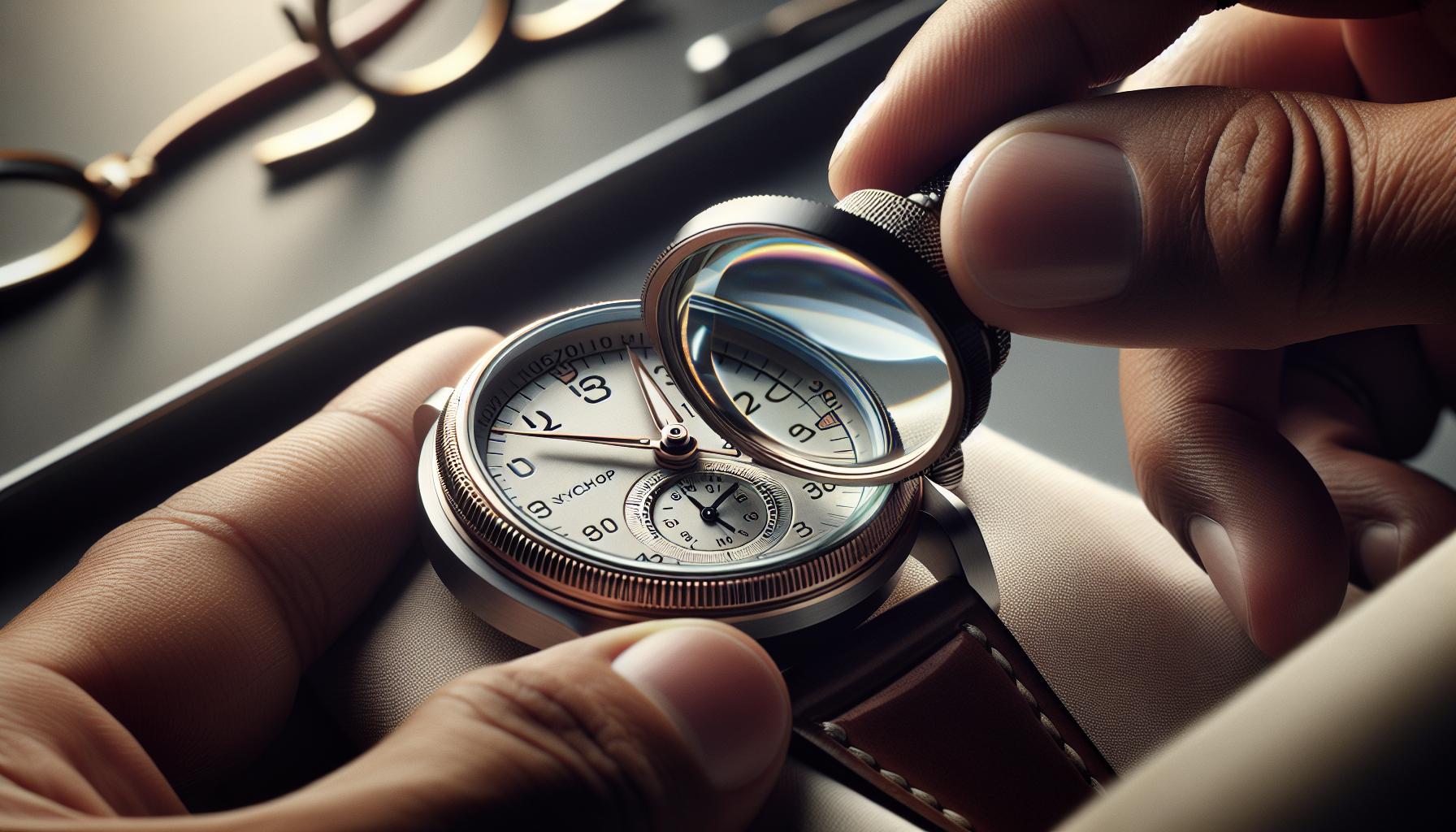
Adjusting the Cyclops Lens for Optimal Date Visibility
Few details define the visual identity of the Rolex Datejust quite like its signature Cyclops lens-a small,bubble-like magnifier that sits over the date window. This iconic feature isn’t just eye candy; it enhances date legibility by magnifying the date display approximately 2.5 times, making it easier to read at a glance. However, because the Cyclops is a fixed part of the sapphire crystal, achieving the optimal date visibility is less about physically adjusting the lens and more about properly positioning the date itself during setting.
The key to clarity lies in making sure the date numeral aligns perfectly under the center of the Cyclops. On the ladies’ Datejust with calibre 2235, use the quickset date feature to advance the date incrementally without moving the hour hand excessively. This precise control helps position the date so it sits squarely beneath the magnifier, preventing partial cutoffs or skewed numbers that can strain the eyes over time.Be patient as you set the date-gently advance and pause if necessary-as rushing frequently enough leads to the date appearing slightly off-center.
If you find the date still isn’t as sharp or visible as it should be, consider the angle and lighting when viewing your watch. The Cyclops lens is designed to reduce glare and distortions, but harsh overhead light can sometimes create reflections. slightly tilting your wrist or shifting the watch to softer lighting conditions often drastically improves legibility without requiring any mechanical intervention.
- Ensure the watch isn’t showing a partially changed date: Adjust the time past 3:00 AM to avoid catching the date change mechanism mid-flip, which can misalign the date window under the Cyclops.
- Clean the crystal regularly: Fingerprints or dust can blur the magnifier’s effect and reduce date visibility significantly. Use a soft microfiber cloth gently.
- Be mindful during winding and setting: Aggressive or rapid crown movements may not allow precise date positioning under the lens.
While some mechanical watches offer adjustable loupe lenses, Rolex does not provide user-accessible adjustments for the Cyclops-this is by design, maintaining both water resistance and crystal integrity. If misalignment persists even after careful setting, it’s usually time to consult a certified Rolex service center rather than attempting DIY fixes. Their expert technicians can verify the crystal’s placement and confirm the lens’s correct alignment within factory tolerances.
The subtle art of marrying the mechanical date change to the Cyclops lens’s magnification might seem like a small detail, but as any passionate collector knows, it’s these fine touches that elevate the Datejust from a mere timekeeper to a joy to wear every day. Sharpening your focus on such nuances combines mechanical respect with practical elegance, letting you experience the watch at its best-not just for casual reading, but as a festivity of precise design and handcrafted horology.
How to Care for Your Datejust While Setting it
A finely crafted Rolex Datejust is a marvel of precision engineering, and treating it with care during the setting process will help preserve that integrity and ensure many years of reliable performance. Although the caliber 2235 automatic movement inside ladies’ Datejust models is designed for durability and accuracy, it still benefits from a delicate touch-especially when handling the crown and adjusting the date or time.
When setting your Datejust, resist the urge to rush. The quickset date function is a joy for convenience but demands patience. Fast or aggressive crown turns can strain the date-change mechanism and risk mechanical wear. instead, gently pull the crown to the correct setting position and use deliberate, measured rotations. This helps the gears inside the movement engage smoothly and minimizes the chance of “jumping” past the intended date. Setting the time or date during times when the watch’s mechanism is actively changing the date,generally between 8:00 PM and 3:00 AM,can damage the date wheel-so always set outside this “danger zone.”
- Handle the crown with clean, dry hands: oils or moisture can degrade seals over time, risking water resistance.
- Wind the watch before setting time or date: For automatic movements, a few gentle clockwise winds while the crown is in position one ensure the mainspring is charged and the movement runs smoothly during adjustments.
- Avoid forcing the crown: If you meet resistance, pause and re-check the setting position. Forcing the crown may damage delicate internal components.
keeping the exterior in pristine condition while operating your Datejust is equally important. The sapphire crystal with its Cyclops lens is scratch-resistant but not scratch-proof, and fingerprints or smudges on the crystal can interfere with visibility-especially around the date window. Wiping the crystal with a clean, soft microfiber cloth before and after setting makes a noticeable difference for a clear view and enriches the joy of interaction with your watch.
If you wear your Datejust daily, small habits help maintain performance. For example, avoid setting or winding the watch when your wrist is sweaty or dirty, as grit or oils may enter the crown assembly despite Rolex’s excellent sealing. If your lifestyle involves exposure to dust, sand, or moisture, plan settings indoors in a clean surroundings for added protection.
Because the Datejust combines intricate mechanics with robust build quality, investing a little extra mindfulness during date and time adjustments upholds the synergy of form and function. Like tuning a fine instrument,caring for your watch while setting it fosters a rewarding relationship where every glance reflects a timepiece treated with respect. And as a watch lover familiar with both high-end and everyday pieces, you’ll appreciate these simple care tips just as much for a $150 Tissot automatic as your precious Datejust.
Summary of Best Practices for Care While Setting
| Action | Reason |
|---|---|
| Set time/date outside 8 PM-3 AM | Protects date-change mechanism from damage |
| Use gentle, deliberate crown turns | Ensures smooth gear engagement and reduces wear |
| Keep hands clean and dry | Preserves water resistance and crown seals |
| Wipe crystal regularly | Improves legibility and maintains aesthetic |
| Avoid forcing crown or rushing | Prevents mechanical damage and misalignment |
Taking these straightforward precautions transforms the simple act of setting your ladies Rolex Datejust into a small ritual of horological appreciation-celebrating both its sophisticated mechanical heart and timeless elegance.
Troubleshooting Date and Time sync Issues
A well-synchronized date and time are vital to the functionality and enjoyment of your ladies Rolex Datejust. Though, even with Rolex’s renowned precision engineering-here, featuring the caliber 2235 automatic movement-occasional misalignments between the displayed date and time can occur. These sync issues might manifest as the date not changing exactly at midnight, the date “jumping” inconsistently, or the time lagging behind. Understanding the underlying mechanics and common pitfalls can save you unnecessary trips to a watchmaker and keep your Datejust performing beautifully.
Often, timing discrepancies stem from attempts to adjust the date during the watch’s ”danger zone” – typically between 8 PM and 3 AM when the date-change gears are engaged. Interfering with the movement during this period can cause the date wheel and hour hand to fall out of sync, leading to early or delayed date changes. If you notice your Datejust switching dates at odd hours, the fix usually involves manually advancing the time past the 3 AM threshold and then resetting the date carefully.Another frequent cause of date-time misalignment is rushing the crown operation. the quickset date mechanism is designed for ease but is delicate. Overzealous crown twisting or forcing settings against natural resistance can damage the date-change jumper or cause the date wheel to ”skip.” To troubleshoot, gently pull the crown to the date-setting position and increment dates slowly, watching for smooth gear engagement.If resistance occurs, retract the crown and try again rather than forcing it-this respect for the movement preserves long-term reliability.
Mechanical watches sometimes experience a slight lag or mismatch due to natural wear or lubrication drying out inside the movement.In these cases,regular servicing every 5-7 years by a certified Rolex technician helps maintain the timing synchronization and ensures the automatic winding system fully charges the mainspring. Simultaneously occurring, daily habits like keeping the crown tightly screwed down and avoiding setting the watch while worn (which twists the crown awkwardly) can prevent premature misalignment.
Quick Diagnostics and Tips for Date-Time Sync Issues
| Issue | Possible Cause | Recommended Action |
|---|---|---|
| Date changes too early or too late | Setting date during 8 PM-3 AM period | Advance time past 3 AM, reset date outside danger zone |
| Date “skips” multiple days when adjusting | Forcing crown or rapid crown turns | Use slow, deliberate crown rotations; do not force resistance |
| Time lags behind reference clock | Mainspring tension low; lubrication issues | wind watch before setting, schedule professional service |
| Date does not align with hour hand at midnight | Misalignment from prior improper setting | Reset both time and date carefully; consider technician if persists |
Ultimately, treating your Datejust’s date and time setting as a gentle, precise art rather than a rushed task ensures that you maintain the hallmark Rolex balance of form and function. The joy of owning a mechanical watch-from accessible $150 tissots to $50K luxury pieces like Rolex-comes from nurturing this delicate mechanical symphony. With patience and mindful handling, your ladies Datejust will reward you with flawless sync and timeless elegance for years to come.
Comparing Date Adjustment on Different Datejust Generations
Rolex’s Datejust line, including the ladies’ models, offers a captivating window into how watchmaking innovations evolve over time-especially in the realm of date adjustment mechanisms. Each generation of the datejust reflects subtle but meaningful engineering refinements that impact how users interact with the watch’s calendar function. Whether you have a vintage lady’s Datejust from the 1970s or a modern reference powered by the caliber 2235 or 2236, knowing the differences in date adjustment can deepen your appreciation and prevent common setting mishaps.
Earlier Datejust generations typically rely on a “non-quickset” or semi-quickset mechanism, especially in models before the mid-1980s. in these, changing the date requires continuously rotating the hour hand through 24-hour cycles, which means advancing the time repeatedly around the dial to inch the date forward.While this method is entirely reliable, it’s inherently slower and demands patience to avoid damaging the delicate gears during adjustment.many collectors cherish this tactile interaction-it’s mechanical intimacy that connects wearer and watch, but it also means more room for frustration if rushed.
The breakthrough came with the introduction of the “quickset” date feature in later Datejust calibers-such as the 2235 automatic movement prevalent in ladies’ models from the 1990s onward. This innovation lets you pull the crown out to the date-setting position and change the date independently of the hour hand by rotating the crown either forward or backward. it’s a huge convenience for daily wear, reducing crown manipulations and minimizing strain on the movement.The quickset mechanism carefully engages discreet levers in the movement that shift the date wheel in one-day increments smoothly and with precise alignment.
Not all quickset mechanisms are created equal.Rolex refined the system further by designing what enthusiasts sometimes call a “jumping date” or “instantaneous date” feature,where the date snaps exactly at midnight rather than gradually over an hour. This improvement debuted in more recent Datejust calibers such as the caliber 3235 (more common in men’s watches but influencing newer ladies’ models) and ensures that the date reliably flips at the right hour without ambiguity.It’s a technical detail that speaks to Rolex’s philosophy of combining effortless usability with mechanical artistry.
Practical Tips Across Generations
- Vintage or non-quickset Datejust: Plan to adjust date only by advancing the time and avoid setting the date during the ”danger zone” (roughly 8 PM to 3 AM) when the date-change gears are engaged. Be patient and make slow 24-hour increments.
- Quickset enabled models (caliber 2235 and similar): Use the crown’s intermediate position to spin through dates directly.Always advance dates forward if unsure, and avoid forcing the crown if resistance is noticed.
- Instantaneous date flip mechanisms: These models demand precise syncing between date and hour hand. If your date changes prematurely or late, try cycling past 3 AM and then resetting both date and time carefully.
| Generation | Date Adjustment Type | Movement Examples | Key User Considerations |
|---|---|---|---|
| Early/Vintage Datejust | Non-quickset (time advancing to change date) | Caliber 2035, earlier ETA-based movements | Slower date advance; no direct date setting; avoid danger zone |
| Modern Datejust (Since 1980s-90s) | Quickset date (direct crown date setting) | Caliber 2235 (Ladies), 3135 (Men’s) | Convenient date change; gentle, no forcing crown; avoid danger zone |
| latest Datejust Generations | Instantaneous jumping date | Caliber 3235, 2236 (Ladies updated) | Precise midnight date change; synchronize date and time carefully |
Understanding these distinctions arms you with the confidence to set your lady’s Datejust correctly, regardless of its vintage or sophistication level.It also encourages respect for the mechanical nuance behind a feature many take for granted-the humble date window. That blend of timeless craft and thoughtful innovation is exactly what makes Rolex Datejust watches such rewarding companions for daily wear. Whether you cherish the rhythmic sweep of a vintage movement or marvel at the quiet precision of the latest caliber, setting your Datejust’s date becomes a ritual that connects you to horological history and ongoing excellence.
Tips for Maintaining Accuracy and Longevity
A Rolex Datejust, especially the women’s model with its refined automatic movement-like the caliber 2235 or the updated 2236-is a marvel of precision engineering. Yet, like any finely tuned mechanical watch, maintaining its accuracy and longevity requires a bit of thoughtful care beyond just setting the right time. Keeping your Datejust running smoothly is about balancing respect for its mechanical artistry with everyday practicalities.
First off, regular servicing cannot be overstated. Rolex recommends a full service approximately every 10 years,but if you wear your Datejust daily or expose it to more strenuous conditions-like frequent swimming or dusty environments-it’s worth considering a check-up sooner. think of servicing like a tune-up for a classic car: lubricants dry out, seals age, and tiny debris can affect the movement’s choreography. A certified Rolex technician will clean,oil,and replace worn parts,preserving that silky-smooth crown feel and crisp date changes you expect.
In daily wear, don’t underestimate the power of gentle handling during setting. The quickset date function is designed for convenience, but forcing the crown or setting the date during the “danger zone” (roughly 8 PM to 3 AM) when the date-change mechanism is engaged can strain delicate gears-potentially leading to misalignment or costly repairs.If unsure, always advance the time forward slowly, and avoid backward winding on non-quickset models to prevent wear. this patience pays dividends in preserving both your watch’s mechanical harmony and your peace of mind.Magnetism is another silent adversary to accuracy. Even though Rolex cases offer strong protection, modern electronics, smartphones, and magnetic clasps can slightly magnetize the movement’s hairspring, leading to erratic timekeeping. If your Datejust gains or loses time noticeably, a watchmaker can demagnetize the movement quickly.To minimize this risk, simply be mindful about placing your watch near powerful magnets or electronic devices routinely.
Simple Daily Rituals to extend performance
- Winding Routine: If you don’t wear your Datejust every day, wind it manually once a week. This action keeps oils distributed evenly inside the movement and prevents lubricants from settling.
- Cleaning: Wipe your watch softly with a microfiber cloth after wear to remove sweat and dust. Periodic gentle rinsing with fresh water is excellent for water-resistant models,especially after exposure to saltwater or chlorine.
- Storage: Store your watch in a temperature-stable environment away from direct sunlight to prevent dial fading and lubricant degradation.
Balancing Beauty and Function for Timekeeping Longevity
Since many ladies’ Datejust models blend precious metals, diamonds, or delicate dials, care while setting is doubly important. Avoid banging the crown against hard surfaces or setting the time zones too hastily on dual-time models. Each mechanical movement is a tiny ecosystem of springs and gears; treating it respectfully ensures your Datejust retains not only its impeccable accuracy but also its timeless beauty.
Remember, the magic of an automatic movement lies in its ability to keep ticking smoothly with natural wrist motion. Daily wear is often the best ‘service’ for your watch, keeping it energized and accurate. If you’re a collector with multiple pieces,consider a watch winder to keep those precious calibers running when not worn.Ultimately, combining mindful setting techniques with routine care creates a positive feedback loop-your Rolex remains a reliable daily companion and an heirloom to treasure for generations. In a world where electronics dominate,owning and caring for a mechanical watch is a celebration of craft,patience,and enduring value.
| Care Aspect | Recommended Action | benefits |
|---|---|---|
| Regular Servicing | Every 5-10 years by certified Rolex service center | Maintains movement precision and component health |
| Proper Date/Time Setting | Avoid changing date during 8 PM-3 AM | Prevents gear damage and misalignment |
| Winding & Wearing | Manual wind weekly if unworn; wear daily when possible | Keeps lubricants balanced and movement energized |
| Magnetism Avoidance | Keep away from strong magnets and electronics | Preserves timing accuracy |
| Cleaning & Storage | Clean regularly; store in shade and stable temperature | Protects dial, seals, and metal finish |
Using the Watch Safely: When Not to Set the Date
Few things underscore the delicate interplay inside a rolex Datejust’s automatic caliber quite like the process of setting the date. Despite being a marvel of precise, durable engineering, certain moments call for caution, especially when adjusting the date display. On ladies’ Datejust models-whether equipped with the caliber 2235 or the more recent 2236 automatic movement-setting the date when the watch is mid-transition can unintentionally stress internal components, risking misalignment or premature wear.
The core issue lies in the “danger zone” of the watch’s daily cycle, typically between 8 PM and 3 AM, when the date change mechanism engages. During these hours,the internal gears slowly begin their movement to flip the date disc at midnight. If you manually adjust the date by the crown during this interval, you run the risk of forcing gears that are already delicately meshing. Consequently, teeth on the date wheel or date jumper can bend or skip, leading to an inaccurate date change or a costly service visit. For many watch enthusiasts, preserving the integrity of this gear train means respecting such “off-limits” hours as a golden rule.
Why Timing Matters: The Mechanics Behind the Caution
Inside your Datejust lurks an automatic movement that’s both resilient and intricately balanced. The date function is a complication separate from the standard time setting gears. When the watch hands reach roughly 8 PM, tiny levers inside begin engaging the date disc, preparing for the sudden flip at midnight. If you turn the crown to change the date during this preparatory phase, you effectively force two sets of gears against each other.
Here are a few practical tips to keep this safe:
- Check the current time: If it falls between 8 PM and 3 AM, avoid setting the date directly.Instead, move the time forward past 3 AM first before adjusting the date.
- Use the quickset date feature properly: This allows changing the date independently only outside the danger zone, minimizing wear on the crown and gears.
- Advance the time forward: Never wind backward during date change-this can stress the mechanism unnecessarily.
This approach isn’t just theoretical; many seasoned collectors and watchmakers alike treat this timeline as fundamental horological etiquette. It’s one of those small respects that keeps the automatic movement running smoothly decade after decade.
Real-World Example: How Casual Setting Can Backfire
Imagine setting your Datejust’s date after a long day-checking the time at 10:30 PM and instantly trying to adjust the date to the next day. You feel a slight resistance on the crown but push through, only to notice the date doesn’t click over correctly at midnight. What’s happened is subtle internal damage to the date jumper, which is now misaligned. Repairing this requires delicate disassembly and replacement of parts, which on a high-end caliber like the 2236 is costly and time-consuming.
On the other hand, by simply moving the hands forward to 4 AM before adjusting the date, you avoid this risk entirely. Most mechanical watches-Rolex included-appreciate this gentle care,translating into smoother operation and fewer service headaches.
Summary of Key Safety Practices
| Action | recommended Approach | benefit |
|---|---|---|
| Setting Date between 8 PM-3 AM | Avoid; first move time past 3 AM | Prevents internal gear stress and damage |
| Using Quickset Date | Use only outside danger zone hours | Maintains crown and mechanism longevity |
| Direction of Hour Hand Movement | Always move forward when setting time | Reduces gear wear and keeps movement synchronized |
| Force on Crown | Never force if resistance felt | Protects delicate components and crown stem |
By mastering these simple,mindful habits,you honor the craftsmanship inside your Datejust’s case. Not only does this protect its precise Rolex-engineered automatic movement, but it also ensures your daily ritual of wearing and setting your watch remains a pleasure, not a worry. Whether you cherish the sparkling elegance of a ladies’ Datejust or appreciate the technical marvel beneath, treating your watch with this care is a direct investment in its mechanical harmony and longevity.
Customizing Datejust Settings for Daily Wear Preferences
The beauty of a Rolex Datejust extends beyond its iconic aesthetics and legendary automatic movement-it’s a watch designed to seamlessly fit into your daily life,adapting to your style and schedule with intuitive customization options. While the core functions like time and date are universal, how you configure these settings can profoundly enhance both wearability and your personal connection with the watch. Whether you’re a casual wearer, a busy professional, or a weekend adventurer, fine-tuning your Datejust’s settings ensures it works harmoniously with your lifestyle every day.
Personalizing the Date Change Experience
The quickset date function on ladies’ Datejust models (calibers 2235 or 2236) is a fantastic convenience, but how and when you use it can be optimized to your routine. For instance, if you wear your Datejust daily but remove it overnight, consider setting the date the evening before, ideally outside the 8 PM to 3 AM “danger zone.” this small habit preserves movement integrity and avoids unnecessary wear. On the flip side, if you’re a weekend wearer who keeps the Datejust off-wrist for days, using the time-setting mode to advance both time and date together can reset the watch quickly and gently, reducing crown manipulations.
adjusting for Time Zone Travel
One of the often-underappreciated features of the Datejust’s movement is its ease in handling multiple time zones through straightforward time adjustments. When traveling, rather than obsessively resetting both time and date separately, leverage the hour hand’s self-reliant quickset feature: just advance local time by the hour without disturbing the minutes or seconds.this is ideal for busy travelers who want their watch accurately synced without the hassle. Remember, always move hands forward, never backward, to avoid gear strain, especially during date transitions. This little practice keeps the Rolex caliber running smoothly miles after miles.
Refining Comfort and Visibility for Every Day
Beyond mechanical adjustments, customizing your Datejust means ensuring it fits and reads effortlessly throughout the day. many ladies’ models come with different bracelet options-Oyster, Jubilee, or President-that balance elegance and comfort. Adjusting the bracelet length precisely, whether via removable links or micro-adjustments on the clasp, is a subtle but game-changing tweak. Likewise, some Datejust wearers opt to customize the position of the Cyclops lens to align perfectly with their dominant eye and reading preferences, enhancing date visibility without glare or distortion. These small ergonomic considerations make wearing the Datejust a consistently enjoyable part of your routine.
- Optimize your winding habit: wind your watch gently when off the wrist to maintain power reserve tailored to your wear schedule.
- Set AM/PM carefully: Confirm the date flips at midnight, not noon, by cycling the hands through 24 hours before settling your time.
- Regularly clean and inspect: Keep the crown threading free from dust or debris for smooth operation especially when customizing settings frequently.
By embracing these practical personalizations, your ladies’ Rolex Datejust transcends mere timekeeping-becoming a bespoke companion crafted for your unique rhythm and style. These customization habits not only elevate the daily wear experience but also honor Rolex’s engineering marvel beneath the surface, preserving its precision and charm for years to come.
Faq
Q: How often should I reset the date on my Ladies Rolex Datejust to keep it accurate?
A: You should reset the date on your Ladies Rolex Datejust only when the watch is not running or after it stops, typically every couple of days if unused. Regular wear keeps the automatic movement powered and date accurate. avoid resetting the date between 8 PM and 4 AM to prevent mechanism damage, as detailed in the main guide’s safety tips section.
Q: Why does my Ladies Rolex datejust date change at different times during the night?
A: The date on a Rolex Datejust shifts gradually over a few hours around midnight due to its automatic movement’s caliber design. This slow change prevents damage from quick jumps. For precise time syncing, refer to your watch’s movement explanation and avoid setting the date during this transition period.
Q: can the Ladies Rolex Datejust’s date be set backward, and is it safe to do so?
A: It’s generally not recommended to set the date backward on a Ladies Rolex Datejust as it may damage the date mechanism. Always set the date forward using the crown to maintain the durability and reliability of the in-house automatic movement. More adjustment tips are in the troubleshooting and care sections.
Q: How do time zone changes affect setting the Ladies Rolex Datejust date and time?
A: When crossing time zones, adjust the hour hand independently without stopping the watch to maintain date accuracy. Use the “Quickset” feature for the date if available. This preserves the automatic movement’s precision,discussed in the article’s section about customization for daily wear.
Q: What is the difference between setting the date on older versus newer Ladies Rolex Datejust models?
A: Newer Datejust models frequently enough include a “Quickset” date feature, allowing faster date adjustment without moving the hour hand past midnight, unlike older models.comparing these methods can help avoid common mistakes outlined in the main article’s comparison section.
Q: How do I protect my Ladies Rolex Datejust from water damage while setting the date and time?
A: Ensure the screw-down crown is fully secured before and after setting the date/time to maintain water resistance. Avoid setting the watch underwater or in humid environments. This care advice is key to longevity and is covered comprehensively in the watch care section.
Q: What should I do if my Ladies Rolex Datejust date won’t advance correctly after setting?
A: If the date doesn’t advance, first ensure you’re not setting it during the prohibited 8 PM-4 AM interval. If issues persist, gently wind the automatic movement manually and reattempt date setting. Persistent problems may require professional servicing, as outlined in the troubleshooting section.
Q: Are there special precautions for setting the date on a ladies Rolesor Datejust (steel and gold) model?
A: When setting the date on a Rolesor (steel and gold) Ladies Datejust, handle the crown gently to protect mixed-material components and avoid excess pressure on the bezel. Regular maintenance ensures both finish and movement longevity, discussed further in the durability and care segments.
—
For detailed step-by-step instructions, see the full setup guide section and explore tips on maintaining your Rolex for reliable daily wear and accuracy.
The Way Forward
Mastering the setting of your Ladies Rolex Datejust unlocks the full charm of this iconic automatic timepiece, known for its precision caliber and elegant design that holds value remarkably well. Whether adjusting the date complication or fine-tuning the time,this guide empowers you to seamlessly engage with your watch’s in-house movement-ensuring your Datejust performs flawlessly every day. Don’t let hesitation hold you back; now’s the perfect moment to experience firsthand the blend of craftsmanship and functionality Rolex delivers in this classic women’s model.
For deeper insights, explore our detailed reviews on Rolex calibers and comparisons with other luxury models to enhance your horology journey. Check out our practical tips on watch maintenance and how to choose the ideal bracelet options to complement your Datejust.Ready to elevate your collection? Subscribe to our newsletter for exclusive updates and expert advice, or visit our product page for curated Rolex selections designed with both style and precision in mind. Share your thoughts or questions below-we love hearing from fellow enthusiasts. Stay curious, keep exploring, and celebrate the art of mechanical watchmaking with confidence and passion.


