The Ultimate Guide to the “Tudor Explorer”: Ranger, Black Bay Pro, and Rolex Alternatives
When watch enthusiasts search for a Tudor Explorer, they are often surprised to learn that Tudor—the revered Rolex sister brand under the Hans Wilsdorf Foundation—doesn’t actually produce a watch officially named the “Explorer”. However, Tudor’s impressive catalog features several luxury sports watches that capture the exact same rugged, go-anywhere spirit. From the vintage-inspired Tudor Ranger to the highly capable Tudor Black Bay Pro, you can easily find the perfect Rolex Explorer alternative that serves as a robust everyday timepiece without the Rolex price tag.
The allure of the classic Explorer lies in its simplicity: a highly legible, durable, no-date three-hander (or a robust GMT) that can seamlessly transition from a harsh alpine environment to a formal office setting. While Rolex has steadily moved its iconic Explorer references further up the luxury ladder—incorporating white gold surrounds and polished center links in some variations—Tudor has proudly preserved the pure, utilitarian essence of the classic expedition watch.
Contents
- Is There an Official Tudor Explorer?
- Tudor Ranger: The Closest Alternative to the Rolex Explorer
- Tudor Black Bay 36: A Classic No-Date Everyday Watch
- Tudor Black Bay Pro: The Explorer II Rival
- Rolex Explorer vs. Tudor Ranger: Which Is Right for You?
- Why Tudor Is the Best Brand for Expedition Watches
- Conclusion: Embracing the Tudor Explorer Aesthetic
- Frequently Asked Questions
Is There an Official Tudor Explorer?
To put it directly: no, you will not find the word “Explorer” printed on any modern or vintage Tudor dial. Because Tudor operates as a Rolex sister brand—originally established by Hans Wilsdorf in 1926 to offer the legendary reliability of Rolex at a more accessible price point—the brand purposely avoids using Rolex’s trademarked model names such as Submariner (in the modern era), Daytona, or Explorer.
However, this naming convention does not mean that Tudor ignores the concept of an expedition watch. Quite the opposite. What the watch community fondly refers to as the “Tudor Explorer” is actually a broad category of highly legible, stainless steel, no-nonsense luxury sports watches built for adventure.
The Rolex Explorer formula is remarkably strict: a black dial, exceptional luminescence, a smooth steel bezel, and superior shock and water resistance. Tudor has internalized this formula and applied it to several models in its collection. Instead of producing an exact 1:1 carbon copy, Tudor utilizes its rich mid-century archives to create watches that fulfill the Explorer brief while maintaining distinct Tudor design language, such as snowflake hands, spade hour hands, and matte finishes.
Tudor Ranger: The Closest Alternative to the Rolex Explorer
If you are searching for the truest Rolex Explorer alternative within the Tudor lineup, the Tudor Ranger is undeniably the definitive answer. Relaunched to celebrate the 70th anniversary of the British North Greenland Expedition, the modern Ranger (reference M79950) is a masterclass in vintage-inspired utilitarianism and purpose-driven design.
Featuring a 39mm case crafted from 316L stainless steel with an almost entirely brushed finish, the Tudor Ranger completely embodies the spirit of a Tudor field watch. The matte black dial is highly textured, designed to absorb light rather than reflect it, ensuring maximum legibility under harsh glare. It features painted luminous Arabic numerals at the 3, 6, 9, and 12 positions—a dial layout that instantly brings the beloved, vintage Rolex Explorer reference 1016 to mind.
The handset of the Ranger is also historically significant. It uses Tudor’s signature arrow-shaped “spade” hour hand and a syringe-style minute hand, paired with a burgundy-tipped seconds hand that adds a subtle, welcomed splash of color to an otherwise monochromatic dial.
Beneath the dial beats the ultra-reliable, COSC-certified Manufacture Calibre MT5402 movement. Offering a weekend-proof 70-hour power reserve and utilizing a non-magnetic silicon balance spring, it is an absolute workhorse. Perhaps the most celebrated feature of the modern Ranger is its fully brushed, three-link Oyster-style bracelet equipped with Tudor’s proprietary “T-Fit” clasp. This mechanism allows for up to 8mm of rapid, tool-free micro-adjustments on the fly—an essential feature for an active lifestyle where wrist swelling during hikes or varying climates is common.
Tudor Black Bay 36: A Classic No-Date Everyday Watch
For those who want something slightly more refined than a pure Tudor field watch but still crave that iconic “Explorer” form factor, the Tudor Black Bay 36 (and its larger 39mm and 41mm siblings) is a spectacular choice. The Black Bay 36 leans heavily into the everyday timepiece and luxury sports watch territory while maintaining the robust water resistance and durability that the brand is known for.
Unlike the Ranger’s heavily brushed case and printed numerals, the Tudor Black Bay 36 introduces a touch of elegance. It features a polished smooth bezel and applied dot and baton indices filled with generous amounts of Super-LumiNova. Naturally, it utilizes Tudor’s iconic snowflake hands, anchoring it firmly within the Black Bay family.
Recent iterations of the Black Bay 36 line have seen significant upgrades, moving from third-party ETA/Sellita movements to Tudor’s own COSC-certified manufacture calibers. Additionally, these models are now frequently offered on a sophisticated five-link (Jubilee-style) bracelet, complete with the T-Fit clasp. This gives the Black Bay 36 a distinctly dressier edge, making it an incredibly versatile Rolex Explorer alternative for those who want a watch that transitions effortlessly from exploring a mountain trail to attending a boardroom meeting.
Tudor Black Bay Pro: The Explorer II Rival
What if you are searching for an alternative to the Rolex Explorer II rather than the time-only Explorer? Enter the Tudor Black Bay Pro. Released to universal acclaim, this watch is Tudor’s modern answer to the spelunker’s and mountaineer’s toolkit. It shares distinct, undeniable visual DNA with the legendary Rolex Explorer II Reference 1655 “Freccione” from the 1970s.
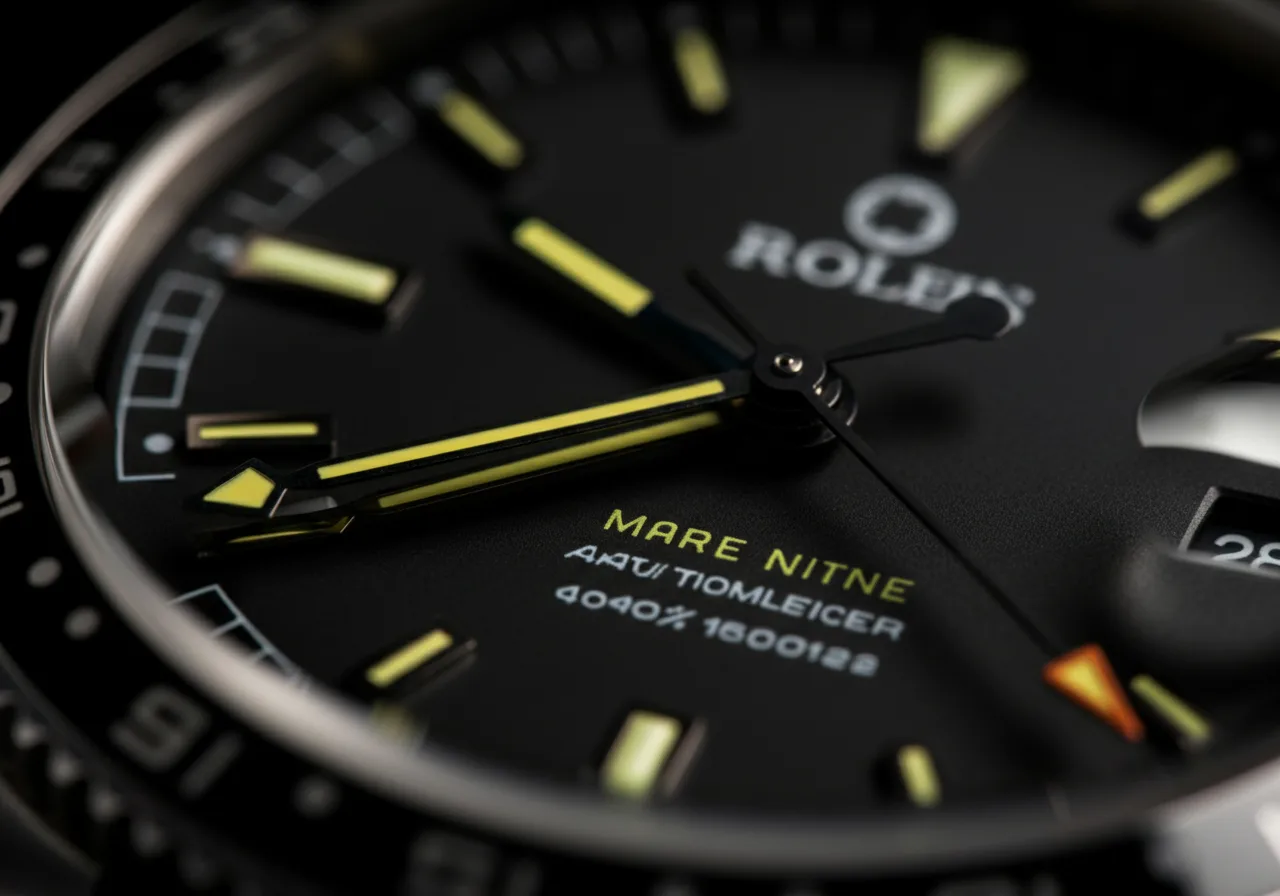
The Tudor Black Bay Pro is a formidable 39mm Tudor GMT that features a fixed 24-hour brushed steel bezel and a bright yellow “snowflake” GMT hand. The matte black, gently domed dial is a masterclass in functional design. One of its most innovative features is the use of monobloc ceramic luminous hour markers. Instead of applying metal surrounds filled with lume, the markers themselves are fully molded blocks of luminescent ceramic, guaranteeing maximum three-dimensional legibility deep inside a cave or high on a mountain peak.
As a true expedition watch, it houses the MT5652 manufacture movement with a 70-hour power reserve and true “flyer” GMT functionality. A flyer GMT allows the wearer to independently jump the local hour hand forward or backward in one-hour increments without stopping the watch or affecting the minutes and seconds. This makes it the ultimate travel companion for crossing time zones.
While some critics note the Black Bay Pro’s case thickness (sitting at roughly 14.6mm), many enthusiasts argue that this heft only adds to its rugged, tool-watch charm. It sits on the wrist with authority, feeling like a piece of equipment rather than delicate jewelry.
| Model | Best For… | Rolex Equivalent |
|---|---|---|
| Tudor Ranger | Utilitarian field watch aesthetic with printed 3-6-9-12 dial | Rolex Explorer 36mm / 40mm |
| Tudor Black Bay Pro | Tracking multiple time zones, rugged exploration, vintage aesthetics | Rolex Explorer II (Ref. 1655 / Ref. 226570) |
| Tudor Black Bay 36/39/41 | Refined, elegant GADA (Go Anywhere, Do Anything) daily wear | Rolex Explorer / Oyster Perpetual |
Rolex Explorer vs. Tudor Ranger: Which Is Right for You?
When pitting the Rolex Explorer directly against the Tudor Ranger, you are comparing two timepieces born from the Hans Wilsdorf Foundation with shared historical DNA but vastly different modern philosophies.
The Rolex Explorer has undoubtedly shifted upmarket over the years. With its white gold applied indices, glossy dial elements, and proprietary 904L Oystersteel that yields an incredibly bright polish, it straddles the delicate line between an uncompromising tool watch and high-end luxury jewelry. It is powered by Rolex’s Superlative Chronometer movement, boasting an accuracy of -2/+2 seconds per day. However, its price tag (often higher on the grey market than at retail due to demand) makes many owners hesitant to subject it to actual exploring, hiking, or climbing.
The Tudor Ranger, conversely, remains fiercely dedicated to the pure Tudor field watch philosophy. It uses standard 316L stainless steel with an almost entirely brushed finish, painted luminous indices, and lacks the flashy, reflective surfaces of the Rolex. It is an everyday timepiece that practically begs to be worn hard, scratched, and scuffed. At a fraction of the cost of the Rolex, it provides peace of mind. You don’t have to baby the Ranger; it is built to take a beating.
Why Tudor Is the Best Brand for Expedition Watches
Tudor’s legitimacy in the realm of exploration isn’t merely clever marketing fluff designed to sell watches. The brand has a documented, storied history of outfitting major scientific and military expeditions.
In 1952, the British North Greenland Expedition (BNGE), led by Commander C.J.W. Simpson, set out to study the ice caps of Greenland. The crew was equipped with the newly released Tudor Oyster Prince models. Over two years, these watches were subjected to brutally cold temperatures, blizzards, and the intense vibrations of tracked vehicles. They survived the ordeal flawlessly, proving to the world that Tudor could produce a watch as tough as any Rolex. This heritage is what directly inspired the modern Tudor Ranger and cements Tudor’s status as a creator of genuine, proven expedition watch gear.
Furthermore, Tudor’s modern manufacturing techniques have leveled up considerably. By integrating silicon balance springs to resist magnetism, offering COSC (and increasingly stringent METAS Master Chronometer) certification, and providing robust power reserves across their manufacture calibers, Tudor equips the modern explorer with a luxury sports watch that operates flawlessly in harsh environments.
Conclusion: Embracing the Tudor Explorer Aesthetic
While you cannot walk into an authorized dealer and ask for a “Tudor Explorer” by name, the Rolex sister brand offers incredible, highly capable options that fulfill the exact same horological brief. Tudor has successfully carved out its own identity while honoring the tool-watch legacy established by Hans Wilsdorf.
Whether you prefer the vintage, matte-dial charm and 3-6-9 layout of the Tudor Ranger, the cavern-exploring GMT functionality and robust bezel of the Tudor Black Bay Pro, or the polished versatility and refined elegance of the Tudor Black Bay 36, you are securing an impeccably built everyday timepiece.
These models aren’t merely Rolex Explorer alternatives designed to appease those on a waitlist. They are outstanding, historically significant luxury sports watches in their own right, proudly continuing Tudor’s legacy of crafting reliable tools for those who dare to explore.
Frequently Asked Questions
Does Tudor make an Explorer model?
No, Tudor does not produce a watch officially named the “Explorer.” However, the Tudor Ranger and the Tudor Black Bay 36 are widely considered to be Tudor’s equivalent to the Rolex Explorer, while the Tudor Black Bay Pro serves as the direct equivalent to the Rolex Explorer II.
Is the Tudor Ranger a good alternative to the Rolex Explorer?
Yes, the Tudor Ranger is an exceptional Rolex Explorer alternative. It features a highly legible 3-6-9-12 dial layout, a robust 39mm stainless steel case with a brushed finish, and a highly reliable chronometer-certified manufacture movement, all at a much more accessible price point than the Rolex.
What is the Tudor equivalent of the Rolex Explorer II?
The Tudor Black Bay Pro is the definitive equivalent to the Rolex Explorer II. It features a fixed 24-hour brushed stainless steel bezel, a matte black dial with monobloc ceramic indices, and a distinct yellow GMT hand to track a second time zone, making it a highly capable expedition watch.
Which Tudor is the best everyday timepiece?
For a refined everyday timepiece, the Tudor Black Bay 36 or 39 is often considered the best choice due to its elegant styling, applied indices, and high water resistance. However, if your daily life is highly active and you prefer a rugged, utilitarian finish, the Tudor Ranger is the ultimate luxury field watch.
Get our latest guides, news, and insights highlighted in your Google Search & AI Overviews.