
When Did the Rolex Datejust Come Out: Origin Story
The Rolex datejust, first introduced in 1945, revolutionized wristwatches by being the world’s first automatic chronometer wristwatch to display the date through a window on the dial.This innovation combined Rolex’s precision automatic movement with practical daily wearability, setting a new standard for luxury sports watches. Whether you’re a seasoned collector or a newcomer curious about why the Datejust remains a benchmark in horology, understanding its origin story reveals much about its lasting appeal and value. This article dives into how Rolex’s pioneering in-house calibers,signature Cyclops lens,and subtle design evolution shaped the Datejust into an icon that balances timeless elegance with mechanical ingenuity-offering both wearers and investors a watch built to last across generations. If you’re fascinated by how a watch blends craftsmanship, innovation, and style into one enduring package, read on to explore the Datejust’s compelling history and what makes it a staple in any serious collection.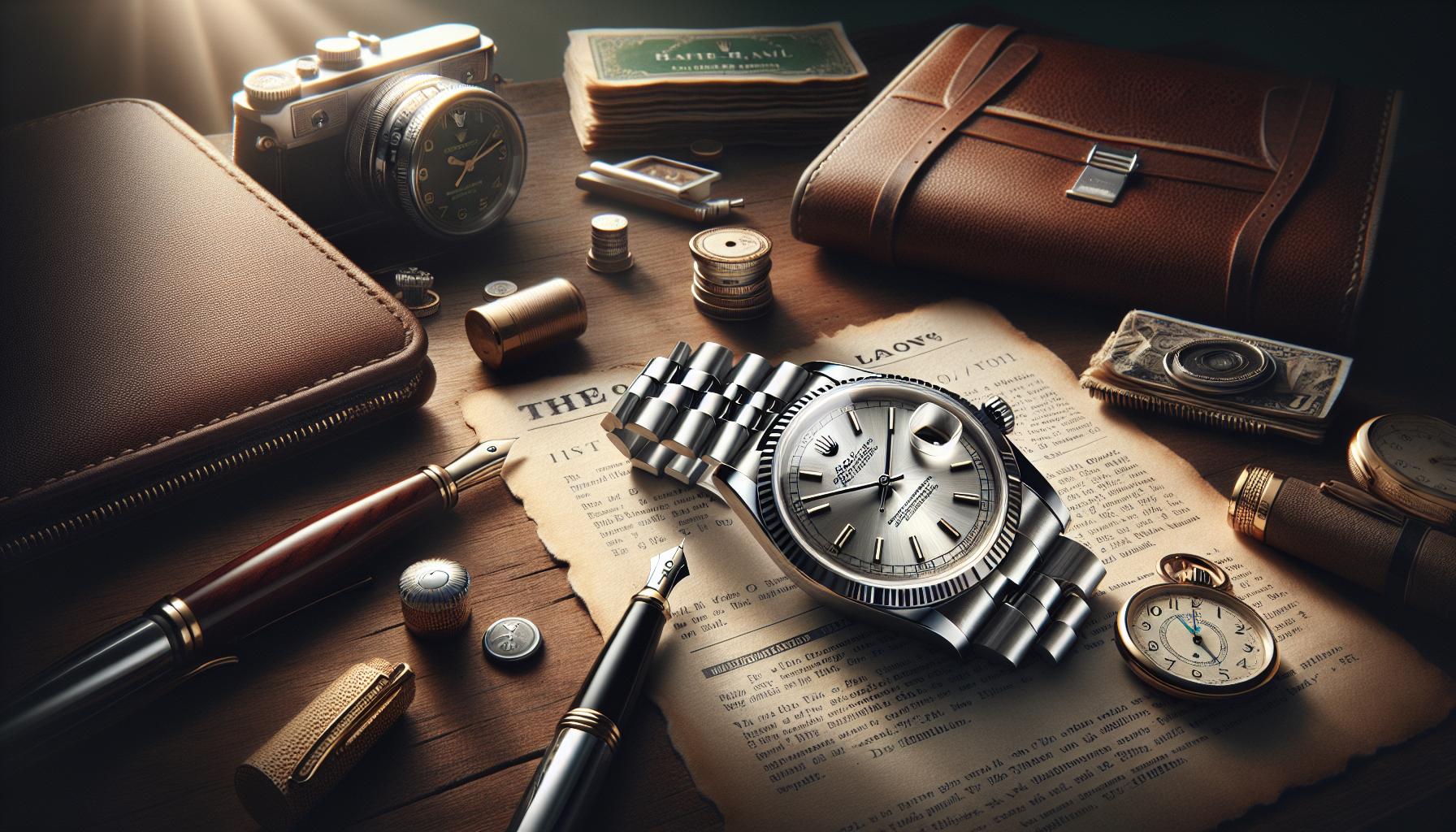
Contents
- The origin and launch of the Rolex Datejust: key milestones and historical context
- The innovative technical features of the first Datejust models
- evolution of the Datejust design: iconic aesthetics through the decades
- Exploring the groundbreaking calibers powering early Datejust watches
- The role of the Datejust in Rolex’s brand legacy and watch market impact
- How the Datejust set new standards for wristwatch date complication
- Comparing the original Datejust to contemporary models and competitors
- Collector’s insights: rarity, value appreciation, and investment potential
- Cultural significance and celebrity endorsements shaping Datejust popularity
- How to authenticate and identify vintage Datejust watches correctly
- Q&A
The origin and launch of the Rolex Datejust: key milestones and historical context
The Rolex Datejust burst onto the scene in 1945, marking a pivotal moment not only for Rolex but for the entire watchmaking world. This model was created to celebrate Rolex’s 40th anniversary, yet it stood apart with a groundbreaking feature that changed wristwatch design forever: it was the first self-winding wristwatch to incorporate a date window that instantly updated at midnight. This innovation addressed a practical need that watch lovers and daily wearers alike had long desired,blending elegant engineering with everyday usability.
At launch, the Datejust reference 4467 was offered exclusively in 18-karat yellow gold-a nod to luxury and refinement-paired with the newly introduced waterproof Oyster case, a hallmark of Rolex’s durability. Its instantly recognizable fluted bezel and the debut of the iconic Jubilee bracelet added elegance and comfort, making the watch effortlessly stand out. The ‘bubble back’ design with a deeply domed caseback accommodated the then-new automatic movement, reflecting the engineering commitments behind the watch’s reliability and ease of wear.
Key Milestones in the Early years
- [1945:[1945: Introduction of the Datejust, setting a new standard for automatic watches with date complication.
- 1953-54: Addition of the Cyclops lens-the magnifying bubble over the date window-dramatically enhancing legibility and becoming a Rolex signature.
- 1957: Movement update to the Caliber 1065 allowed for a slimmer, flatter case back, modernizing the watch’s profile.
- 1955: The Turn-o-Graph variant released, adding a rotatable bezel and military pedigree, further expanding the Datejust’s versatility.
These milestones highlight Rolex’s continuous dedication to refinement without sacrificing the model’s instantly recognizable classic design. The Datejust wasn’t just a watch; it was a trailblazer for integrating a useful complication that still felt elegant and unobtrusive.
Historical Context and Impact
The post-war era was a period ripe for innovation and optimism. people sought practical, reliable tools that also projected personal style and achievement. Rolex’s Datejust tapped into this zeitgeist perfectly. Its introduction coincided with a growing cultural emphasis on precision and reliability in a watch, pushing the automatics beyond just time-telling to become multifunctional companions. Furthermore, Rolex’s ability to combine technical innovation with aesthetic appeal ensured the Datejust’s enduring place in watch history and culture.
Collectors and enthusiasts looking to appreciate the Datejust’s origin story should note that its launch was as much a technical and functional evolution as it was a festivity of Rolex’s identity. The thoughtful blending of robustness and elegance made it accessible to a growing post-war audience, securing its appeal across generations.This balance between tradition and innovation is why the Datejust remains a foundational piece in luxury watchmaking even today [[1]](https://www.youtube.com/watch?v=ZuW79FfeTRw) [[2]](https://en.wikipedia.org/wiki/Rolex_Datejust).
The innovative technical features of the first Datejust models
Rolex’s inaugural Datejust was a landmark in watchmaking, not just for its elegant design but for the technical sophistication packed into what, on the surface, looked like a classic dress watch. At its core, the Datejust introduced an innovation that some might take for granted today-the first self-winding wristwatch featuring a date display that automatically flips at exactly midnight. This was a giant leap in both functionality and precision, achieved through Rolex’s pioneering automatic movement technology paired with novel date mechanism engineering.
The Datejust’s automatic (or self-winding) caliber was designed to harness the natural motion of the wearer’s wrist to wind the mainspring, eliminating the hassle of manual winding. this meant the watch could reliably keep time while also ensuring the date complication updated seamlessly without user intervention. Rolex’s early calibers, like the original Caliber 710 in the ref. 4467, integrated a robust, precise rotor system that wound continuously with natural wrist movement, a key factor in maintaining wristwatch accuracy and longevity.
Beyond the automatic winding and date function, Rolex engineered the Datejust with notable practical features that enhanced everyday usability:
- Waterproof Oyster case: The Datejust inherited Rolex’s Oyster case innovation, which provided a hermetically sealed environment protecting the movement from dust and moisture. This durability made the Datejust not just elegant, but reliably tough for daily wear.
- quickset date precursor: Although the first Datejust did not feature the quickset date function popularized later, its date wheel mechanism dramatically improved readability and convenience by instantly changing the date at midnight, setting a new mechanical benchmark.
- Domed acrylic crystal: Early models employed an acrylic crystal that enhanced shock resistance and gave the dial a distinct, warm visual depth rare in modern sapphires.
- “Bubble-Back” caseback: This thick, rounded caseback design housed the automatic movement’s enlarged rotor mechanism, a characteristic physical trademark of early self-winding Rolex watches.
Rolex’s integration of the date window at 3 o’clock, magnified with the Cyclops lens developed in the early 1950s, turned a simple calendar feature into a signature element enhancing legibility. This Cyclops lens increased the date’s size by around 2.5 times, an approachable horological detail that improved real-world utility.
While the complexity of synchronizing the date change precisely at midnight might sound simple today, it demanded careful and innovative engineering at the time. Rolex crafted a reliable and durable date change wheel that could withstand repeated cycles without failure-an essential step in solidifying the Datejust’s reputation for robust precision and timeless functionality.
Practical Takeaways for Collectors and Enthusiasts
Understanding these early technical features is crucial for anyone considering a vintage Datejust. The original calibers underscore Rolex’s commitment to blending mechanical ingenuity with daily practicality. When looking at vintage pieces, keep in mind that servicing these automatic movements to original factory standards is key to maintaining their hallmark smooth date transitions and timekeeping. Additionally, appreciating the initial lack of instant quickset reminds one of how watchmaking innovation is iterative-each mechanical leap builds on the last.Ultimately,the first Datejust models represent Rolex’s transitional mastery-bridging traditional watchmaking with user-centric complications. It was a watch designed not just to tell time, but to fit naturally into the rhythms of everyday life, forever embedding technical innovation in a classically styled timepiece that woudl become a benchmark for generations to come [[1]](https://www.rolex.com/en-us/watches/datejust) [[2]](https://www.youtube.com/watch?v=48HtDB1c-bc).
| Feature | Benefit | Rolex Innovation |
|---|---|---|
| Self-winding automatic caliber | Constant winding without manual effort | First Rolex automatic with date function |
| Date window with midnight change | Instant date update for accuracy | Pioneered automatic date-changing mechanism |
| Waterproof Oyster case | Protection from elements and durability | Hermetically sealed case technology |
| “Bubble-Back” caseback | Accommodated thicker automatic movement | Distinctive rounded profile for rotor space |
| Cyclops lens (post-launch) | Enhanced date legibility | magnified date window for ease of reading |
evolution of the Datejust design: iconic aesthetics through the decades
Few watches evoke the classic allure of the Datejust, a design icon that has gracefully evolved without ever losing sight of its original charm. Introduced in 1945, the Datejust set a new standard for wristwatch aesthetics by combining elegance with functional innovation-a synthesis that Rolex has carefully preserved across more than seven decades of subtle design refinements. What’s interesting is how the model balances respect for tradition with incremental updates that keep it contemporary and relevant for collectors and everyday wearers alike.
In its early years, the Datejust bore hallmark features like the 36mm Oyster case, the distinctive fluted bezel, and the classic Jubilee bracelet-created especially for this model’s launch.These elements firmly established its timeless presence and instantly recognizable silhouette. Over the decades, the Case and dial palettes expanded, bringing in two-tone Rolesor variants that mixed steel’s durability with gold’s refined warmth. This introduced a versatile style appeal that could be dressed up or down, a versatility still celebrated in modern editions.
Key Design Milestones
- Late 1940s-1950s: The original Datejust featured a domed acrylic crystal and the signature “bubble-Back” caseback to house the bulky early automatic movement. The introduction of the Cyclops lens in the early 1950s dramatically improved date legibility, becoming an unmistakable Rolex hallmark.
- 1970s-1980s: Refinements like flatter case profiles, slimmer lugs, and the incorporation of sapphire crystals marked the era’s aesthetic evolution. The Oyster bracelet gained solid links, enhancing robustness and comfort.
- Late 1970s: The Oysterquartz Datejust debuted with a bold angular case and integrated bracelet, appealing to the quartz revolution while maintaining Datejust DNA.
- 2009-2016: Rolex responded to market demand for larger watches by releasing the Datejust II with a 41mm case,replacing it in 2016 with the Datejust 41,which offered refined proportions and updated movements without sacrificing classic elegance.
What stands out about the Datejust’s design lineage is its steady yet respectful evolution. rolex rarely makes radical changes here - the emphasis is on enduring style, proportion, and readability rather than chasing fleeting trends. As collectors often note, the Datejust’s geometry-from lug shape to bezel diameter-is meticulously balanced for optimal wrist presence.This makes the watch versatile across generations, genders, and wrists.
Practical Tips for enthusiasts and Collectors
when considering vintage versus contemporary Datejust models, think about how size and materials influence wearability and value:
- Early vintage Datejusts with their acrylic domed crystals and “Bubble-Back” cases offer a warm, character-rich look but require delicate servicing.
- Two-tone Rolesor models are perennial crowd-pleasers and often represent excellent entry points for collectors seeking Rolex’s unmistakable blend of ruggedness and luxury.
- Modern Datejust 41
In photography and real life, the interplay of light on the Datejust’s fluted bezel and polished surfaces adds dynamic visual interest, rewarding different lighting conditions with subtle shifts in reflection and shadow. This is not just a watch but a mechanical sculpture worn on the wrist.
Ultimately, the Datejust exemplifies Rolex’s ideology of timeless design paired with purposeful innovation-a combination that continues to inspire both newcomers and seasoned collectors. Its aesthetic journey reflects broader trends in horology while remaining uniquely Rolex, making each era’s Datejust a snapshot of watchmaking history blended gracefully with modern sensibility [1] [3].
Exploring the groundbreaking calibers powering early Datejust watches
One of the most remarkable aspects of the early Rolex Datejust models is their revolutionary movement, which set a new benchmark not only for Rolex but for the entire wristwatch industry. The Datejust was launched in 1945 powered by the Caliber 710, a self-winding automatic caliber that integrated a date complication capable of instantaneously changing the date at midnight – a groundbreaking technical feat at that time. This was the world’s first wristwatch to feature this “date window with automatic wear” effect,which transformed the way people interacted with their watches daily.
the automatic mechanism itself relied on a perpetual rotor, allowing the watch to wind itself using the natural motion of the wearer’s wrist. This was not just convenient but enhanced the watch’s accuracy and efficiency, reducing the need for manual winding. The Caliber 710 was regarded for its robustness and precision, a hallmark of Rolex’s in-house manufacturing philosophy focused on durability paired with elegant engineering. Later, this evolved into the Caliber 730 and eventually the Caliber 1570 during the 1950s and 60s, adding technical improvements like higher beat rates and stronger shock resistance.
Technical Highlights of Early Calibers
- Automatic winding: Powered by a bidirectional winding rotor that maximized energy efficiency from wrist movement.
- Instant date change: Unlike earlier watches with slow date transitions, the Datejust’s mechanism flipped the date suddenly at midnight, enhancing legibility and user experience.
- Robust construction: Movement parts built for shock resistance and longevity, critical for daily wear in varied environments.
- Adjusted for accuracy: Calibers were finely regulated in multiple positions, ensuring reliable timekeeping.
From a collector’s outlook, these original calibers are a compelling mix of innovation and craftsmanship. They showcase Rolex’s skill in marrying complication with wearability-offering not just a novel date feature, but one wrapped in a movement renowned for its reliability. When servicing vintage Datejust watches, it’s essential to find watchmakers familiar with these specific calibers, as the “bubble-back” case design requires special tooling and expertise.
Balancing Historic Value with Modern Expectations
While the early Datejust calibers were ahead of their time,it’s crucial for enthusiasts to understand their limitations compared to today’s standards. They run at a lower frequency (typically 18,000 beats per hour in caliber 710 and 21,600 in Caliber 730), meaning they may exhibit slightly less smooth seconds-hand movement and marginally lower accuracy than newest Rolex calibers, which beat at 28,800 bph. However, this slower beat contributes to the durability of the early components-proof that Rolex prioritized practical longevity in daily wear watches.For those considering a vintage Datejust purchase, understanding these technical traits informs expectations around service intervals, timekeeping precision, and authenticity checks. The craftsmanship embedded in these calibers underscores why the Datejust remains not just an iconic design but a mechanical pioneer, setting the pace for automatic watches with complications that manny brands would emulate decades later.
| Caliber | Introduced | Beat Rate (bph) | Key Features | Typical Caseback |
|---|---|---|---|---|
| Caliber 710 | [1945[1945 | 18,000 | First automatic date mechanism, instant date change, “Bubble-Back” case | Bubble-Back, domed |
| Caliber 730 | Late 1940s | 21,600 | Higher beat rate, improved shock absorption, better accuracy | bubble-Back, domed |
| Caliber 1570 | 1959 | 21,600 | Chronometer-certified options, date function refinement, enhanced durability | Flatter caseback emerging |
The early calibers of the Datejust embody Rolex’s genius in creating functional watches that don’t sacrifice ease of use or reliability. Owning a Datejust from this era is like wearing a piece of mechanical history-a celebration of innovation that, more than 75 years later, still continues to captivate collectors and casual wearers alike.
The role of the Datejust in Rolex’s brand legacy and watch market impact
Few watches have shaped a brand’s identity as profoundly as the Rolex Datejust. When it debuted in 1945, the Datejust wasn’t just another luxury watch-it was a bold statement of technical innovation combined with timeless style. Rolex’s pioneering introduction of the self-winding mechanism paired with an instantly changing date window positioned the brand not merely as a maker of elegant timepieces but as a forward-thinking innovator. This fusion of function and form helped the Datejust become a cornerstone of Rolex’s brand legacy, symbolizing dependability and sophistication in equal measure.The Datejust’s influence extends beyond its technical breakthroughs. It effectively set the template for what a modern wristwatch should offer: rugged reliability, simple usability, and versatile aesthetics. Over the decades, the model has continually adapted to changing tastes and technologies without losing its distinctive identity. Whether in the stainless steel or two-tone variants, the characteristic fluted bezel, or the Cyclops lens magnifying the date, these design elements have become hallmarks of Rolex itself-instantly recognizable and widely imitated. the Datejust’s enduring appeal across generations helped cement Rolex’s reputation as a watchmaker capable of balancing innovation with tradition.
Market Impact and Practical Considerations
- Broad appeal: Offered in a vast range of sizes and styles, the Datejust appeals to diverse buyers-from first-time luxury purchasers to seasoned collectors seeking a reliable daily wearer.
- Value proposition: While priced firmly in the luxury segment, the Datejust frequently enough maintains strong resale value due to its iconic status and continuous Rolex support, making it a relatively sound investment among luxury watches.
- Watchmaking ethos: The Datejust embodies Rolex’s in-house movement philosophy, meaning Rolex controls quality and innovation from design to assembly, ensuring reliable accuracy and durability.
For the watch market, the Datejust has been a benchmark for competitors and newcomers alike, setting clear expectations for durability, feature integration, and style consistency. You can trace much of the industry’s “date complication” progress back to the Datejust’s groundbreaking work in the 1940s. even as smartwatches and avant-garde brands crowd the scene today,the Datejust remains a symbol of pure mechanical watchmaking craftsmanship with an approachable price point relative to ultra-high-end luxury watches.
Collectors and enthusiasts often appreciate the Datejust as both a historical artifact and a versatile modern timepiece.Its steady popularity means that vintage Datejusts hold a cachet that blends rarity with familiar practicality. Getting one serviced well, keeping original parts, and understanding subtle dial or case variations can significantly impact desirability and value thankfulness. Whether you lean towards cutting-edge horology or appreciate classic mechanical engineering, the Datejust serves as a bridge connecting generations of watch lovers.
What It Means for Enthusiasts Today
Owning a Datejust isn’t just about wearing a watch; it’s joining a lineage of horological innovation. For those new to collecting or upgrading their collection, it represents a pragmatic entry point offering Rolex’s craftsmanship and cachet without often reaching the stratospheric prices of more intricate or limited-edition models. On the flip side, seasoned collectors cherish the Datejust for its rich history and the subtle nuances embedded in its evolving calibers and designs.
Understanding its place in Rolex’s history and the broader market can definitely help enthusiasts make informed decisions, appreciate the watch’s engineering artistry, and engage more deeply with its storied legacy. The datejust is not merely a watch but a milestone marking how a single model can help define a brand’s identity and influence the entire watch industry for decades.

How the Datejust set new standards for wristwatch date complication
One of the most striking innovations the Rolex Datejust introduced in 1945 was the automatic date-changing mechanism-a feature that now feels like a given in modern wristwatches but was revolutionary at the time. Before the Datejust,watches with date complications required manual adjustment,and the date often lagged behind or changed gradually over several hours. Rolex’s groundbreaking “instantaneous date change” system made the date jump sharply at midnight, enhancing readability and practicality. This leap in functionality wasn’t just a convenience; it fundamentally changed how watchmakers approached calendar complications.
The Datejust was powered by Rolex’s in-house Caliber 710 at launch, a robust automatic (self-winding) movement that integrated this novel date system. The design included a date window at 3 o’clock, accompanied eventually by the now-iconic Cyclops lens-an external magnifier that made the date easier to read at a glance. This was a thoughtful nod to everyday usability, long before “wearability” became watch industry jargon. The precision and dependability of the mechanism meant owners could rely on accurate date display without fiddling to sync it each day, a significant step up in user experience compared to earlier watches.
Setting a New benchmark for Date Complications
- Instant date change at midnight: An innovative mechanical cam and lever system allowed the date disk to “snap” to the next day precisely, avoiding the slow, ambiguous shifting common in other models.
- Self-winding movement: The seamless coupling of an automatic winding rotor with the date complication made the Datejust one of the first watches to deliver this combo reliably to the market, eliminating the hassle of daily manual winding.
- Ease of use: Unlike many early calendar watches, Rolex introduced the “quickset” date feature decades later, but the original Datejust’s simple construction laid the foundation for this much-welcomed convenience.
- Durability and precision: The movement’s ruggedness contributed to consistent timing and date function, supporting Rolex’s reputation for reliable sports and dress watches alike.
This innovation immediately challenged other brands to improve their own date displays, propelling the date complication from a mere novelty to a standard feature expected in quality watches. The instantaneous date change mechanism became a hallmark of Rolex’s technical prowess and a key selling point that helped distinguish the Datejust in a crowded marketplace. Collectors and enthusiasts often highlight this functional breakthrough as a core reason why the Datejust remains so revered today.
For practical advice, those interested in vintage Datejust models should be aware that service and maintenance of the instantaneous date changer require expert care-precision in the cam and spring tensions are critical to keep the sharp midnight date transition crisp and reliable. Modern Rolex calibers have evolved to offer quickset dates allowing effortless adjustments without disturbing timekeeping-a direct descendant of the first Datejust’s innovation, showing that this historic feature still resonates in contemporary horology.
In sum, the Rolex Datejust’s pioneering mechanism didn’t just improve date display; it reset the possibilities and standards for one of the most essential wristwatch complications. Whether you’re exploring entry-level mechanical watches or are an aficionado of haute horlogerie, understanding this mechanical milestone enriches appreciation for how function, design, and engineering excellence come together to shape iconic timepieces.
Comparing the original Datejust to contemporary models and competitors
The original Rolex Datejust of 1945 remains a landmark in watchmaking, but how dose it stack up against today’s models and its competitors? Remarkably, the core appeal of the Datejust-a blend of precision, reliability, and elegant practicality-has endured while the watch itself evolved dramatically, keeping pace with new technologies and changing tastes without losing its original soul.
The first Datejust was powered by the Caliber 710, an automatic (self-winding) movement with the groundbreaking instantaneous date change at midnight. Contemporary Datejusts now feature the in-house Caliber 3235, which advances on this legacy through enhanced accuracy, a 70-hour power reserve, and Rolex’s Chronergy escapement for improved efficiency. While modern calibers incorporate quickset date adjustments and greater shock resistance, the philosophy remains: deliver robust, no-fuss performance alongside elegant daily usability. The addition of the Cyclops lens-a hallmark introduced soon after the original model-also continues to be a distinct, user-pleasant feature found on most modern Datejusts and some competitors.
When you pitch the Datejust against other iconic watches with date complications-like the Omega Seamaster Aqua Terra, or the Tudor Style-differences become clear in both craftsmanship and brand prestige. Omega’s in-house coaxial movements offer similar precision and anti-magnetic properties, frequently enough at a slightly lower price point, while Tudor, Rolex’s sister brand, provides vintage-inspired designs with solid ETA or in-house calibers at accessible prices. however, the Datejust’s status is underscored by its classic jubilee bracelet, signature fluted bezel, and the refined balance of dress and sport elements-a combination many competitors with similar tech specs aim to replicate but rarely match in consistency or cultural clout.
Design and Wearability Across Eras
The original Datejust had a 36mm case-considered large then but modest by today’s standards-crafted mainly in yellow gold or stainless steel. Contemporary models offer a wider size range (from 31mm to 41mm) and a variety of metals including Rolesor (Rolex’s two-tone steel and gold mix), Everose gold, and white gold.This adaptability invites more diverse wearers, from those preferring traditional dimensions to fans of larger, bolder watches. New dials also explore vivid colors, sunburst textures, and diamond indexes, reflecting modern tastes while paying homage to classic design cues.
Price and Value Considerations
Original Datejust models can often be found on the vintage market for prices typically ranging from $4,000 to $10,000, depending on condition, rarity, and provenance. In contrast,new steel Datejusts (like the 41mm reference 126300) hover around $9,000-$10,000 retail,with two-tone or precious metal versions climbing higher. The Datejust generally holds its value well, buoyed by Rolex’s brand strength and continuous refinement.Comparatively, competitor watches with similar specs may come with lower entry prices but also don’t carry quite the same legacy or resale strength.
| Model | Movement | Case Size | Price Range (USD) | Key Features |
|---|---|---|---|---|
| Rolex Datejust (1945) | Caliber 710 Automatic | 36mm | Vintage $4,000-$10,000 | Instant midnight date change, Cyclops lens (later addition) |
| Rolex Datejust (Current) | Caliber 3235 Automatic | 31-41mm | $7,000-$14,000+ | Quickset date, Chronergy escapement, Rolesor options |
| Omega Seamaster Aqua Terra | Co-Axial Master Chronometer | 38-41mm | $5,000-$8,000 | Anti-magnetic, date, sporty elegance |
| Tudor Style | ETA or MT5652 Automatic | 28-41mm | $1,500-$3,500 | Classic looks, good value, date window |
Wearability and Versatility: The Datejust’s Edge
from casual to black-tie, the Datejust effortlessly straddles formal and everyday wear. This versatility stems from its clean dial, signature fluted bezel (optional), and pleasant bracelet options-Jubilee or Oyster.Competitors may lean more heavily into sport (like the Seamaster) or value (like Tudor), but few blend heritage, style, and mechanical innovation as seamlessly. Plus, the resale market and service infrastructure for Rolex remain robust, a practical concern for collectors and casual owners alike.
Ultimately, the original Datejust’s blueprint laid the groundwork for what Rolex fans now enjoy: a dependable, versatile, and stylish watch that invites customization yet never strays from its timeless roots. Whether comparing it to its celebrated competitors or marveling at the technological leap from 1945 to today, the Datejust remains a benchmark in date complication watches-proof that smart engineering and classic design can walk hand-in-hand through decades of changing trends and tastes.
Collector’s insights: rarity, value appreciation, and investment potential
The allure of the Rolex Datejust extends far beyond its timeless design and technical innovation-it has become a prized piece among collectors for its rarity, solid value retention, and notable investment potential. Early Datejusts, particularly those from the 1940s and 1950s with original components like the Caliber 710 movement and first-generation “pie-pan” dials, are highly sought after. Watches with well-preserved lacquered or two-tone dials, rare dial variants, or unique case materials often command premium prices in the vintage market. These features aren’t just aesthetic-they mark moments of Rolex’s historical evolution and craftsmanship that collectors cherish deeply.
Rarity and variant Collecting
Not all Datejusts are created equal when it comes to scarcity. While millions have been produced since the model’s debut in 1945, certain configurations remain elusive:
- Early Reference Models: First editions like the Ref. 4467 or early Ref. 6305/6309 with original Caliber 710 movements are prized for both their status as “firsts” and their mechanical significance.
- Dial Variations: Lacquered dials, rare two-tone ”salamander” dials, or those with unusual font styles add collectible appeal and rarity.
- Bracelet and Bezel Types: Limited production Jubilee bracelets, early folding Oyster clasps, and original fluted bezels from the era greatly influence desirability.
- Condition and Provenance: Watches with unpolished cases, intact original parts, or accompanied by box and papers enjoy enhanced value.
This selective rarity means collectors frequently enough treasure condition and originality as much as age, rewarding those who seek well-documented, thoughtfully preserved examples.
Value Appreciation and market Trends
Over the past decade, Rolex Datejust watches-especially vintage models-have seen steady price appreciation. With increasing demand from both seasoned collectors and entry-level enthusiasts drawn by the Datejust’s iconic status, prices for mint-condition originals can far exceed their initial retail equivalents. Such as, a well-maintained 1940s Datejust can trade between $4,000 to $10,000 or more depending on dial and bracelet rarity, while contemporary steel models start around $7,000-$9,000 but benefit from modern features and warranty support.
Investors should note:
- Consistency: Unlike more volatile auction pieces, Datejust values tend to rise steadily rather than spike unpredictably.
- Rolex’s Brand Strength: The brand’s legendary reputation keeps Datejust values buoyant, supported by a global collector base and Rolex’s tight production volumes.
- Market vs. sentiment: Although value appreciation is promising, genuine passion and knowledge about the watch should drive purchases rather than speculation alone.
practical Advice for aspirant Collectors
Anyone looking to start or expand a Datejust collection should consider a few key factors:
- Research Variants: Dive into serial numbers and reference guides to identify rare specs and production years.
- Authentication: Verify originality carefully; vintage Datejusts are often subject to aftermarket dial swaps and replaced parts.
- Condition Balance: While pristine condition commands higher prices, slightly worn watches with original parts may offer better entry points and authentic charm.
- Long-Term Perspective: Treat your collection as a passion project first-historic watches like the Datejust reward patient appreciation and preserving mechanical artistry.
| Model | Era | Estimated Vintage Price (USD) | Key Collector Features |
|---|---|---|---|
| Rolex Datejust Ref. 4467 | Mid-1940s | $7,000-$12,000+ | First Datejust,Caliber 710,Pie-pan dial,Gold case |
| Rolex Datejust Ref. 1601 | 1960s-1970s | $5,000-$8,000 | Cyclops lens, Fluted bezel, Datequick movement |
| Rolex Datejust (Modern 36mm) | 2000s-Present | $7,500-$12,000 | Caliber 3135/3235, Various dial options, Rolesor |
in sum, the Datejust’s enduring appeal reflects more than its role as a precision timekeeper-it’s a piece of horological history with tangible collector and investment appeal. Whether drawn by craftsmanship, brand heritage, or long-term value growth, the watch offers a rewarding experience both on the wrist and in the portfolio for enthusiasts who respect its legacy and mechanical soul.
—
For those eager to explore deeper, guides like Van Straaten’s *Vintage Rolex Datejust Buyer’s Guide* or specialist blogs provide excellent insights into spotting rare dials and authenticating vintage models-key skills for anyone navigating the vibrant Datejust market [[1]](https://www.fratellowatches.com/vintage-rolex-datejust-buyers-collectors-guide-1945-1990/).
Cultural significance and celebrity endorsements shaping Datejust popularity
The Rolex Datejust is more than a pioneering wristwatch – it’s a cultural icon that resonates well beyond its technical achievements. From its debut in 1945, the Datejust quickly became a symbol of refinement and success, embraced by influential figures ranging from world leaders to Hollywood stars. This broad cultural appeal has played a notable role in cementing its status as one of Rolex’s flagship models.
one of the earliest and most notable endorsements came from President Dwight D. Eisenhower, who popularized the Datejust by wearing it publicly. His choice spotlighted the watch as a mark of leadership and accomplishment-a subtle yet powerful form of endorsement. Following this, statesmen and cultural icons like Winston Churchill and Paul Newman helped weave the Datejust into the fabric of social and political history. Newman, in particular, brought the Datejust into pop culture with his role in *The Color of Money*, where the watch was part of his on-screen persona, symbolizing success and meticulous taste in craftsmanship[[1]](https://www.bobswatches.com/rolex-blog/watch-101/makes-rolex-datejust-iconic.html?srsltid=AfmBOorHyhRnBsIjgyLxvmBQZyQjW0cMH0e5rGbhyr55LzJDx3SHd3T7).
How Endorsements Elevated the Datejust
The impact of celebrity and cultural endorsement on the Datejust’s popularity can’t be overstated. It wasn’t just about association with fame but about authentic connections. public figures chose the Datejust for its aesthetics, robustness, and precision – qualities valued by enthusiasts at every level. This grounded the Datejust’s reputation not merely as a status symbol but as a practical, reliable everyday watch with an elegant design.
- Authentic Choice: Unlike outright sponsored endorsements common today, many historical figures organically adopted the Datejust, enhancing the watch’s credibility.
- Wide Appeal: The watch’s versatile design made it equally appropriate in formal settings and casual contexts, appealing to a vast demographic.
- Pop Culture Reference: Associations with movies, music, and art further expanded its reach, making the Datejust a recognizable emblem of classic style.
Why These Cultural Ties Matter to Collectors and Buyers
For collectors, provenance and story add layers of value to a watch. A Datejust with verified ties to celebrities or notable individuals frequently enough commands a price premium. Beyond investment, these stories deepen the emotional connection, transforming a mechanical timepiece into a piece of living history.
Even for buyers who are new to watches, understanding these cultural connections can guide choices that align with personal style or interests. It’s less about chasing hype and more about selecting a watch with a rich narrative that complements your lifestyle.
Practical Steps to Explore Datejust’s Cultural Heritage
- Research Historical References: Look into models favored by notable figures, especially early references like the Ref. 4467 favored in the mid-1940s.
- Explore Limited Editions: Some Datejusts have been released as special editions tied to events or personalities,which can provide a tangible link to history.
- Follow Authenticity Closely: If you’re seeking a datejust with celebrity provenance, ensure documents or expert appraisals confirm its background to avoid pitfalls.
Ultimately, the Datejust’s cultural resonance showcases its dual strength as both a piece of fine mechanical engineering and a canvas for personal identity. Whether worn by a world leader or a passionate collector, it carries an enduring legacy crafted through decades of storytelling, style, and substance[[2]](https://splendoreunique.com/the-rolex-datejust-a-timeless-canvas-of-elegance-and-identity/?srsltid=AfmBOopg6g3wvsgNLNE1Q5EjiOZ2MbHZexkhorM63phplR_XxUTDidnv).
How to authenticate and identify vintage Datejust watches correctly
Authenticating a vintage Rolex Datejust is both an art and a science,blending detailed technical knowledge with a keen eye for craftsmanship. Given the Datejust’s rich history and its popularity since its 1945 debut, counterfeit and heavily altered models have proliferated over time. Spotting a genuine vintage Datejust means understanding the key markers Rolex applied during different production periods and appreciating the mechanical nuances that define the watch as a true collector’s treasure.
The earliest step in authentication involves verifying the serial and model numbers, which are stamped between the lugs of the watch case. These engravings are never printed and should be crisp and deeply etched – a sign of genuine Rolex precision engraving. Serial numbers can be cross-referenced with date charts to estimate the production year, an essential step that matches the watch’s stated era of manufacture. vintage Datejust models from the 1940s and ’50s, for example, typically carry serial numbers engraved on the 18k gold or steel case, while later models show upgrades in engraving depth and font style reflecting technological advances[[[[[3]](https://www.grayandsons.com/blog/how-to-authenticate-a-rolex-tips-from-the-experts-at-gray-and-sons/?srsltid=AfmBOooLOCQ0uDDf2xpHK7lC6eEu6eK6gTDhOMSjUO1XwzPpCdTIGrs6).
Look closely at the dial - the “face” of the Datejust tells a compelling story. Authentic vintage dials exhibit finely detailed text, perfectly aligned markers, and uniform luminescent application (if present). Collectors prize models with original dials since aftermarket replacements diminish value notably. An original dial usually shows subtle aging (patina), which enhances character without compromising legibility or spacing. The famous “roulette date wheel,” alternating red and black numerals on some early Datejusts, is a distinctive feature your eyes should seek.Beware of dial reprints, as reproductions often lack the crispness and depth of genuine vintage printing.
Movement and Caliber Verification
Underneath the caseback lies Rolex’s in-house caliber, the engine powering the Datejust’s famed reliability.Vintage Datejusts originally featured calibers like the 710 (1945 launch), evolving later to the 1560 and 1570, known for robustness and smooth automatic winding. Opening the caseback-preferably by a learned watchmaker-allows inspection of the movement’s engravings and serial numbers, which must align accurately with the watch’s era and model. The presence of Rolex’s signature technical innovations, such as the Parachrom hairspring or Microstella regulating screws in later calibers, provides further authenticity cues. If the movement appears non-Rolex or lacks hallmark finishing, it’s a red flag often signaling substitution or counterfeit[[2]](https://zealande.com/blogs/we-talk-about-watch-models/how-to-check-your-rolex-authenticity?srsltid=AfmBOopA-9l8nriHUkh_7nBAICCLX_j5pEcq-FIrXXVo4wqElk4mH7XM).
Case and Bracelet details
The physical feel and details of the case and bracelet also offer telling clues. vintage Datejusts frequently enough had the classic Oyster case style, marked by a fluted bezel that must be sharp and well-defined. The winding crown should bear the Rolex coronet, proportional and finely detailed. Bracelet end links carry reference numbers matching the watch, and Rolex’s Oyster or Jubilee bracelets have distinctive “feel” and flex patterns difficult to imitate convincingly.Even the clasp mechanism has subtle Rolex engravings and a unique locking system, which counterfeit pieces mimic only roughly. Careful examination of weight, finish, and construction quality separates an authentic Datejust bracelet from imposters.
- Originality Matters: Always seek watches with matching numbers on the case, dial, movement, and bracelet.
- Patina’s Role: Natural aging on dials and hands signals originality absent in aftermarket parts.
- Professional Help: Don’t hesitate to consult experienced watchmakers or trusted vintage Rolex dealers who can open the case and confirm mechanical authenticity accurately.
In the world of vintage watch collecting, knowledge is your most valuable tool. Understanding what rolex produced when,how it finished components,and the signature movement calibers helps protect you from disappointments and ensures long-term satisfaction. Whether you’re hunting for a classic Datejust Ref.4467 or a 1960s 1601, authenticity verification is the gateway to owning a piece of history that ticks with genuine Rolex artistry.
| Authentication Step | What to Check | Why It Matters |
|---|---|---|
| serial & Model Numbers | Between lugs engraving; crisp, deep etching | confirms production year; aligns watch history |
| Dial & Date Wheel | Original printing, patina, roulette date wheel | Indicates originality; rare features add value |
| Movement Caliber | Rolex in-house calibers like 710, 1560, 1570 | Proof of mechanical authenticity & quality |
| Case & Bracelet Details | Fluted bezel, Rolex crown, bracelet ref. numbers | Physical quality check; matches known specs |
Q&A
Get our latest guides, news, and insights highlighted in your Google Search & AI Overviews.


