Which Rolex Model Holds Its Value Well? Are Prices On The Rolex Secondary Market Already Falling Because There’S An Oversupply?
Which Rolex Model Holds Its Value Well? (And Are Secondary Market Prices Falling?)
Navigating the Rolex market can be complex. Discover which Rolex models hold their value the best and get the latest insights on whether secondary market prices are falling due to oversupply.
Contents
The Rolex Investment Phenomenon
For decades, Rolex has transcended its status as a mere watchmaker to become a global symbol of success, luxury, and most notably, financial retention. Unlike most luxury goods, which depreciate the moment they leave the boutique, certain Rolex timepieces have historically retained or even increased their value over time. This unique phenomenon has led countless enthusiasts and investors to ask: Which Rolex model holds its value well?
Simultaneously, the watch world has experienced unprecedented volatility in recent years. Following a massive surge during the pandemic, the market dynamics are shifting. Rumors of oversupply and price corrections are rampant, prompting the critical question: Are prices on the Rolex secondary market already falling because there’s an oversupply?
In this comprehensive guide, we will break down the Rolex models with the strongest value retention and analyze the current state of the secondary market.
Top Rolex Models That Hold Their Value Well
When it comes to value retention, not all Rolex watches are created equal. Professional sports models in stainless steel consistently outperform two-tone, solid gold, and dress models (like the Cellini). Here are the undisputed champions of Rolex value retention:
1. The Rolex Cosmograph Daytona
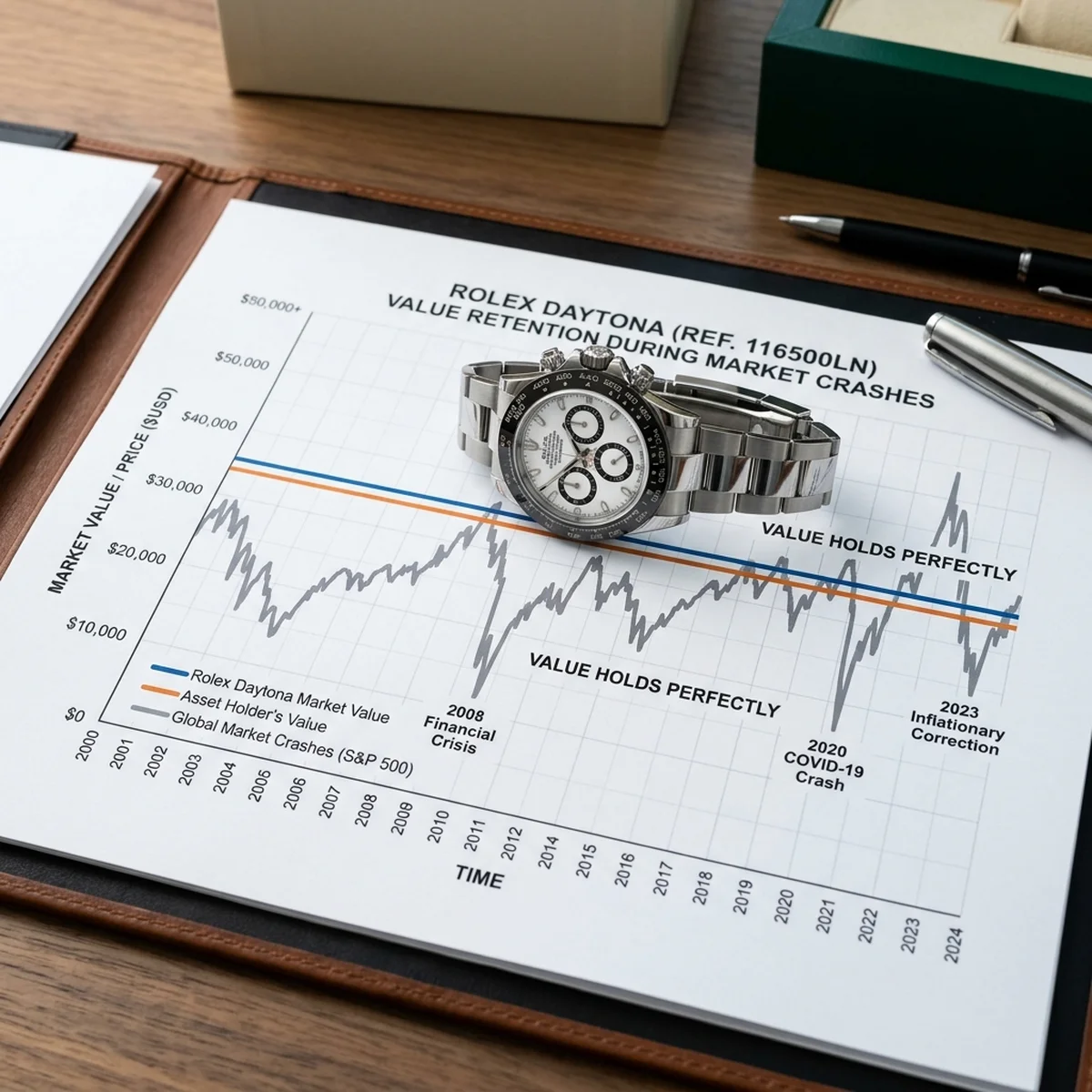
The stainless steel Rolex Daytona (such as references 116500LN and the newer 126500LN) is arguably the king of value retention. Thanks to its rich racing heritage, association with Paul Newman, and notoriously low production numbers relative to demand, the Daytona commands significant premiums. Even during market corrections, a steel Daytona remains one of the safest places to park your money in the horological world.
2. The Rolex Submariner
The Submariner is the quintessential dive watch and the most recognizable timepiece on the planet. Its timeless design ensures perpetual demand. The classic stainless steel Submariner Date (Ref. 126610LN) and the “No-Date” Submariner (Ref. 124060) are highly liquid assets. Special editions, such as the green-bezel “Kermit,” “Hulk,” or “Starbucks,” often hold even higher premiums.
3. The Rolex GMT-Master II
Famous for its dual-time zone capabilities and striking two-color bezels, the GMT-Master II is a staple for travelers and collectors alike. Models like the “Pepsi” (red and blue bezel, Ref. 126710BLRO) and the “Batman/Batgirl” (black and blue bezel, Ref. 126710BLNR) are fiercely sought after. The GMT-Master II’s distinct aesthetic ensures it rarely sits on a dealer’s shelf for long, keeping its secondary value robust.
4. The Rolex Oyster Perpetual (Colorful Dials)
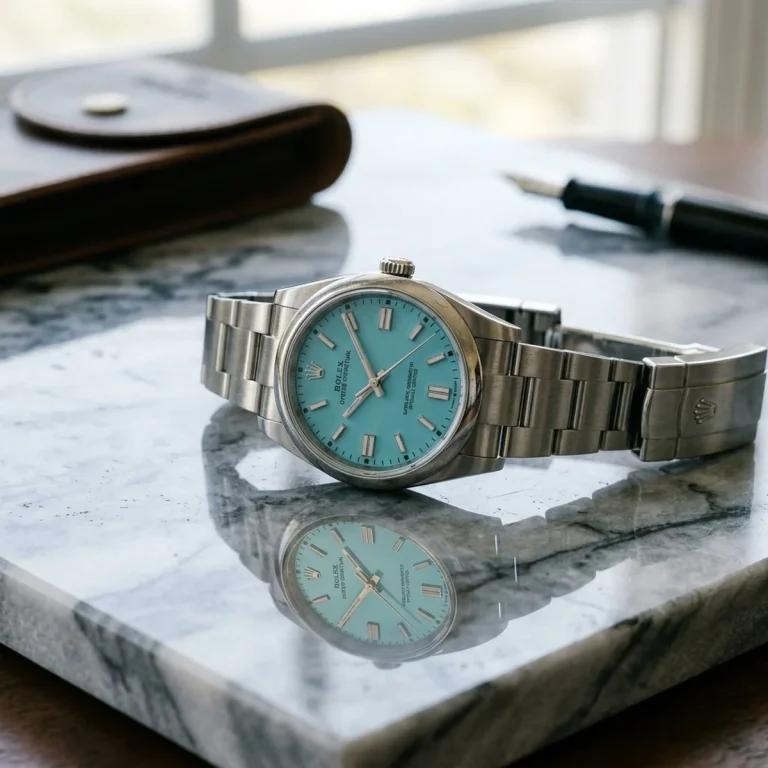
Traditionally considered an entry-level Rolex, the Oyster Perpetual saw a massive surge in value with the introduction of vibrant “Stella-inspired” dials in 2020. Colors like Tiffany Blue (Turquoise), Yellow, and Coral Red became overnight sensations. While the hype has cooled slightly, these specific dial colors continue to hold their value exceptionally well.
Are Rolex Secondary Market Prices Falling?
If you’ve been monitoring the watch market since 2022, you will have noticed a shift. The short answer is yes, prices on the Rolex secondary market have fallen from their peak. But is this due to an “oversupply”? Let’s dive into the nuances.
The Peak and The Correction
During 2021 and early 2022, the secondary market experienced a speculative bubble. Cryptocurrencies were booming, stimulus money was flowing, and traditional investments felt stagnant. Watches, particularly Rolex, Patek Philippe, and Audemars Piguet, became alternative asset classes. Prices for a steel Daytona soared well past $35,000, and standard Submariners were trading for nearly double their retail price.
However, as macroeconomic conditions shifted—with rising interest rates, inflation, and a cooling crypto market—the speculative buying dried up. The result was a healthy, much-needed correction. Prices have indeed fallen from their 2022 peaks, but they largely remain above retail MSRP.
Is Oversupply the Culprit?
The notion of “oversupply” in the Rolex market is complex. Rolex produces an estimated 1 million watches per year. However, global demand still vastly outstrips this production capability. So, why do dealers suddenly seem to have more stock? It’s not a true manufacturing oversupply, but rather a liquidity shift.
- Flippers Exiting the Market: When prices stopped climbing vertically, short-term speculators (“flippers”) panicked and flooded the secondary market with inventory they could no longer sell for a quick profit.
- Dealer Consolidation: Grey market dealers who bought stock at the peak are now having to lower prices to move inventory, creating the illusion of a flooded market.
- Rolex Certified Pre-Owned (CPO): Rolex’s recent entry into the pre-owned market has legitimized and standardized the secondary space, creating more transparent pricing channels but also contributing to the perceived availability of used stock.
Therefore, it’s not that Rolex is producing too many watches; it’s that the hoarding and speculative buying have subsided, returning the secondary market to a more normalized state of supply and demand.
Should You Buy a Rolex Now?
With prices correcting, many enthusiasts are wondering if now is the right time to buy.
If your goal is to buy a watch to wear, enjoy, and pass down, a market correction is excellent news. You can now purchase a Submariner or a GMT-Master II on the secondary market for significantly less than you would have two years ago, without waiting years on an Authorized Dealer’s list.
If your goal is purely investment, caution is advised. While the steel sports models mentioned above will likely always retain their value relative to retail, expecting massive short-term flips is no longer a viable strategy. Treat a Rolex as a reliable store of value rather than a high-yield growth stock.
Frequently Asked Questions (FAQs)
Does the Rolex Datejust hold its value?
The Rolex Datejust holds its value fairly well, particularly models in stainless steel with the fluted bezel and Jubilee bracelet. However, because it is more readily available than the professional sports models, it typically does not command high premiums over retail and may experience slight depreciation upon purchase.
Will Rolex prices ever go back to retail on the grey market?
For highly sought-after steel sports models like the Daytona, GMT-Master II, and Submariner, it is highly unlikely that grey market prices will drop to or below retail MSRP. The intrinsic demand globally is simply too high. However, two-tone and precious metal models frequently trade closer to or below retail on the secondary market.
Is a two-tone Rolex a good investment?
Two-tone (Rolesor) Rolex watches do not hold their value as well as full stainless steel models. They are generally easier to acquire at retail and suffer a steeper initial depreciation. They are beautiful watches to wear, but less ideal if your primary goal is financial retention.
Conclusion
In summary, the Rolex Daytona, Submariner, and GMT-Master II in stainless steel remain the undisputed champions of value retention. While the secondary market has indeed seen a price correction from its 2022 peak, characterizing this as a crash due to “oversupply” is inaccurate. It is a healthy stabilization driven by the exit of short-term speculators. For true enthusiasts, a stabilized market offers better buying opportunities for timeless pieces that will undoubtedly retain their allure and financial integrity for generations to come.
Get our latest guides, news, and insights highlighted in your Google Search & AI Overviews.