Decoding the Components of a Mechanical Watch: Know Your Gear
Have you ever wondered what makes a mechanical watch tick? Join us as we dive into the intricate components that come together to create the precise and timeless technology of a mechanical watch. In this article, we will decode the gears, springs, and levers that make up the inner workings of these classic timepieces. So, grab your magnifying glass and let’s unravel the mystery of how a mechanical watch keeps time with precision and elegance.
Contents
- – Hands-On Guide: Exploring the Different Components of a Mechanical Watch
- – Dive Deeper: Unraveling the Intricacies of the Gear Train System
- – Revealed: The Role of the Escapement in the Timekeeping Precision
- – Gear Up: How the Crown and Stem Control the Functions of a Mechanical Watch
- – Inside Out: Delving Into the Movements and Rotors of Automatic Watches
- To Wrap It Up
– Hands-On Guide: Exploring the Different Components of a Mechanical Watch
If you’re intrigued by the intricate workings of mechanical watches, you’re in the right place. Let’s dive into the fascinating world of horology and explore the various components that make up a mechanical watch.
One of the most crucial parts of a mechanical watch is the movement. This internal mechanism is responsible for driving the watch hands and powering other functions like date complications and chronographs. Movements can be either automatic, manual, or a hybrid of the two, each with its own unique characteristics.
Next, we have the dial, which displays the time and other information. The dial is typically adorned with hour markers, hands, and sometimes additional features like subdials for measuring elapsed time. The design and layout of the dial can vary greatly between watch models, adding to the uniqueness of each timepiece.
The case of a mechanical watch houses all of its components and provides protection against external elements. Cases are often made from materials like stainless steel, titanium, or precious metals like gold. The size, shape, and finish of the case can greatly impact the overall look and feel of a watch.
– Dive Deeper: Unraveling the Intricacies of the Gear Train System
When it comes to understanding the intricate workings of a mechanical watch, one key component that often goes unnoticed is the gear train system. This crucial system is responsible for regulating the movement of the watch, ensuring accurate timekeeping and smooth operation.
The gear train system consists of a series of gears, each with a specific purpose and function. By unraveling the complexities of this system, you can gain a deeper appreciation for the craftsmanship and engineering that goes into creating a mechanical timepiece.
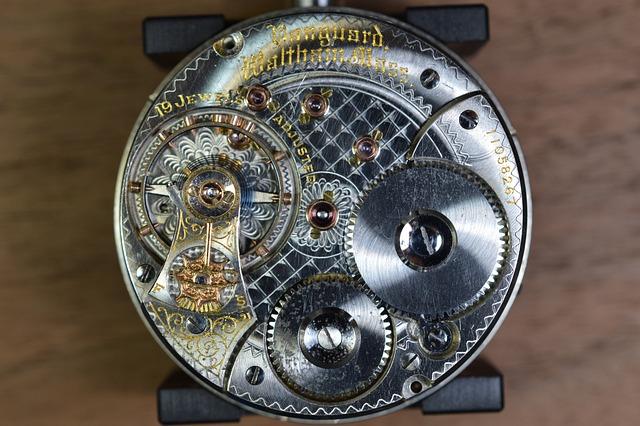
Here are some of the key components of the gear train system:
- Barrel: This component houses the mainspring, which stores energy and powers the movement of the watch.
- Center Wheel: Also known as the second wheel, this gear transmits power from the barrel to the other gears in the gear train system.
- Third Wheel: This gear is responsible for transmitting power from the center wheel to the fourth wheel, which drives the seconds hand.
- Escapement: This critical component regulates the release of energy from the gear train system, allowing for precise timekeeping.
| Component | Function |
|---|---|
| Barrel | Stores energy and powers the movement |
| Center Wheel | Transmits power to other gears |
| Third Wheel | Transmits power to fourth wheel |
| Escapement | Regulates energy release for precise timekeeping |

– Revealed: The Role of the Escapement in the Timekeeping Precision
The escapement is a crucial component in the intricate mechanism of a mechanical watch, playing a pivotal role in maintaining the accuracy and precision of timekeeping. This small but mighty device controls the release of energy from the mainspring in a regulated manner, allowing the gear train to move at a constant rate.
One of the key functions of the escapement is to divide time into equal intervals, ensuring that the watch’s hands move smoothly and consistently. It accomplishes this by releasing a specific amount of energy to the gear train at regular intervals, controlling the speed at which the gears rotate and ultimately, the movement of the hands.
The escapement consists of several parts working together in harmony, including the pallet fork, escape wheel, balance wheel, and hairspring. Each of these components plays a unique role in the overall function of the escapement, contributing to the precise timekeeping capabilities of the watch.
Understanding the role of the escapement in a mechanical watch is essential for watch enthusiasts and collectors alike. By delving deeper into the intricate mechanics of this vital component, you can gain a greater appreciation for the craftsmanship and precision that goes into creating these timeless timepieces.
– Gear Up: How the Crown and Stem Control the Functions of a Mechanical Watch
In a mechanical watch, the crown and stem play a crucial role in controlling its various functions. These components may seem small, but they are essential for the proper operation of your timepiece. Understanding how the crown and stem work together can help you appreciate the intricate mechanics of your watch.
The crown is the small knob on the side of the watch that is used to set the time, date, and other functions. By turning the crown clockwise or counterclockwise, you can adjust the hands of the watch and change the date or time zone. The stem, on the other hand, is the part that connects the crown to the internal mechanisms of the watch. When you pull out the crown, you are engaging with the stem to make adjustments to the watch.
When you wind the crown, you are actually winding the mainspring of the watch. This stores energy that is released gradually to power the movement of the watch. By turning the crown, you are essentially providing the watch with the energy it needs to function. The stem, on the other hand, controls the gears and levers inside the watch that translate your adjustments into the movement of the hands.
So, the next time you look at your mechanical watch, take a moment to appreciate the intricate dance of the crown and stem that keeps your timepiece running smoothly and accurately.

– Inside Out: Delving Into the Movements and Rotors of Automatic Watches
In the intricate world of mechanical watches, there lies a captivating realm of movements and rotors that drive the heart of these timepieces. Understanding the inner workings of automatic watches can offer a deeper appreciation for the craftsmanship and precision that goes into creating these mechanical marvels.
**The Movement:**
– The movement of an automatic watch is essentially the engine that drives the watch’s functionality.
– It consists of a series of gears, springs, and other components that work together to keep time accurately.
– There are two main types of movements: quartz movements, which are battery-powered, and mechanical movements, which are powered by the movement of the wearer’s wrist.
**The Rotor:**
– The rotor is a key component of automatic watches, as it is responsible for winding the mainspring that powers the watch.
– As the wearer moves their wrist, the rotor spins, transferring energy to the mainspring.
– This continuous winding action ensures that the watch remains powered and keeps accurate time.
By delving into the movements and rotors of automatic watches, you can gain a deeper understanding of the intricate workings of these timepieces. Knowing your gear can not only enhance your appreciation for the craftsmanship involved but also give you a newfound fascination for the art of horology.
To Wrap It Up
In conclusion, understanding the components of a mechanical watch is essential for any watch enthusiast. Knowing the gear such as the escapement, balance wheel, mainspring, and gears can give you a deeper appreciation for the craftsmanship that goes into creating these timepieces. By decoding these components, you can better understand how a mechanical watch functions and appreciate the intricate mechanics at play. Remember, each gear plays a crucial role in keeping your watch ticking accurately and smoothly. So, the next time you look at your watch, take a moment to recognize and appreciate the intricate components that make it a truly remarkable piece of engineering.
Get our latest guides, news, and insights highlighted in your Google Search & AI Overviews.