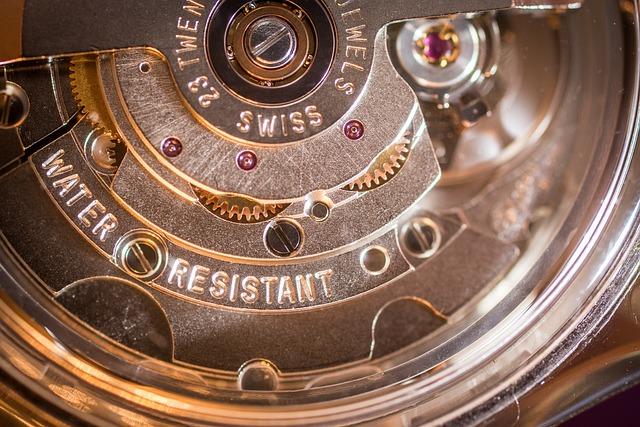
How Do You Regulate a Mechanical Watch? Precision Techniques
Have you ever wondered how to regulate a mechanical watch to ensure it keeps perfect time? Precision techniques are crucial in maintaining the accuracy and performance of these intricate timepieces. In this article, we will dive into the detailed process of regulating a mechanical watch, providing you with the knowledge and skills needed to keep your watch running smoothly. Let’s explore the fascinating world of horology together.
Contents
- – Understanding the Inner Workings of a Mechanical Watch
- – The Importance of Regular Maintenance for Long-lasting Precision
- – Techniques for Regulating the Accuracy of Your Timepiece
- – Adjusting the Beat Rate for Optimal Performance
- – Testing the Amplitude of the Balance Wheel for Consistent Timekeeping
- – Fine-tuning the Hairspring to Ensure Reliable Timekeeping
- – Balancing the Power Reserve for Efficient Operation
- – Utilizing Specialty Tools for Delicate Adjustments
- – Seeking Professional Help When Necessary
- – Monitoring and Calibrating the Watch Regularly for Peak Performance
- Final Thoughts
– Understanding the Inner Workings of a Mechanical Watch
Mechanical watches are intricate timepieces that rely on a series of gears, springs, and other components to keep accurate time. One of the most crucial aspects of ensuring a watch runs smoothly and accurately is regulating its movement. Regulating a mechanical watch involves adjusting the rate at which the watch keeps time by fine-tuning the balance wheel and hairspring.
Related: Precision Regulating: How to Regulate a Mechanical Watch
There are several precision techniques that watchmakers use to regulate a mechanical watch:
- Adjusting the Regulator Pins: The regulator pins control the effective length of the hairspring, which in turn affects the rate at which the watch beats. By carefully moving the regulator pins closer together or further apart, a watchmaker can increase or decrease the watch’s accuracy.
- Changing the Effective Length of the Hairspring: By altering the effective length of the hairspring, watchmakers can adjust the watch’s beat rate. This can be done by carefully bending the hairspring or adjusting its position in the balance wheel.
- Timing Machine Adjustment: A timing machine is a tool used by watchmakers to measure the rate at which a watch keeps time. By analyzing the readings from the timing machine, a watchmaker can make precise adjustments to regulate the watch’s movement.
Through a combination of skill, experience, and meticulous attention to detail, watchmakers can regulate a mechanical watch to keep accurate time. These precision techniques ensure that a mechanical watch functions at its optimal performance level, providing reliable timekeeping for years to come.

– The Importance of Regular Maintenance for Long-lasting Precision
Regular maintenance is crucial for ensuring the long-lasting precision of your mechanical watch. By following precision techniques and regulating your watch properly, you can extend its lifespan and keep it running smoothly for years to come.One key aspect of regulating a mechanical watch is adjusting the rate at which it keeps time. This can be done by carefully adjusting the balance wheel, hairspring, and escapement mechanism to ensure that the watch is running at the correct speed. By fine-tuning these components, you can improve the accuracy and precision of your timepiece.
In addition to regulating the timekeeping of your watch, it is important to regularly clean and lubricate its movement. Dust, dirt, and moisture can build up inside the watch and interfere with its operation, leading to decreased accuracy and potential damage. By regularly servicing your watch and keeping it clean, you can prevent these issues and maintain its precision over time.
Overall, by implementing precision techniques and following a regular maintenance schedule, you can ensure that your mechanical watch remains accurate and reliable for years to come. Investing in the proper care and upkeep of your timepiece will not only extend its lifespan but also enhance your overall enjoyment of owning and wearing a piece of precision craftsmanship.

– Techniques for Regulating the Accuracy of Your Timepiece
Regulating a mechanical watch is essential to ensure its accuracy and performance. Here are some techniques you can use to regulate your timepiece:
- Adjusting the Balance Wheel: The balance wheel is a critical component of a mechanical watch that oscillates back and forth to regulate the timekeeping. You can adjust the speed of the balance wheel by carefully turning the regulating screws located on the balance wheel bridge.
- Regulating the Hairspring: The hairspring is another component that plays a crucial role in regulating the accuracy of the watch. You can adjust the length of the hairspring to fine-tune the timing of the watch. This process requires precision and skill to avoid damaging the delicate hairspring.
- Checking the Beat Error: The beat error is a measurement of the time difference between the two vibrations of the balance wheel. By adjusting the pallet fork and escape wheel, you can minimize the beat error and improve the overall accuracy of the watch.

– Adjusting the Beat Rate for Optimal Performance
Regulating the beat rate of a mechanical watch is essential for ensuring optimal performance and accuracy. By making precise adjustments to the balance wheel, you can finely tune the watch to keep time accurately.
To regulate the beat rate of a mechanical watch, follow these precision techniques:
- Identify the Beat Error: Use a timing machine to determine the current beat error of the watch. This will help you understand how much adjustment is needed.
- Adjust the Regulator Pin: By carefully moving the regulator pin closer or further from the balance wheel, you can speed up or slow down the beat rate of the watch.
- Monitor the Rate: After making adjustments, keep an eye on the watch’s rate over a period of time to ensure that it is keeping accurate time.
| Beat Rate Adjustment Steps | Result |
|---|---|
| Identify the beat error | Understanding the current state of the watch |
| Adjust the regulator pin | Fine-tuning the beat rate for optimal performance |
| Monitor the rate | Ensuring the watch is keeping accurate time |

– Testing the Amplitude of the Balance Wheel for Consistent Timekeeping
When it comes to regulating a mechanical watch for precise timekeeping, one crucial aspect to consider is the balance wheel’s amplitude. The balance wheel is the heart of a watch movement, oscillating back and forth to regulate the ticking of the timepiece. Testing the amplitude of the balance wheel ensures that it is moving within the correct parameters for consistent timekeeping.
There are several precision techniques that watchmakers use to test the amplitude of the balance wheel:
- Timing Machine: Watchmakers use a timing machine to measure the beat rate of the balance wheel. This device accurately calculates the number of vibrations per hour, allowing the watchmaker to determine if the balance wheel is oscillating at the correct amplitude.
- Laser Sensor: Some modern watchmakers use a laser sensor to measure the movement of the balance wheel. This non-invasive technique provides precise data on the balance wheel’s oscillations, helping to ensure accuracy in timekeeping.
- Visual Inspection: Watchmakers also conduct a visual inspection of the balance wheel’s movement. By observing the oscillations under a microscope, they can detect any irregularities or issues that may affect the watch’s accuracy.
| Technique | Advantage |
|---|---|
| Timing Machine | Accurate measurement of beat rate |
| Laser Sensor | Precision data on oscillations |
| Visual Inspection | Identification of irregularities |
By utilizing these advanced techniques in testing the amplitude of the balance wheel, watchmakers can ensure that a mechanical watch is regulated to keep time accurately and reliably. This precision in timekeeping is what makes mechanical watches a timeless and coveted piece of craftsmanship.

– Fine-tuning the Hairspring to Ensure Reliable Timekeeping
To fine-tune the hairspring of a mechanical watch, precision techniques are essential to ensure reliable timekeeping. The hairspring is a critical component of the watch movement that controls the oscillation of the balance wheel, which ultimately dictates the accuracy of the watch. Here are some of the methods used to regulate a mechanical watch:– **Adjusting the Hairspring Stud**: The position of the hairspring stud can be adjusted to alter the rate at which the balance wheel oscillates. By carefully moving the stud in small increments, watchmakers can fine-tune the watch to keep accurate time.
– **Massaging the Hairspring**: Watchmakers may gently massage the hairspring to correct any irregularities in its shape. This precise technique requires skill and patience to ensure the hairspring is perfectly symmetrical, allowing for consistent timekeeping.
– **Checking for Beat Error**: Beat error is a crucial measurement that indicates the evenness of the balance wheel’s oscillations. By adjusting the hairspring and balance wheel, watchmakers can minimize beat error to improve the overall accuracy of the watch.
When these precision techniques are applied with expertise and care, the hairspring of a mechanical watch can be finely-tuned to ensure reliable and precise timekeeping. This attention to detail is what sets high-quality timepieces apart from the rest and showcases the craftsmanship and skill of experienced watchmakers.

– Balancing the Power Reserve for Efficient Operation
One crucial aspect of regulating a mechanical watch is balancing the power reserve for efficient operation. By ensuring that the power reserve is properly balanced, the watch can maintain accurate timekeeping and function smoothly. There are several precision techniques that watchmakers use to regulate the power reserve of a mechanical watch.One technique involves adjusting the tension of the mainspring within the watch movement. By carefully adjusting the tension of the mainspring, watchmakers can control the amount of power transferred to the escapement, which ultimately affects the power reserve of the watch. This delicate adjustment requires precision and expertise to ensure optimal performance.
Another technique is regulating the oscillating frequency of the balance wheel. By fine-tuning the oscillating frequency, watchmakers can optimize the energy transfer within the movement, leading to a more efficient power reserve. This process involves adjusting the length of the balance spring or changing the mass of the balance wheel to achieve the desired frequency.
Overall, balancing the power reserve of a mechanical watch is essential for maintaining its accuracy and longevity. By utilizing precision techniques and expertise, watchmakers can ensure that the watch operates at its best potential. Properly regulating the power reserve will result in a timepiece that not only keeps accurate time but also functions efficiently for years to come.

– Utilizing Specialty Tools for Delicate Adjustments
When it comes to regulating a mechanical watch with precision, utilizing specialty tools for delicate adjustments is crucial. These tools are designed to help watchmakers make micro adjustments to the movement of the watch, ensuring that it keeps accurate time.One common tool used for regulating a mechanical watch is the watchmaker’s loupe. This tool allows the watchmaker to closely examine the movement of the watch and make precise adjustments to the balance wheel, hairspring, and escapement. By making small tweaks to these components, the watchmaker can fine-tune the accuracy of the watch.
Another specialty tool that is often used for delicate adjustments is the tweezers. These precision tweezers are designed to handle small watch components with ease, allowing the watchmaker to make tiny adjustments without causing any damage to the movement.
In addition to these tools, watchmakers also utilize electronic timing machines to measure the accuracy of the watch. These machines provide detailed feedback on the rate at which the watch is ticking, allowing the watchmaker to make the necessary adjustments for optimal performance. By combining the use of specialty tools with precision techniques, watchmakers can ensure that a mechanical watch is regulated to keep accurate time.

– Seeking Professional Help When Necessary
When it comes to regulating a mechanical watch, precision techniques are key to ensuring accurate timekeeping. While many watch enthusiasts enjoy the process of regulating their own timepieces, seeking professional help when necessary can provide valuable expertise and resources.
Professional watchmakers have the tools and knowledge to regulate a watch with the utmost precision, ensuring optimal performance and longevity. They can make adjustments to the balance wheel, hairspring, and escapement to fine-tune the watch’s accuracy.
Some common methods used by professional watchmakers to regulate a mechanical watch include:
- Adjusting the regulator pins to alter the effective length of the hairspring
- Checking and adjusting the beat error to ensure proper alignment of the pallet jewels
- Testing the watch in multiple positions to detect any positional error and make necessary adjustments
| Regulation Technique | Description |
|---|---|
| Regulator Pin Adjustment | Alter the effective length of the hairspring to regulate the watch’s accuracy |
| Beat Error Check | Ensure proper alignment of the pallet jewels for accurate timekeeping |
| Positional Testing | Detect any positional error and make necessary adjustments for optimal performance |

– Monitoring and Calibrating the Watch Regularly for Peak Performance
Regular monitoring and calibration of your mechanical watch is essential for maintaining its peak performance. By following precision techniques, you can ensure that your watch is always running accurately and smoothly.
One important aspect of regulating a mechanical watch is checking its timekeeping accuracy. You can do this by comparing the watch’s time with a reliable time source, such as an atomic clock. If you notice any discrepancies, you may need to make adjustments to the watch’s movement.
Calibrating the watch involves making precise adjustments to the balance wheel, escapement, and hairspring to ensure that the watch keeps accurate time. This process requires skill and patience, and it is best left to a professional watchmaker.
By monitoring and calibrating your watch regularly, you can prolong its lifespan and enjoy reliable timekeeping for years to come. Remember to consult a watch specialist if you have any doubts or concerns about the performance of your mechanical watch.
Final Thoughts
In conclusion, regulating a mechanical watch requires precision techniques to ensure accurate timekeeping. By carefully adjusting the balance wheel and hairspring, you can improve the watch’s performance and keep it running smoothly. Remember to consult a professional watchmaker if you are unsure about regulating your watch on your own. With practice and patience, you can master the art of regulating a mechanical watch and enjoy its precise timekeeping for years to come. Thank you for reading and happy timekeeping!Related reading: What Years Did Rolex Mark Watch Dial with T-Swiss Made-T? Historical Insights!
Get our latest guides, news, and insights highlighted in your Google Search & AI Overviews.