Parts of a Watch Mechanism: Understanding Timepiece Anatomy
Have you ever wondered how a watch actually works? From the intricate gears to the delicate balance wheel, understanding the anatomy of a timepiece can provide valuable insight into the inner workings of this essential accessory. In this article, we will explore the different parts of a watch mechanism, shedding light on the fascinating world of horology. So, grab your magnifying glass and get ready to dive into the world of watch mechanics!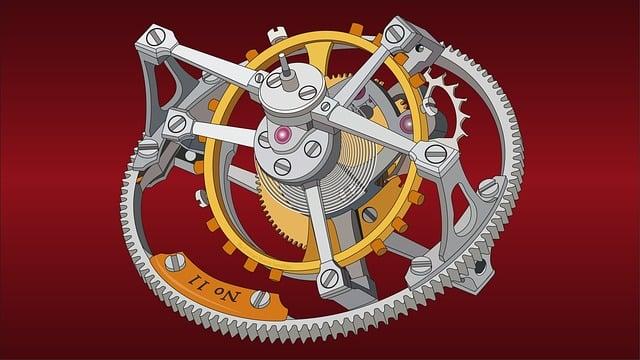
Contents
- Overview of Watch Movements
- Exploring the Essential Components of a Watch
- Understanding the Function of the Escapement
- Detailed Analysis of the Balance Wheel
- Examining the Role of the Gear Train
- Insight into the Power Reserve Mechanism
- Importance of the Crown and Stem in Watch Operation
- Exploring the Intricacies of the Dial and Hands
- Detailed Examination of the Case and Crystal
- Recommendations for Proper Care and Maintenance of Watch Mechanisms
- In Retrospect
Overview of Watch Movements
<tbody>

    <tr>

        <td>Quartz</td>

        <td>Battery, Integrated Circuit, Quartz Crystal, Motor</td>

    </tr>

    <tr>

        <td>Mechanical</td>

        <td>Spring, Gears, Escapement, Balance Wheel</td>

    </tr>

</tbody>
Understanding the inner workings of a watch can enhance your appreciation for the craftsmanship involved in timepiece creation. From precise movements to intricate components, each part plays a crucial role in keeping time accurately.
The quartz movement, powered by a battery and regulated by a quartz crystal, is known for its accuracy and low maintenance. On the other hand, mechanical movements, driven by a spring and gears, require regular winding to function properly.
Whether you prefer the modern efficiency of quartz or the traditional charm of mechanical movements, both types offer unique characteristics that make each timepiece special. By delving into the anatomy of watch movements, you can gain a deeper understanding of the fascinating world of horology.
Exploring the Essential Components of a Watch
Understanding the inner workings of a watch is like peering into a miniature world of intricate engineering. Every component plays a crucial role in ensuring precise timekeeping and durability. Let’s dive into the essential parts that make up a watch mechanism:
- Movement: Also known as the caliber, the movement is the heart of the watch. It’s responsible for powering the timepiece and regulating the hands’ motion.
- Dial: The face of the watch where the hour markers, hands, and sometimes additional complications such as date windows or subdials are located.
- Hands: The hands on a watch indicate the hours, minutes, and sometimes seconds. They are driven by the movement and move in a precise fashion.
- Crystal: The clear cover that protects the dial and hands. Crystals can be made of various materials such as sapphire, mineral glass, or acrylic.
| Component | Function |
|---|---|
| Movement | Powering and regulating timekeeping |
| Dial | Displaying time and additional complications |
| Hands | Indicating hours, minutes, and seconds |
| Crystal | Protecting the dial and hands |

Understanding the Function of the Escapement
The escapement is a crucial component of a watch mechanism, responsible for regulating the flow of energy and ultimately controlling the movement of the hands on the dial. It consists of several parts working together in harmony to ensure precise timing and accuracy. Understanding how the escapement functions is key to appreciating the complexity and craftsmanship behind timepiece design.
One of the main parts of the escapement is the pallet fork, which acts as the control element by engaging with the escape wheel. This interaction creates a ticking motion that drives the gear train and propels the hands forward. The escapement also includes the balance wheel, which oscillates back and forth at a constant rate, providing the necessary inertia for the movement of the watch.
Another important component is the anchor, which connects the pallet fork and the escapement wheel, allowing for the controlled release of energy. The escapement mechanism works in conjunction with the mainspring, gear train, and other parts of the watch to ensure accurate timekeeping. By , watch enthusiasts can gain a deeper appreciation for the intricate workings of their timepieces.
Detailed Analysis of the Balance Wheel
In a mechanical watch, the balance wheel plays a crucial role in regulating the timekeeping accuracy of the timepiece. This small, circular component is responsible for controlling the oscillation of the balance spring, which in turn governs the movement of the watch hands.
The balance wheel consists of several key parts that work together to ensure precise timekeeping. These parts include the balance staff, balance rim, balance screws, and balance spring. The balance staff serves as the pivot point for the balance wheel, allowing it to oscillate back and forth at a consistent rate. The balance rim provides the necessary weight for the wheel to maintain its momentum, while the balance screws can be adjusted to fine-tune the timekeeping accuracy. The balance spring, on the other hand, is crucial for controlling the frequency of the oscillations.
Overall, a reveals the intricate design and engineering that goes into creating a reliable and accurate timekeeping mechanism. By understanding the anatomy of this essential component, watch enthusiasts can appreciate the craftsmanship and precision that goes into creating a high-quality mechanical watch.
Examining the Role of the Gear Train
When it comes to the inner workings of a timepiece, the gear train plays a crucial role in keeping the watch running smoothly and accurately. Made up of a series of interconnected gears, the gear train is responsible for transmitting power from the mainspring to the escapement, which regulates the movement of the hands.
Key Components of the Gear Train:
- Barrel: Stores energy from the mainspring
- Pinion: Transfers energy from the barrel to the next gear
- Wheel: Transmits energy to the escapement
Each gear within the gear train is carefully calibrated to ensure that the watch keeps accurate time. By controlling the speed at which the gears rotate, watchmakers can fine-tune the movement of the watch to maintain precision over time.
| Component | Function |
|---|---|
| Barrel | Stores energy from the mainspring |
| Pinion | Transfers energy to the next gear |
| Wheel | Transmits energy to the escapement |

Insight into the Power Reserve Mechanism
When it comes to understanding the inner workings of a timepiece, the power reserve mechanism is a crucial component that often goes unnoticed. This mechanism is responsible for storing energy within the watch to keep it running smoothly and accurately.
The power reserve mechanism consists of several key parts, working together to ensure the watch remains powered for an extended period. These parts include:
- Main Spring: The main spring is the primary source of energy within the watch, storing potential energy that is released gradually to power the movement.
- Gear Train: The gear train is responsible for transmitting the energy from the main spring to the escapement, regulating the release of power to keep the watch running at a consistent rate.
- Escapement: The escapement is a crucial component that controls the release of energy from the mainspring, ensuring that the watch movement is regulated and accurate.
Understanding the power reserve mechanism and its components is essential for watch enthusiasts who want to delve deeper into the world of horology. By gaining insight into how this mechanism works, you can develop a deeper appreciation for the intricate craftsmanship that goes into creating a high-quality timepiece.

Importance of the Crown and Stem in Watch Operation
The crown and stem are essential components of a watch mechanism, playing a crucial role in its operation. The crown is the small knob usually located on the side of the watch case, allowing you to set the time and date, wind the watch, and adjust other functions. It is the main interface between you and the watch movement, enabling you to interact with and control the timepiece.
On the other hand, the stem connects the crown to the watch movement, transmitting your adjustments to the internal gears and mechanisms. It acts as a bridge between the external controls (the crown) and the internal components of the watch. The stem also helps to keep the watch movement secure within the case, preventing it from moving around or getting damaged.
In summary, the crown and stem are integral parts of a watch mechanism, working together to ensure the accurate and smooth operation of the timepiece. Understanding their functions and importance can help you appreciate the intricate design and craftsmanship that goes into creating a high-quality watch. So, next time you adjust the time or wind your watch, remember the crucial role played by the crown and stem in making it all possible.
Exploring the Intricacies of the Dial and Hands
The dial of a watch is a crucial component that displays the time in a clear and legible manner. It is usually the part of the watch face that features the hour markers, numerals, and any additional complications such as date windows or subdials. The dial comes in various designs, colors, and materials, adding to the overall aesthetic of the timepiece.
The hands of a watch are responsible for pointing to the current time on the dial. Typically, there are three main hands on a watch: the hour hand, the minute hand, and the second hand. Each hand moves at a different pace, with the seconds hand making a complete rotation every 60 seconds. The hands are usually made of metal and come in different shapes and styles, contributing to the overall design of the watch.
It is essential to understand the intricacies of the dial and hands when learning about the anatomy of a watch mechanism. The dial and hands work together harmoniously to provide an accurate and visually appealing way to tell time. By examining these components closely, one can gain a deeper appreciation for the craftsmanship and engineering that goes into creating a quality timepiece.
Detailed Examination of the Case and Crystal
In order to truly understand the intricacies of a watch mechanism, one must take a . The case of a watch serves as its outer shell, protecting the delicate inner workings from damage. It can be made from various materials such as stainless steel, gold, or titanium.
The crystal, on the other hand, is the transparent cover that sits atop the watch face, allowing the wearer to easily read the time. Crystals are typically made from either mineral glass, sapphire crystal, or acrylic. Each material has its own unique set of properties, such as scratch resistance and clarity.
When examining the case and crystal of a watch, it’s important to consider not only their materials, but also their design and construction. A well-made case and crystal can enhance the overall aesthetic of a timepiece, while also ensuring its durability and longevity. By paying attention to these details, one can gain a deeper appreciation for the artistry and craftsmanship that goes into creating a quality watch.
Recommendations for Proper Care and Maintenance of Watch Mechanisms
Understanding the various parts of a watch mechanism is essential for proper care and maintenance of your timepiece. By knowing the anatomy of your watch, you can better appreciate the craftsmanship that goes into these intricate devices.
Some key components of a watch mechanism include:
- Movement: Also known as the caliber, the movement is the engine of the watch that drives its timekeeping function.
- Dial: The face of the watch where the time is displayed, often featuring hour markers and hands.
- Case: The outer shell of the watch that houses the movement and protects it from damage.
- Crown: The knob on the side of the watch that is used to set the time and adjust other functions.
Proper care and maintenance of your watch mechanism can extend its lifespan and keep it running smoothly. Some recommendations include:
- Regularly servicing your watch by a professional watchmaker to ensure proper functioning.
- Avoid exposing your watch to extreme temperatures, moisture, or magnetic fields.
- Keep your watch clean by wiping it with a soft cloth and avoiding harsh chemicals.
- Store your watch in a safe place when not in use, preferably in a watch box or pouch to protect it from dust and scratches.
In Retrospect
In conclusion, understanding the anatomy of a watch mechanism is essential for any watch enthusiast or collector. By knowing the key components such as the movement, dial, hands, and crown, you can appreciate the intricate craftsmanship that goes into creating a timepiece. Remember to take care of your watch and have it serviced regularly to ensure it continues to function properly. Keep exploring the world of horology and enjoy the beauty and precision of these timeless pieces. Thank you for reading and happy timekeeping!
Get our latest guides, news, and insights highlighted in your Google Search & AI Overviews.