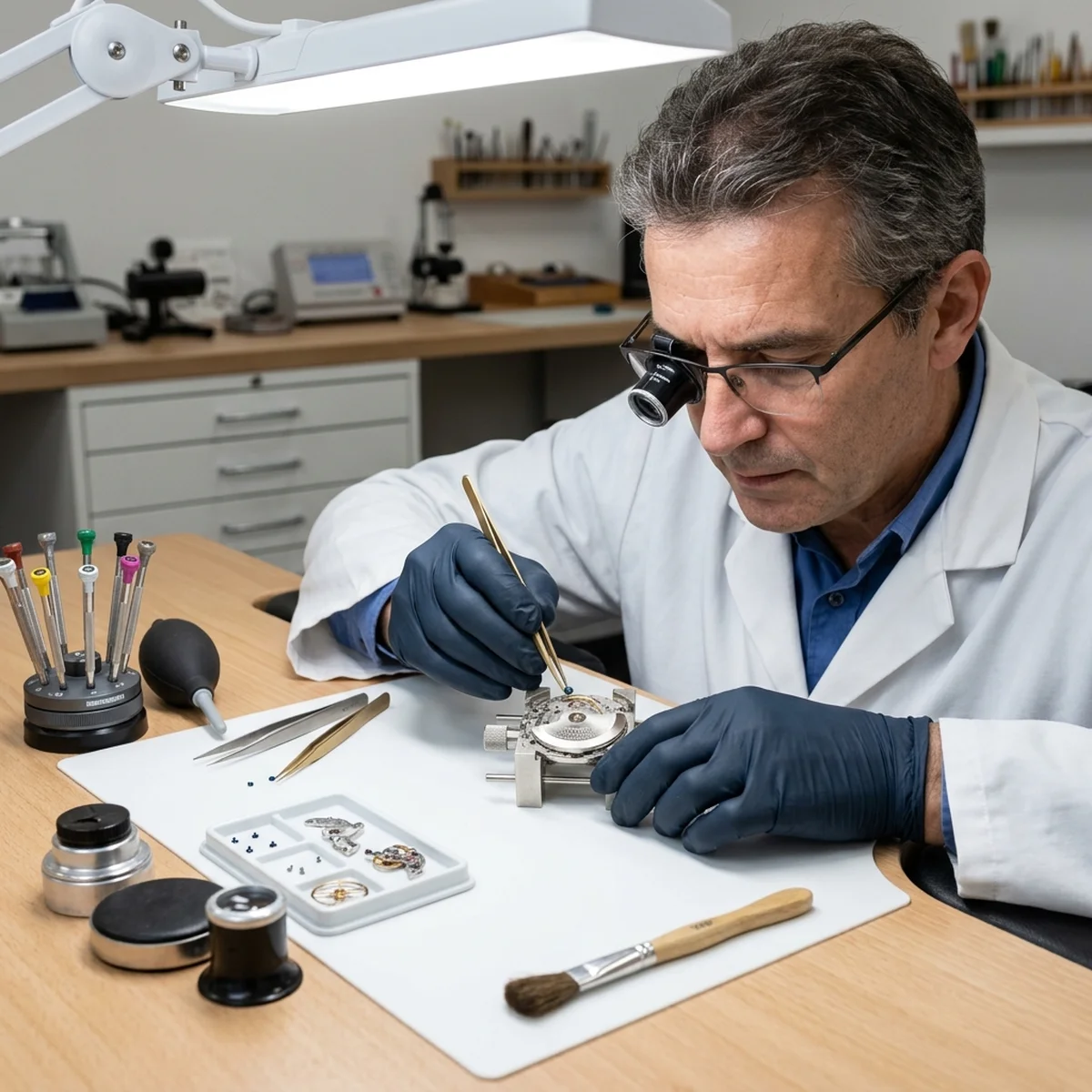
Servicing Powermatic 80.611
The Ultimate Guide to Servicing the Powermatic 80.611 Movement
The Powermatic 80.611 has revolutionized the affordable mechanical watch market. By offering an impressive 80-hour power reserve and utilizing modern materials like the Nivachron balance spring, this movement—developed collaboratively by ETA and Tissot—has become a staple in modern Swiss watchmaking. However, as with any intricate mechanical device, the time will eventually come when you need to consider servicing Powermatic 80.611 movements to ensure they continue to tick with precision and reliability.
While the Powermatic 80 series (based on the ETA C07.111 architecture) is celebrated for its robust performance, its unique construction introduces specific considerations when it comes to maintenance and repair. From understanding the differences between traditional escapements and the modern synthetic counterparts, to navigating the complexities of laser regulation, this comprehensive guide will cover everything you need to know about servicing this remarkable caliber.
Contents
- What Makes the Powermatic 80.611 Unique?
- Signs Your Powermatic 80 Needs Servicing
- Can Any Watchmaker Service the Powermatic 80.611?
- Step-by-Step Overview of the Servicing Process
- Cost and Turnaround Time for Servicing
- Tips to Prolong the Life of Your Powermatic 80 Movement
- Frequently Asked Questions (FAQ)
What Makes the Powermatic 80.611 Unique?
Before diving into the servicing process, it is essential to understand what sets the Powermatic 80.611 apart from its predecessor, the legendary ETA 2824-2. The primary modifications were made to extend the power reserve from the standard 38 hours to an incredible 80 hours. This was achieved through a combination of engineering adjustments:
- Reduced Beat Rate: The frequency was lowered from 28,800 vibrations per hour (vph) to 21,600 vph (3 Hz). This slower beat rate consumes less energy, directly contributing to the extended power reserve.
- Improved Mainspring: A more flexible and longer mainspring was fitted into the barrel arbor, allowing for a longer continuous run time.
- Nivachron™ Balance Spring: The 80.611 variant specifically utilizes a titanium-based Nivachron hairspring. This material is highly resistant to magnetic fields, temperature fluctuations, and shocks, making the movement incredibly accurate and reliable.
These enhancements are remarkable, but they also mean that the servicing approach differs slightly from traditional calibers. The reduced beat rate requires precise regulation, and the advanced materials necessitate specific handling techniques.
Signs Your Powermatic 80 Needs Servicing
Modern Swiss movements are built to last, and the Powermatic 80.611 is no exception. However, lubricants dry up, and parts experience friction over time. Generally, it is recommended to service your watch every 4 to 5 years. Here are the telltale signs that your watch is due for a check-up:
- Decreased Power Reserve: If your watch fails to run for the promised 80 hours when fully wound and left off the wrist, the mainspring or barrel might be experiencing excessive friction.
- Erratic Timekeeping: A sudden loss or gain in time (e.g., losing or gaining minutes per day) is a strong indicator that the lubricants have dried or that the movement has been magnetized (though the Nivachron spring significantly reduces this risk).
- Stiff Manual Winding: If the crown feels gritty, stiff, or unusually difficult to turn when winding the watch manually, the keyless works likely require cleaning and fresh lubrication.
- Moisture on the Crystal: Any sign of condensation inside the dial means the water-resistance seals have failed. The watch must be serviced immediately to prevent catastrophic rust damage to the movement.
Can Any Watchmaker Service the Powermatic 80.611?
One of the most debated topics among watch enthusiasts is whether the Powermatic 80 can be serviced by an independent watchmaker or if it must be sent back to the Swatch Group (Tissot, Hamilton, Certina, Mido, etc.).
The Regulation Challenge
Unlike traditional movements that feature a typical regulator index (the small lever used to adjust the effective length of the hairspring), the Powermatic 80 utilizes a free-sprung balance wheel. Regulation is done at the factory using lasers to remove microscopic amounts of material from the balance wheel weights. Because of this high-tech regulation method, traditional independent watchmakers cannot easily regulate the movement if it begins to run too fast or too slow.
Availability of Spare Parts
The Swatch Group has tightened its distribution of spare parts to independent watchmakers over the years. While standard cleaning, oiling, and reassembly can be performed by any competent, trained horologist, sourcing a replacement balance wheel, a new barrel, or specific gear train components for the 80.611 can be difficult for non-certified repair centers.
For these reasons, many watchmakers prefer—and recommend—sending the watch directly to an authorized Swatch Group service center. In many cases, the service center may opt to swap out the entire movement for a brand-new one rather than overhauling the old one, as the manufacturing cost of the caliber is highly optimized.
Step-by-Step Overview of the Servicing Process
Whether performed by a master independent watchmaker with access to parts or an official service center, the fundamental steps of servicing the Powermatic 80.611 remain rooted in traditional watchmaking principles.
1. Disassembly and Cleaning
The watch case is opened, and the movement is carefully extracted from the dial and hands. The caliber is then fully disassembled down to its individual screws and plates. Every component is placed into a specialized ultrasonic cleaning machine. This process uses chemical solvents to strip away old, dried oils, dirt, and microscopic metal shavings accumulated from years of friction.
2. Inspection and Replacement
Once clean, each part is inspected under high magnification. The watchmaker checks the teeth of the wheels, the pivots, the jewels, and the mainspring barrel. If any part shows signs of wear or damage, it is discarded and replaced with a genuine Swatch Group component. The Nivachron hairspring is also inspected for perfect concentricity.
3. Lubrication and Reassembly
Reassembly is a meticulous process. As the movement is put back together, the watchmaker applies precise amounts of specialized, high-grade synthetic lubricants to the jewel bearings, the pallet fork, and the gear train pivots. The Powermatic 80 requires specific epilame coatings on the escapement to ensure the oil stays exactly where it is needed and does not spread to the rest of the movement.
4. Regulation and Testing
Once fully assembled, the movement is placed on a timegrapher to analyze its amplitude, beat error, and daily rate. If the movement is a Swatch Group factory replacement, it will already be laser-regulated. The watch is then tested in multiple positions (dial up, dial down, crown up, crown down, etc.) to simulate real-world wrist wear. Finally, the movement is cased up, and the gaskets are replaced to restore full water resistance before undergoing a final pressure test.
Cost and Turnaround Time for Servicing
The cost of servicing a Powermatic 80.611 is generally very reasonable, especially when compared to high-end luxury calibers. If you send the watch to an authorized service center (such as Tissot or Hamilton), a full maintenance service typically costs between $150 and $250 USD, depending on the brand and your location. This price usually covers the movement overhaul (or replacement), new gaskets, water resistance testing, and a light polishing of the case and bracelet.
Turnaround times can vary significantly based on the backlog at the service center. On average, you can expect to be without your watch for anywhere from 4 to 8 weeks.
Tips to Prolong the Life of Your Powermatic 80 Movement
To maximize the time between service intervals and keep your watch running flawlessly, follow these best practices:
- Keep it away from extreme magnets: While the Nivachron hairspring is highly anti-magnetic, it is still best practice to avoid resting your watch on laptops, speakers, or magnetic clasps.
- Avoid setting the date in the “Danger Zone”: Never adjust the quickset date function when the hands are between 9:00 PM and 3:00 AM. Doing so can break the delicate teeth of the date wheel mechanism.
- Rinse after saltwater exposure: If your watch is a diver or is rated for swimming, always rinse it with fresh water after swimming in the ocean or a chlorinated pool to protect the gaskets.
- Don’t overwound manual winding: If you are starting the watch from a dead stop, 15 to 20 turns of the crown are sufficient to get the movement running before you strap it to your wrist. The automatic winding rotor will handle the rest.
Frequently Asked Questions (FAQ)
Can a Powermatic 80 be regulated?
Traditional manual regulation is extremely difficult because the movement uses a free-sprung balance wheel regulated by lasers at the factory. However, authorized Swatch Group service centers have the proprietary tools and replacement components necessary to ensure the watch meets its strict accuracy tolerances.
Does Swatch Group repair or replace the Powermatic 80?
This depends on the service center and the condition of the movement. Due to the high volume of production and cost-efficiency of manufacturing, it is very common for Swatch Group service centers to completely swap the old movement for a brand-new, factory-lubricated caliber during a routine service, ensuring optimal performance.
How long does the Powermatic 80 last?
With proper care and regular servicing every 4 to 5 years, a Powermatic 80.611 movement can easily last a lifetime. Its robust architecture and modern material upgrades make it one of the most reliable entry-level luxury mechanical movements on the market today.
Understanding the intricacies of servicing Powermatic 80.611 calibers allows you to better appreciate the marvel of modern accessible horology. By adhering to recommended service intervals and treating your timepiece with care, you can ensure that its 80-hour heartbeat continues strong for generations to come.
Get our latest guides, news, and insights highlighted in your Google Search & AI Overviews.