Swiss Made Replica Watches
Swiss Made Pocket Watch Brands: Preserving the Heritage of Classic Horology
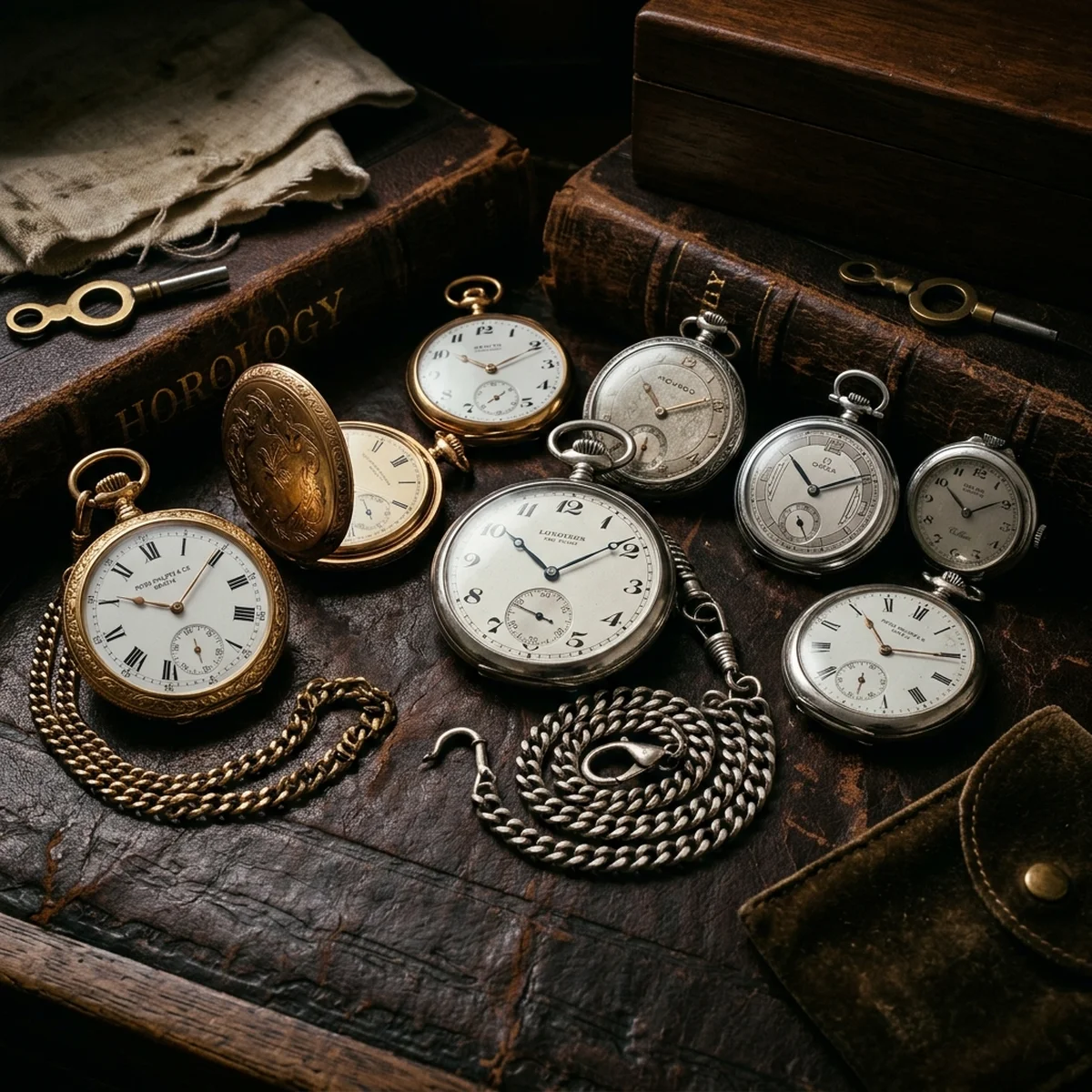
Long before wristwatches dominated the market, the pocket watch was the ultimate symbol of gentlemen’s fashion, punctuality, and technological achievement. For centuries, a finely crafted pocket watch attached to a waistcoat chain was a necessary tool for railway conductors, military officers, and businessmen. At the heart of this historical production was Switzerland, the undisputed capital of fine watchmaking. While wristwatches have largely rendered them functionally obsolete, pocket watches remain highly sought after by collectors, traditionalists, and those seeking a unique, elegant accessory. Today, several prestigious Swiss made pocket watch brands continue to produce these mechanical marvels, honoring centuries-old traditions. This guide explores the most notable Swiss brands keeping the art of the pocket watch alive.
Contents
- Tissot: The Accessible Standard
- Longines: Equestrian Elegance and Aviation History
- Patek Philippe: The Pinnacle of Haute Horlogerie
- Breguet: The Inventor’s Legacy
- Victorinox Swiss Army: Rugged and Modern
- Aero Watch: The Independent Specialist
- What to Look for When Buying a Swiss Pocket Watch
- Frequently Asked Questions (FAQs)
Tissot: The Accessible Standard
When discussing modern Swiss pocket watches, Tissot is undeniably the brand that dominates the accessible luxury segment. Founded in 1853 in Le Locle, Switzerland, Tissot has a rich history that parallels the rise of the Swiss watch industry itself. Today, they offer one of the largest and most diverse collections of pocket watches available from any major brand.
- The Tissot Savonnette: The Savonnette collection features “hunter-style” pocket watches, which include a hinged metal cover that protects the crystal and dial. These are often ornately decorated and are perfect for engraving, making them popular gifts for weddings and anniversaries.
- The Tissot Lepine: The Lepine style (named after French watchmaker Jean-Antoine Lépine) features an open face without a protective cover, allowing the time to be read instantly when pulled from a pocket. Tissot offers Lepine models ranging from classical vintage designs to sleek, modern minimalist interpretations.
- Mechanical and Quartz Options: While purists prefer the hand-wound mechanical movements (often utilizing reliable ETA calibers), Tissot also offers quartz pocket watches for those prioritizing affordability and set-it-and-forget-it accuracy.
Longines: Equestrian Elegance and Aviation History
Longines, with its iconic winged hourglass logo, is one of the oldest registered watch brands in the world. Historically, Longines produced highly accurate pocket chronographs used to time sporting events, particularly equestrian sports, and navigational pocket watches for early aviators.
While their modern catalog is heavily focused on wristwatches, Longines occasionally releases limited-edition or heritage pocket watches that pay homage to their archival pieces. A Longines pocket watch, whether a modern reissue or a vintage piece from the early 20th century, represents a perfect blend of elegant Swiss design and robust, historically significant movement architecture. Vintage Longines pocket watches are highly prized in the collector market for their exceptional finishing and movement quality.
Patek Philippe: The Pinnacle of Haute Horlogerie
If you are looking for the absolute zenith of Swiss pocket watch manufacturing, look no further than Patek Philippe. Founded in 1839, Patek Philippe has continuously produced pocket watches since its inception. In fact, many of the brand’s most famous and complicated timepieces ever created—such as the Henry Graves Supercomplication and the Calibre 89—were pocket watches.
Today, Patek Philippe still maintains a small collection of pocket watches in their current catalog. These are not mass-produced; they are bespoke works of art, handcrafted by master artisans. They often feature grand complications (like minute repeaters and perpetual calendars) and boast exquisite métiers d’art techniques, such as hand-engraving, guilloché dials, and miniature enamel painting. A modern Patek Philippe pocket watch is a generational heirloom that commands astronomical prices.
Breguet: The Inventor’s Legacy
Abraham-Louis Breguet is arguably the most important figure in the history of watchmaking. Though he operated primarily in Paris, the modern Breguet brand is firmly Swiss. Breguet invented the tourbillon in 1801—a complication originally designed specifically for pocket watches to counter the effects of gravity while resting vertically in a waistcoat pocket.
The modern Breguet brand honors its founder by continuing to produce pocket watches that reflect his original aesthetic codes. These include the famous engine-turned guilloché dials, coin-edge cases, and the unmistakable pomme hands (now universally known as “Breguet hands”). Acquiring a Breguet pocket watch is like owning a piece of living horological history.
Victorinox Swiss Army: Rugged and Modern
For those looking for a pocket watch that departs from the traditional, ornate Victorian aesthetic, Victorinox offers a modern, rugged alternative. Best known for the Swiss Army Knife, Victorinox brings the same philosophy of durability and utilitarianism to their watches.
Victorinox pocket watches are typically robust, featuring thick steel cases, high-legibility dials reminiscent of military field watches, and protective silicone or leather bumpers. They are designed not for a formal waistcoat, but to be clipped to a backpack, worn on a lanyard, or carried in the pocket of a hiking jacket. They provide reliable, Swiss-made quartz accuracy for outdoor enthusiasts and professionals who need a durable timepiece off the wrist.
Aero Watch: The Independent Specialist
While the giant conglomerates dominate much of the industry, independent brands like Aerowatch keep the spirit of specialized pocket watch manufacturing alive. Based in Saignelégier, Switzerland, Aerowatch has been producing pocket and pendant watches since 1910.
Unlike brands where pocket watches are an afterthought, they are a core pillar of Aerowatch’s identity. They offer an incredible variety of styles, from skeletonized movements that display the intricate inner workings, to traditional sterling silver hunter cases, and even models featuring moon phase complications. Aerowatch utilizes high-quality Unitas (ETA) hand-wound movements, beautifully decorated and regulated, offering exceptional value for a traditional Swiss mechanical pocket watch.
What to Look for When Buying a Swiss Pocket Watch
If you are in the market for a new or vintage Swiss pocket watch, consider the following factors:
- Style (Hunter vs. Open Face): Decide if you want the protection and classic ritual of opening a hinged cover (Hunter/Savonnette) or the immediate legibility of an open face (Lepine).
- Movement: A mechanical, hand-wound movement offers the authentic historical experience, requiring daily interaction to keep it running. A quartz movement offers convenience and low maintenance.
- Material: Options range from affordable stainless steel or brass to precious metals like sterling silver, 18k gold, and platinum. Precious metals are heavier, more luxurious, and traditional, but significantly more expensive.
- Chain: A pocket watch is incomplete without an Albert chain. Ensure you factor in the cost and style of a matching chain to secure the watch to your vest or belt loop.
Frequently Asked Questions (FAQs)
Do people still wear pocket watches today?
While no longer the primary way people tell time, pocket watches are experiencing a resurgence as sartorial accessories. They are popular for formal events (weddings, black-tie galas) worn with a three-piece suit, and among enthusiasts of vintage fashion or steampunk aesthetics.
Are old Swiss pocket watches worth money?
It heavily depends on the brand, condition, material, and complications. Vintage pieces from Patek Philippe, Vacheron Constantin, Rolex, or Breguet can be extremely valuable. However, millions of mass-produced, lower-tier Swiss pocket watches from the early 1900s hold mostly sentimental rather than high financial value.
How often does a mechanical pocket watch need winding?
Most standard mechanical pocket watches have a power reserve of 36 to 48 hours. It is best practice to wind them once a day, preferably at the same time every morning, to ensure optimal accuracy and to keep the mainspring tension consistent.
What is a “railroad grade” pocket watch?
In the late 19th and early 20th centuries, railroads required conductors to carry highly accurate watches to prevent train collisions. “Railroad grade” refers to watches that met strict criteria for accuracy, temperature resistance, and legibility (often open-face with bold Arabic numerals). While many American brands dominated this space, Swiss brands like Longines and Omega also produced them.
Get our latest guides, news, and insights highlighted in your Google Search & AI Overviews.