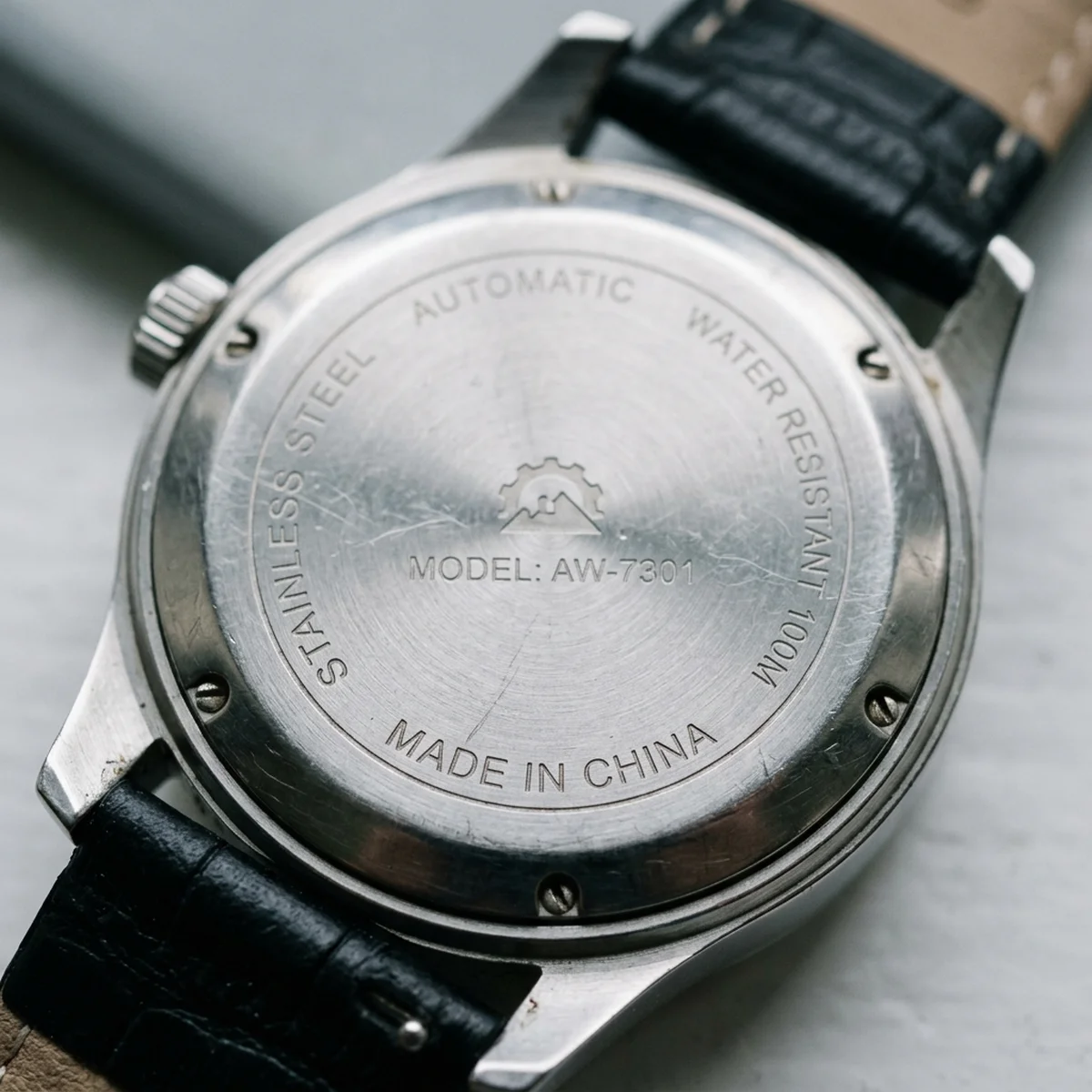
Watch Made In China
Watch Made in China: Breaking the Stereotypes in Modern Horology
For decades, the phrase “Made in China” stamped on the back of a timepiece carried a heavy stigma in the watch collecting community. It was often synonymous with cheap, mass-produced quartz novelties or poorly constructed counterfeits that would break after a few weeks of wear. However, the horological landscape has shifted dramatically over the past ten years. Today, buying a watch made in China is no longer a compromise—it is often a strategic choice for collectors seeking immense value, impressive specifications, and surprisingly high-quality mechanical movements.
The Chinese watchmaking industry has evolved from merely manufacturing parts for global brands to establishing its own identity. With the rise of high-quality microbrands, award-winning original designs, and highly capable mechanical calibers, it is time to take a closer look at the truth behind Chinese horology.
Contents
The Evolution of Chinese Watchmaking
To understand the current state of Chinese watches, one must look back at the establishment of the industry. The modern Chinese watch industry began in the mid-1950s under government mandates to produce domestic timepieces for military and civilian use. The Tianjin Watch Factory (which later became Seagull) produced the first fully Chinese-made watch in 1955. Over the subsequent decades, these state-owned factories mass-produced reliable, albeit rudimentary, mechanical movements.
The real shift occurred in the early 2000s, when Chinese factories began upgrading their machinery and investing in precision CNC (Computer Numerical Control) technology. By learning from decades of manufacturing components for foreign brands, Chinese watchmakers began producing cases, dials, and movements with tolerances that rivaled entry-level Swiss manufacturing.
Why a “Watch Made in China” is No Longer a Bad Thing
The modern stigma surrounding Chinese manufacturing in the watch world is largely outdated. Here is why collectors are increasingly embracing Chinese-made timepieces:
- The Microbrand Revolution: The vast majority of beloved Western microbrands rely entirely on Chinese manufacturing. From the machining of 316L stainless steel cases to the application of Swiss Super-LumiNova on the dials, the assembly and manufacturing happen in Shenzhen or Guangzhou. The quality control is dictated by the brand, proving that Chinese factories can produce spectacular quality when held to a high standard.
- Incredible Value Proposition: A watch made in China can offer features that would cost thousands of dollars from a Swiss brand. It is now common to find Chinese watches with sapphire crystals, ceramic bezels, solid end-link bracelets, and high-beat mechanical movements for under $300.
- Legitimate Horological Innovation: Chinese brands are no longer just copying; they are innovating. Brands are producing their own tourbillons, micro-rotor movements, and avant-garde designs that challenge traditional Swiss aesthetics.
Prominent Chinese Watch Brands to Know
If you are looking to explore the best of what China has to offer, these are the standout brands that have earned the respect of watch enthusiasts worldwide:
Seagull (Tianjin Seagull Watch Group)
Seagull is arguably the most historically significant Chinese watch manufacturer and currently produces one-quarter of the world’s mechanical watch movements. Their most famous timepiece is the Seagull 1963, a stunning reissue of a mechanical chronograph designed for the Chinese Air Force. Powered by the ST19 column-wheel chronograph movement, it is considered one of the most accessible and beautiful mechanical chronographs on the market.
San Martin
San Martin has built a massive cult following by mastering the art of the “homage” watch. While they draw heavy inspiration from iconic Swiss designs (like the Rolex Submariner or Tudor Black Bay), their build quality is astounding. With flawless case finishing, perfectly aligned bezels, and robust movements, they offer an undeniable value proposition for those who want luxury aesthetics on a budget.
CIGA Design
CIGA Design proved that a watch made in China can compete on the highest global stage. In 2021, their “Blue Planet” watch won the prestigious Challenge Watch Prize at the GPHG (Grand Prix d’Horlogerie de Genève)—the Oscars of watchmaking. This marked a watershed moment, proving that Chinese brands are capable of award-winning original design and haute horlogerie.
The Distinction Between Chinese Components and “Swiss Made”
Many consumers are shocked to learn how deeply integrated Chinese manufacturing is with the Swiss watch industry. The label “Swiss Made” carries strict legal definitions, but it does not mean 100% of the watch was manufactured in Switzerland.
Under current Swiss law, a watch can be labeled “Swiss Made” if at least 60% of its manufacturing costs are generated in Switzerland, and the final assembly and inspection take place there. Because labor in Switzerland is vastly more expensive than in Asia, a brand can import heavily finished watch cases, dials, and bracelets from China at a low cost. As long as the Swiss assembly labor and the Swiss movement account for 60% of the total cost, the watch is “Swiss Made.” In reality, many entry-level luxury Swiss watches rely heavily on Chinese metallurgy and component manufacturing.
Types of Chinese Mechanical Movements
The heart of any mechanical watch is its movement. Chinese manufacturers produce several highly respected calibers:
- Seagull ST19: Based on the vintage Swiss Venus 175 caliber (the tooling for which was sold to China in the 1960s), this is a hand-wound, column-wheel chronograph movement. It is visually stunning, featuring intricate bridges and gears visible through a case back.
- PT5000: Manufactured by HKPT, the PT5000 is a direct clone of the legendary Swiss ETA 2824-2. It beats at a smooth 28,800 vibrations per hour (vph) and has even been certified by the Glashütte Observatory for chronometer-level accuracy.
- Peacock Tourbillons: The Liaoning Peacock Watch Company produces surprisingly affordable and reliable tourbillon movements, democratizing a high-complication that traditionally costs tens of thousands of dollars.
Frequently Asked Questions (FAQ)
Are Chinese watches good quality?
The quality of a Chinese watch depends entirely on the price point and the brand’s quality control standards. A $20 watch from an unknown marketplace seller will be poor quality. However, a $200–$500 watch from an established brand like San Martin or Seagull will often rival or exceed the quality of entry-level Swiss watches.
Is it worth buying a Seagull 1963?
Absolutely. The Seagull 1963 is widely considered a “must-have” for serious collectors. It offers a fascinating piece of military history and a beautiful mechanical chronograph movement at a price that is unmatched by Western brands.
Do Chinese movements last?
Yes, higher-end Chinese movements like the PT5000 or the Seagull ST2130 are robust and can last decades if properly serviced. Because they are often clones of famous Swiss architectures, any competent local watchmaker can easily service them and source replacement parts.
The stigma of the watch made in China is rapidly fading. As manufacturing technologies improve and original designs begin to flourish, China is positioning itself not just as the factory of the world, but as a legitimate and respected player in the global horological community.
Get our latest guides, news, and insights highlighted in your Google Search & AI Overviews.