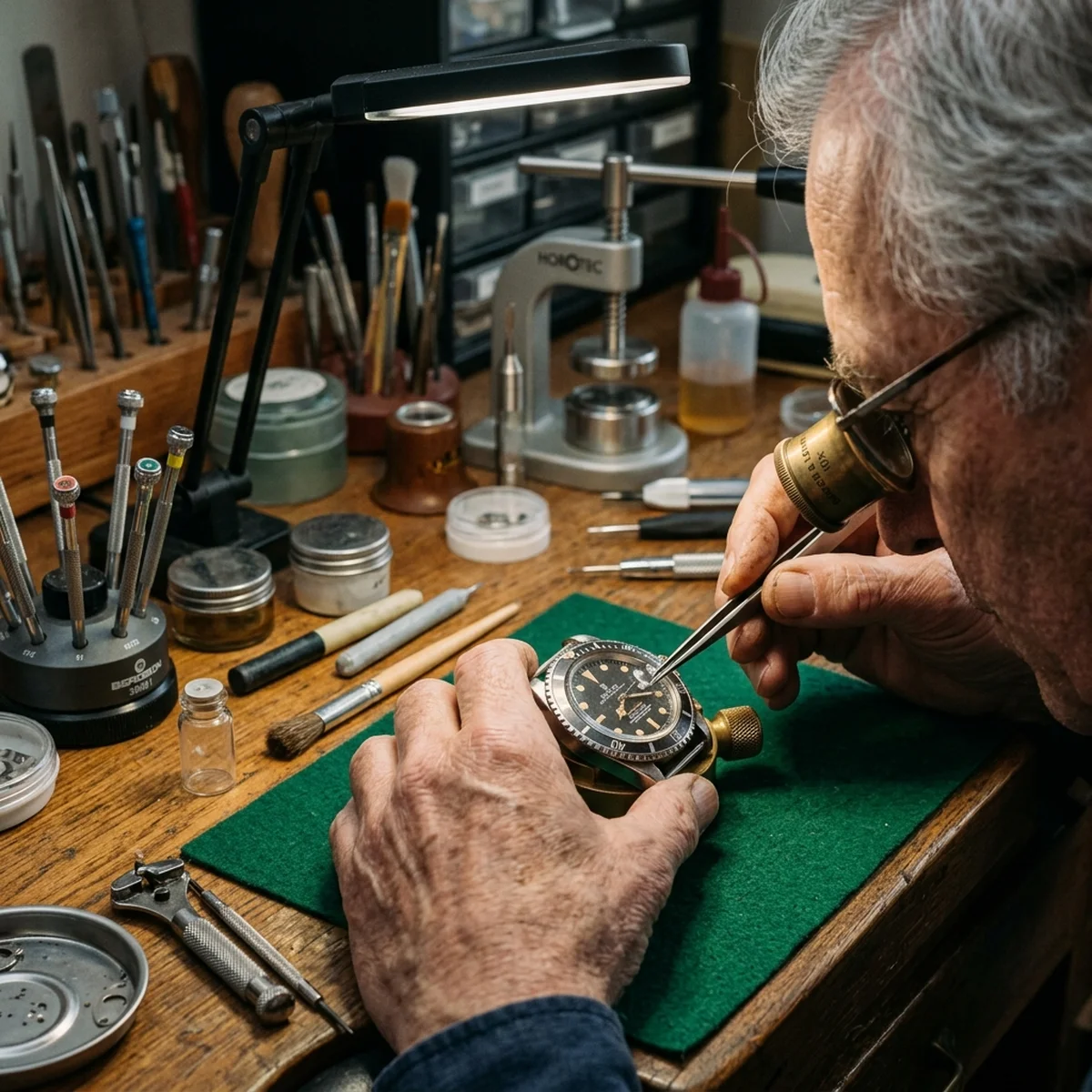
How To Authenticate A Rolex Watch
How to Authenticate a Rolex Watch: The Ultimate Guide to Spotting a Fake
Rolex is undoubtedly the most recognized luxury watch brand in the world. With its rich history, impeccable craftsmanship, and status symbol appeal, it is no wonder that Rolex watches are highly sought after by collectors and enthusiasts alike. However, this immense popularity has also made Rolex the most counterfeited watch brand globally. Knowing how to authenticate a Rolex watch is crucial for anyone looking to invest in one, whether it is a vintage Submariner or a brand-new Datejust. This comprehensive guide will walk you through the essential steps, details, and expert tips to ensure that the timepiece on your wrist is a genuine Rolex.
Contents
- 1. The Weight and Feel of the Watch
- 2. Examining the Dial and Typography
- 3. The Cyclops Lens and Date Window
- 4. The Movement: The Heart of the Rolex
- 5. The Serial and Model Numbers
- 6. The Case Back and Etchings
- 7. The Micro-Etched Crystal
- 8. The Bracelet and Clasp
- 9. Box and Papers
- 10. Seek Professional Authentication
- Frequently Asked Questions (FAQs)
1. The Weight and Feel of the Watch
One of the first things you will notice when handling a genuine Rolex is its substantial weight. Rolex manufactures its own proprietary metals, such as Oystersteel (904L stainless steel), 18 ct gold, and platinum. These materials are incredibly dense and heavy. Counterfeit watches often use cheaper, lighter materials like base metals or 316L stainless steel. If a Rolex feels light or flimsy in your hand, it is a significant red flag.
In addition to the weight, the overall feel of the watch should exude quality. The bracelet should not rattle loosely, and the edges of the case and bracelet should be smooth to the touch, free from sharp or unrefined finishes. The intricate brushing and polishing techniques used by Rolex are extremely difficult for counterfeiters to replicate perfectly.
2. Examining the Dial and Typography
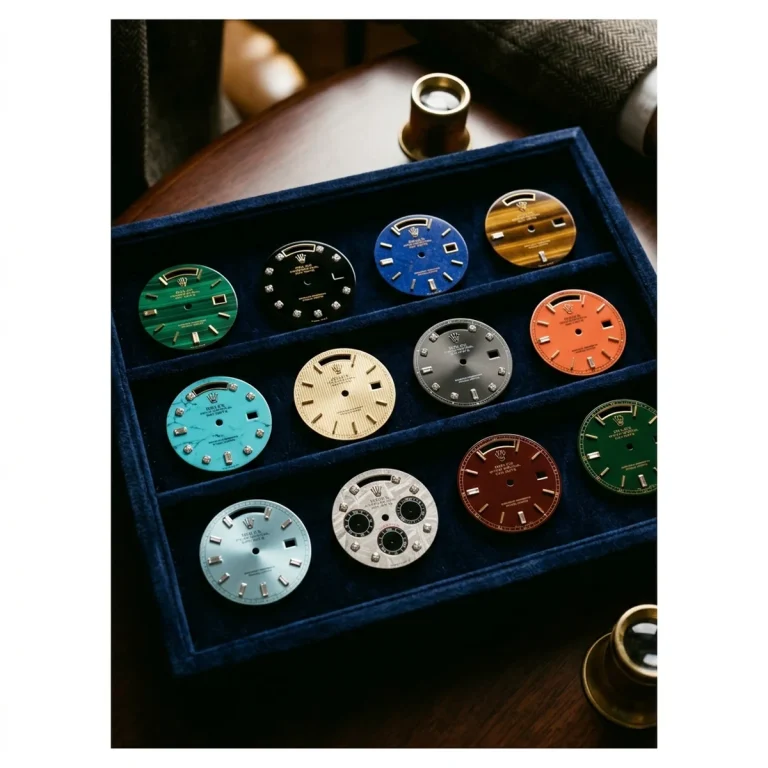
The dial is the face of the watch, and Rolex’s dials are virtually flawless. When inspecting the dial under a loupe (a jeweler’s magnifying glass), you should look for the following:
- Crisp Lettering: The text on a genuine Rolex dial is precise, sharp, and slightly raised. There should be no smudging, uneven spacing, or bleeding of the ink. Counterfeits often have flat or slightly blurry text.
- The Coronet (Rolex Crown): The applied Rolex crown logo at the 12 o’clock position should be perfectly symmetrical. The circles at the end of the five points should be well-defined, and the overall finish should be highly polished.
- Luminescence: Rolex uses its proprietary luminescent material, Chromalight, which glows a distinct blue in the dark (older models used Super-LumiNova which glows green, or Tritium). The application of the lume on the hands and hour markers should be perfectly even and smooth.
3. The Cyclops Lens and Date Window
For Rolex models that feature a date complication, the Cyclops lens is a tell-tale sign of authenticity. Rolex introduced the Cyclops lens in 1953 to magnify the date window for easier reading. On a genuine Rolex, the Cyclops lens magnifies the date precisely 2.5 times. The date should take up almost the entire window and be incredibly easy to read.
Many fake Rolex watches struggle to achieve this level of magnification. Often, the magnification is only 1.5x, making the date appear small or distorted. Furthermore, on a genuine Rolex, the Cyclops lens is perfectly centered over the date window, and the anti-reflective coating is applied flawlessly beneath the lens, reducing glare.
4. The Movement: The Heart of the Rolex
The most defining characteristic of a Rolex is its mechanical movement. Rolex movements are renowned for their reliability, precision, and robust construction. Unlike many luxury watch brands that feature exhibition case backs (transparent case backs allowing you to see the movement), Rolex almost exclusively uses solid case backs. Therefore, inspecting the movement typically requires opening the watch, which should only be done by a qualified watchmaker.
However, there are a few external indicators regarding the movement:
- The “Sweeping” Seconds Hand: A genuine mechanical Rolex does not “tick” once per second like a quartz watch. Instead, it operates at 28,800 vibrations per hour (vph), translating to 8 ticks per second. This gives the seconds hand a smooth, sweeping motion. If you see a Rolex with a seconds hand that ticks once per second in a jerky motion, it is almost certainly a fake with a cheap quartz movement (with the rare exception of the vintage Rolex Oysterquartz models).
- The Crown Winding Action: When you unscrew the winding crown and manually wind the watch, it should feel incredibly smooth and precise. Counterfeits often feel gritty, stiff, or loose when being wound.
5. The Serial and Model Numbers
Rolex watches feature a unique serial number and a model (reference) number. These numbers are deeply and perfectly engraved. On older Rolex models (pre-2005), the serial number is located between the lugs at the 6 o’clock position, and the reference number is between the lugs at the 12 o’clock position. The engraving should feature crisp, fine lines that catch the light similar to a diamond cut.
Since 2005 (and standard by 2008), Rolex began engraving the serial number on the inner reflector ring, also known as the rehaut, located between the dial and the crystal at the 6 o’clock position. The word “ROLEX” is also engraved repeatedly around the rest of the rehaut. The letters should align perfectly with the minute markers on the dial.
6. The Case Back and Etchings
As mentioned earlier, Rolex almost never uses clear exhibition case backs. The standard Rolex case back is a smooth piece of solid metal with no engravings, logos, or text on the outside. There are a few rare exceptions, such as the Sea-Dweller and certain military models, which feature specific engravings, but standard models like the Submariner, Datejust, and Daytona will have a plain, smooth case back.
If you see a Rolex with an engraved case back displaying the logo, model name, or a clear glass back showcasing the movement (unless it is the very recent platinum Daytona or the 1908 model), it is a red flag. Furthermore, counterfeiters often try to make the watch look “fancier” by adding unnecessary engravings.
7. The Micro-Etched Crystal
Starting in 2002, Rolex began micro-etching a tiny coronet (crown) logo into the sapphire crystal at the 6 o’clock position. This etching is incredibly small and difficult to see with the naked eye. You usually need to shine a light across the crystal from the side and use a magnifying loupe to spot it.
Because it is so difficult to manufacture, counterfeiters either skip it entirely, make it too large and obvious, or laser-etch it sloppily. A genuine Rolex micro-etching is precise and subtle, consisting of tiny, perfectly formed dots.
8. The Bracelet and Clasp
The bracelet and clasp of a Rolex are masterpieces of engineering. Whether it is the robust Oyster bracelet, the elegant Jubilee bracelet, or the prestigious President bracelet, the links should flow smoothly and fit together perfectly with minimal stretching or gaps.
The clasp should click shut securely with a satisfying, solid sound. The Rolex crown logo on the clasp should be raised, detailed, and flawlessly finished. Inside the clasp, you will find intricate engravings, including the Rolex logo, “GENEVA,” “SWISS MADE,” and specific clasp codes. These engravings should be deep and sharp, not shallow or chemically etched like on many fakes.
9. Box and Papers
While the presence of the original box and papers (warranty card/certificate) adds value and credibility, it is important to remember that boxes and papers can also be counterfeited. A fake box often looks cheap, the green color may be slightly off, and the interior materials might feel flimsy. Genuine Rolex documentation should be printed on high-quality paper or plastic cards with sharp, clear printing and include the matching serial and model numbers.
Do not rely solely on the box and papers to authenticate a watch. The watch itself is the ultimate proof of authenticity.
10. Seek Professional Authentication
The most foolproof way to authenticate a Rolex watch is to have it inspected by an authorized Rolex dealer, a certified watchmaker, or a reputable independent appraiser. These professionals have the expertise, experience, and specialized tools required to open the case back, inspect the movement, and verify every single component of the watch.
If a deal seems too good to be true, it probably is. Counterfeiters are becoming increasingly sophisticated, creating “super fakes” or “Frankenwatches” (watches made from a mix of genuine and fake parts) that can fool even experienced collectors. Professional authentication provides the peace of mind needed when investing in a luxury timepiece.
Frequently Asked Questions (FAQs)
Do all Rolex watches have a sweeping second hand?
Yes, all modern mechanical Rolex watches feature a sweeping seconds hand that ticks 8 times per second, creating a smooth motion. The only exceptions are the vintage Oysterquartz models and watches featuring a “deadbeat seconds” complication like the Tru-Beat, which tick once per second.
Are there any Rolex watches with a clear back?
Historically, Rolex has avoided exhibition case backs. However, there are very rare exceptions, such as the modern Cellini Prince, the 2023 Cosmograph Daytona in platinum (reference 126506), and the new Rolex 1908 collection. If a standard Submariner or Datejust has a clear back, it is likely a fake.
Can a fake Rolex have a real serial number?
Yes, counterfeiters often copy genuine serial numbers from real watches they find online. This is why you cannot rely solely on looking up a serial number to verify authenticity. The quality of the engraving and the watch as a whole must be examined.
How much does it cost to authenticate a Rolex?
The cost varies depending on the watchmaker or jeweler. Some authorized dealers may do a quick visual check for free, while a comprehensive authentication involving opening the case back and providing documentation can cost anywhere from $50 to $150 or more.
Get our latest guides, news, and insights highlighted in your Google Search & AI Overviews.