Exploring Different Types of Watch Mechanisms: A Detailed Comparison
When it comes to timepieces, watch enthusiasts understand that there’s more than meets the eye. Beyond the dazzling designs and luxurious materials lies the intricate world of watch mechanisms. From reliable quartz to the timeless charm of mechanical watches, the variety of watch mechanisms is vast and fascinating. In this detailed comparison, we delve into the key differences between different types of watch mechanisms, helping you unravel the inner workings and choose the perfect timepiece for your style, needs, and flair. Buckle up as we embark on a journey through the captivating realm of watch mechanisms, unraveling the secrets that make these horological marvels tick.
Contents
- Mechanical vs. Quartz: Understanding the Fundamentals
- Automatic Watches: A Masterpiece of Mechanical Ingenuity
- Manual Wind Watches: Embracing Tradition and Craftsmanship
- Comparing Mechanical Movements: Lever Escapement vs. Co-Axial Escapement
- The Intricate World of Tourbillon: Enhancing Accuracy and Aesthetics
- Chronograph Watches: Perfect Blend of Style and Functionality
- Dive Watches: Robust Mechanics for Underwater Expeditions
- Precision at Its Finest: Exploring Quartz Calibers
- Multi-Time Zone Watches: Keeping Up with Global Time
- Horological Marvels: Delving into Complications and Grand Complications
- Concluding Remarks
Mechanical vs. Quartz: Understanding the Fundamentals
Choosing the perfect watch can be a daunting task with so many options available in the market. Two popular types of watch mechanisms that often come up in the discussion are mechanical and quartz watches. Understanding the fundamentals of these mechanisms is crucial in order to make an informed decision.
Mechanical watches are often favored by watch enthusiasts for their intricate craftsmanship and timeless appeal. These watches are powered by a complex system of gears and springs, which are manually wound or automatically wound through the motion of the wearer’s wrist. This mechanism creates a smooth sweeping motion of the watch hand, giving it a distinct vintage charm that many find attractive. Furthermore, mechanical watches generally have a longer lifespan compared to their quartz counterparts, with some models lasting for generations when properly maintained.
Related: Different Types of Rolex Submariner: Explore the Options!
On the other hand, quartz watches are known for their accuracy and affordability. These watches rely on a quartz crystal to generate a steady electric current that powers the watch movement. This ensures precise timekeeping, with most quartz watches losing or gaining only a few seconds per month. Additionally, quartz watches are battery-powered, eliminating the need for winding or wearing the watch regularly to keep it running. This has made them a popular choice for those seeking convenience and reliability.
To help you better understand the comparison between mechanical and quartz watches, let’s look at their key differences side by side:
| Mechanical Watches | Quartz Watches |
|---|---|
| Requires manual or automatic winding | Battery-powered |
| Hand-assembled with intricate mechanisms | Precise timekeeping |
| Smooth sweeping motion of watch hand | High accuracy |
| Longer lifespan with proper maintenance | More affordable |
In conclusion, both mechanical and quartz watches have their own unique appeal and advantages. While mechanical watches offer a timeless charm and remarkable craftsmanship, quartz watches provide accuracy and convenience at a more affordable price point. Whether you choose a mechanical or quartz watch, it ultimately boils down to your personal preferences and the purpose for which you’ll be wearing the watch. So, take your time, consider your needs, and explore the world of watch mechanisms to find the perfect timepiece for you.
Automatic Watches: A Masterpiece of Mechanical Ingenuity
When it comes to watch mechanisms, automatic watches truly stand out as a masterpiece of mechanical ingenuity. These timepieces have captivated watch enthusiasts for decades with their intricate craftsmanship and self-winding capabilities. In this detailed comparison, we will dive deep into the world of watch mechanisms and explore the different types available on the market today.
The Automatic Movement:
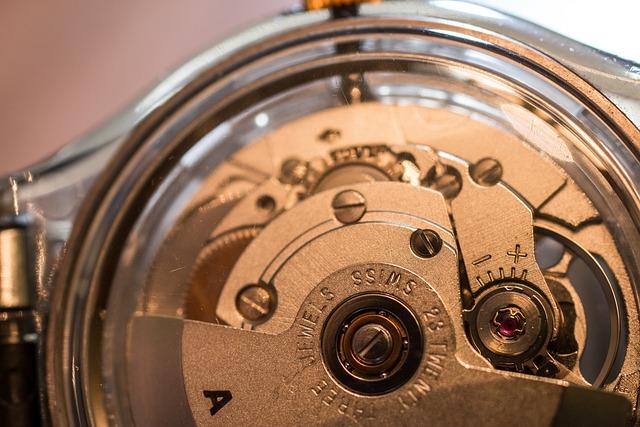
At the heart of an automatic watch lies its automatic movement. This mechanism harnesses the energy generated from the wearer’s wrist movements to automatically wind the watch, eliminating the need for manual winding or battery changes. This impressive feat is achieved through a series of intricate gears, rotors, and springs seamlessly working together.
Pros of Automatic Movements:
- Convenience: Automatic watches are hassle-free and require minimal maintenance, as long as they are regularly worn.
- Mechanical Artistry: These watches embody the craftsmanship of the watchmaking industry and are a symbol of prestige and luxury.
- Smooth Movement: Due to the continuous winding, automatic movements provide a smooth sweeping motion of the seconds hand, unlike quartz watches which have a ticking motion.
Cons of Automatic Movements:
- Accuracy: While automatic watches are generally accurate, they may require occasional adjustment or calibration to maintain their precision.
- Sensitivity: Automatic movements are sensitive to shock and extreme temperatures, requiring careful handling to avoid damage.
- Complexity: The intricate components of an automatic movement make its repair and maintenance more costly compared to quartz movements.
The Quartz Movement:
Contrary to automatic watches, quartz watches utilize a quartz crystal to keep time. The crystal oscillates when an electrical current is applied, ensuring highly accurate timekeeping. Although lacking the mechanical allure of automatic watches, quartz movements have their own set of advantages.
Pros of Quartz Movements:
- Precision: Quartz watches are renowned for their exceptional accuracy, generally losing or gaining only a few seconds per month.
- Affordability: Quartz watches are often more budget-friendly compared to their mechanical counterparts.
- Durability: The electronic nature of quartz movements makes them more resistant to shocks and temperature variations.
Cons of Quartz Movements:
- Battery Dependency: Quartz watches rely on batteries, which need to be replaced every few years.
- Ticking Motion: Unlike automatic watches, quartz movements exhibit a ticking motion, which may be less appealing to some watch enthusiasts.
From the intricate craftsmanship of automatic movements to the unparalleled accuracy of quartz movements, each type of watch mechanism offers its own unique charm. Ultimately, the choice between automatic and quartz watches comes down to personal preference, lifestyle, and the desired balance between tradition and technology.
Manual Wind Watches: Embracing Tradition and Craftsmanship
When it comes to mechanical watches, one of the most revered types of mechanisms is the manual wind movement. Manual wind watches, also known as hand-wound watches, hark back to a time when craftsmanship and tradition reigned supreme. These timepieces require the wearer to manually wind the watch by turning the crown, providing a unique and intimate connection to the inner workings of the watch.
<p>One of the main appeals of manual wind watches is the sense of craftsmanship and attention to detail that goes into their creation. Each intricate component of the movement is meticulously assembled by skilled watchmakers, ensuring precision and reliability. The act of manually winding the watch becomes a ritualistic experience, reminding us of the artistry involved in horology.</p>


<p>Moreover, manual wind watches offer a sense of nostalgia and a connection to watchmaking traditions of the past. These timepieces evoke a bygone era when individuals took the time to appreciate the craftsmanship and mechanics of their watches. In a world saturated with automatic and quartz watches, a manual wind timepiece stands out as a symbol of the dedication and passion that goes into creating a mechanical marvel.</p>


<p>While manual wind watches may require more frequent winding than their automatic counterparts, they offer an unparalleled sense of involvement and appreciation for the art of watchmaking. For those who appreciate craftsmanship, tradition, and a tangible connection to their timepiece, a manual wind watch is a testament to the beauty and elegance of embracing the past.</p>
Comparing Mechanical Movements: Lever Escapement vs. Co-Axial Escapement
In the fascinating world of mechanical watches, the escapement is a crucial component that regulates the timekeeping accuracy and reliability. Two popular types of escapements that have gained significant attention among watch enthusiasts are the Lever Escapement and the Co-Axial Escapement.
Lever Escapement: Known for its simplicity and durability, the Lever Escapement has been the standard in mechanical watches for centuries. This type of escapement utilizes a lever, pallet fork, and escape wheel to control the oscillations of the balance wheel. The lever escapement offers excellent reliability and is relatively easy to service and repair.
Co-Axial Escapement: Invented by renowned watchmaker George Daniels, the Co-Axial Escapement revolutionized mechanical watchmaking with its innovative design. Unlike the traditional lever escapement, the co-axial escapement features a unique arrangement of the escape wheel, pallet fork, and impulse roller, which reduces friction and enhances long-term accuracy.
- The co-axial escapement reduces friction between the pallet and escape wheel, resulting in enhanced efficiency and reduced wear.
- Its innovative design allows for longer service intervals compared to the lever escapement, emphasizing low maintenance and improved durability.
- Thanks to reduced friction, the co-axial escapement offers enhanced timekeeping precision, contributing to better chronometric performance over time.
In conclusion, both the Lever Escapement and the Co-Axial Escapement have their merits and are widely used in mechanical watches. While the lever escapement is a time-tested mechanism known for its simplicity and reliability, the co-axial escapement brings innovation and improved long-term performance to the table. Ultimately, the choice between these two types of escapements boils down to personal preferences, budget, and desired watch characteristics.
Comparison Table:
| Type of Escapement | Advantages | Disadvantages |
|---|---|---|
| Lever Escapement |
|
|
| Co-Axial Escapement |
|
|

The Intricate World of Tourbillon: Enhancing Accuracy and Aesthetics
The world of watch mechanisms is a fascinating one, with each type offering its own unique benefits and characteristics. One such type is the tourbillon, a mechanism that not only enhances accuracy but also adds a touch of aesthetic beauty to timepieces. A tourbillon is a rotating cage that houses the balance wheel, escapement, and other regulating components of a mechanical watch. Its primary purpose is to counter the effects of gravity on the movement, thus improving accuracy.
There are different types of tourbillon mechanisms available, each with its own design and functionality. The most common type is the single-axis tourbillon, where the cage rotates on a single axis. This design effectively cancels out the gravitational errors in one position, but not in others. To address this limitation, a double-axis tourbillon was developed. With two rotation axes, this mechanism compensates for errors in multiple positions, resulting in even greater accuracy.
In addition to the single-axis and double-axis tourbillons, there are also other variations worth exploring. The flying tourbillon, for example, features a cantilevered design that eliminates the need for an upper bridge, giving the mechanism a sense of floating in the watch. Another interesting variation is the multi-axis tourbillon, which incorporates a third axis of rotation, further improving accuracy in various positions.
When it comes to aesthetics, tourbillon mechanisms are often showcased through an open dial or exhibition case back, allowing the wearer to admire the intricate and mesmerizing movements of the rotating cage. The combination of the mechanical complexity and visual appeal of a tourbillon makes it a sought-after feature in luxury watches.
In conclusion, the world of watch mechanisms offers a wide range of choices, each with its own set of advantages and features. The tourbillon, in particular, enhances accuracy while adding an element of visual beauty to timepieces. Whether it’s a single-axis, double-axis, flying, or multi-axis tourbillon, each type brings its own unique charm to the intricate world of watchmaking.
Chronograph Watches: Perfect Blend of Style and Functionality
Chronograph watches are the epitome of style and functionality, combining the elegance of a traditional timepiece with the practicality of a stopwatch. With their distinct sub-dials and intricate mechanisms, these watches have become a symbol of sophistication and precision.
There are several types of watch mechanisms used in chronograph watches, each with its own unique features and advantages. The most common type is the quartz movement, which utilizes a battery to power the watch’s time-keeping and chronograph functions. Quartz chronographs offer exceptional accuracy and are known for their affordability.
Another popular mechanism is the automatic movement, also known as self-winding. These watches are powered by the movement of the wearer’s wrist, eliminating the need for a battery or manual winding. Automatic chronograph watches are cherished for their craftsmanship and often feature intricate detailing on their dials and cases.
For those seeking the highest level of precision, the mechanical movement is the way to go. These watches are powered by a complex system of gears and springs and require manual winding to operate. Mechanical chronographs are favored by watch enthusiasts for their craftsmanship and longevity.
When it comes to functionality, chronograph watches offer a wide range of features beyond the basic timekeeping. Many models include additional complications such as a tachymeter, which allows the wearer to measure speed, or a telemeter, which can calculate distance based on the speed of sound. These features make chronograph watches versatile and practical for various activities, from sports to professional settings.
In conclusion, chronograph watches are the perfect blend of style and functionality. They not only enhance your overall look with their elegant design but also provide useful features that can come in handy in various situations. Whether you prefer the accuracy of a quartz movement, the craftsmanship of an automatic watch, or the precision of a mechanical timepiece, there is a chronograph watch out there that suits your personal style and needs.
Dive Watches: Robust Mechanics for Underwater Expeditions
Dive watches are an essential tool for underwater expeditions, designed to withstand the rigors of diving and provide reliable timekeeping in the depths. One of the key aspects that sets dive watches apart from regular timepieces is their robust mechanics. These watches are specifically engineered to withstand extreme pressure, temperature variations, and water resistance. Let’s explore the different types of watch mechanisms commonly used in dive watches and compare their features and advantages.
Mechanical Movements
Many dive watches feature mechanical movements, which are powered by a mainspring and do not require a battery. Here are a few popular types of mechanical movements:
- Automatic (self-winding) movements: These mechanisms use the natural motion of the wearer’s arm to wind the mainspring. They are renowned for their accuracy and reliability.
- Manual (hand-wound) movements: As the name suggests, these movements require manual winding using the crown. While they may require more maintenance, they offer a traditional charm and can be incredibly accurate.
- Manual (hand-wound) movements: As the name suggests, these movements require manual winding using the crown. While they may require more maintenance, they offer a traditional charm and can be incredibly accurate.
Quartz Movements
Another common type of movement found in dive watches is quartz movement. These watches use a battery to power a quartz crystal, which oscillates at a precise frequency. Here are some key benefits of quartz movements:
- Precision: Quartz movements are known for their exceptional accuracy, with minimal time deviation.
- Low Maintenance: Unlike mechanical movements, quartz watches require minimal maintenance, with battery replacements being the primary concern.
- Affordability: Dive watches with quartz movements are often more affordable compared to their mechanical counterparts, making them an excellent choice for budget-conscious adventurers.
Hybrid Movements
In recent years, hybrid movements have emerged as a popular choice for dive watches. These movements combine the reliability and accuracy of quartz technology with the mechanical appeal of automatic movements. Some hybrid movements feature a quartz module that assists the mechanical components, providing increased accuracy and extended power reserve.
Precision at Its Finest: Exploring Quartz Calibers
Quartz calibers have long been a staple in the world of watchmaking, offering precision and reliability like no other. In this section, we will delve into the intricacies of quartz calibers, exploring their unique features and benefits.
Quartz movements are powered by a battery, which sends an electrical current through a small piece of quartz crystal. This current causes the quartz crystal to vibrate at a precise frequency, typically 32,768 times per second. These vibrations are then converted into electrical pulses, which regulate the movement of the watch hands. This meticulous timekeeping system ensures unparalleled accuracy, with quartz watches typically boasting a deviation of just a few seconds per month.
One of the key advantages of quartz calibers is their low maintenance requirements. Unlike mechanical watches that require regular winding or automatic movements that rely on the wearer’s motions, quartz watches are powered by long-lasting batteries that can go on for years without needing replacement. This makes quartz watches a convenient choice for those who don’t want to fuss over their timepiece.
In addition to their reliability, quartz calibers also offer a wider range of design options. The compact size of the quartz movement allows for sleeker and thinner watch designs, making them more versatile in terms of style. Moreover, the use of quartz movements has led to the rise of quartz chronographs, which offer precise timing functions for sports enthusiasts and professionals alike.
To further understand the differences between quartz calibers and other watch mechanisms, let’s take a look at a comparison table:
| Feature | Quartz | Mechanical | Automatic |
|---|---|---|---|
| Accuracy | High | Moderate | Moderate |
| Maintenance | Low | Regular | Regular |
| Power Source | Battery | Manual | Movements |
| Design Options | Versatile | Limited | Limited |
| Price Range | Affordable | High | Moderate |
As you can see, quartz calibers excel in terms of accuracy, low maintenance, and design options. However, it’s important to note that watch enthusiasts still appreciate the craftsmanship and traditional appeal of mechanical and automatic movements. So, whether you prefer the precision of quartz or the charm of traditional watch mechanisms, the world of horology has something to offer for everyone.
Multi-Time Zone Watches: Keeping Up with Global Time
A multi-time zone watch is a timepiece that allows you to keep track of multiple time zones simultaneously. These watches are a must-have for frequent travelers, business professionals, and anyone who needs to stay connected to different parts of the world. With advancements in technology, there are various types of watch mechanisms that power these multi-time zone watches. In this article, we will explore different types of watch mechanisms and provide a detailed comparison of their features and functionalities.
GMT (Greenwich Mean Time): GMT watches are equipped with an additional hand that indicates the time in a second time zone. This hand typically rotates once every 24 hours and can be set independently from the primary hour hand. It is particularly useful for travelers who frequently visit places with a significant time difference.
World Time: World time watches feature a rotating bezel or an inner dial that displays the time in major cities around the world. By aligning the city of interest with the current hour, you can easily determine the time in different time zones. Some world time watches even come with a 24-hour ring, allowing you to track time in military or civil format.
Dual Time: Dual time watches offer the convenience of displaying two time zones simultaneously. Unlike GMT watches, the second time zone is typically displayed in a separate sub-dial or window. You can easily set the second time zone to your desired city or adjust it according to your travel destination.
- Digital: Digital watches have made a comeback in recent years, especially in the realm of multi-time zone watches. With a digital display, you can effortlessly switch between different time zones by selecting them from a menu. These watches often come with additional features like alarms, timers, and countdowns, making them highly versatile timekeeping tools.
When choosing a multi-time zone watch, consider factors such as ease of use, accuracy, design, and additional functions that align with your specific needs. With the right watch mechanism, you can effortlessly keep up with global time and stay connected in today’s interconnected world.
Horological Marvels: Delving into Complications and Grand Complications
When it comes to watch mechanisms, there are a wide range of types to choose from, each with its own unique features and complications. In this article, we will delve into the intricate world of watch mechanisms, specifically focusing on complications and grand complications.
Complications, in the horological context, refer to any additional function on a watch apart from telling the time. These functions can range from simple date displays to more complex features such as moon phase indicators, chronograph (stopwatch) functions, and perpetual calendars. What makes complications truly fascinating is the level of engineering and craftsmanship required to integrate them into a watch movement. These intricate additions often result in beautifully complex and aesthetically pleasing timepieces.
One step up from complications are grand complications, which take watchmaking to the next level of complexity. A watch can be categorized as a grand complication when it combines several complications into a single timepiece. Some of the most notable grand complications include minute repeaters, tourbillons, and perpetual calendars combined with a chronograph. These exceptional timepieces not only showcase the technical prowess of watchmakers but also serve as a testament to the exquisite artistry and skill involved in their creation.
Concluding Remarks
In conclusion, understanding the various types of watch mechanisms is essential for any watch enthusiast or collector. Each mechanism offers its unique advantages and limitations, catering to different preferences and needs. Mechanical watches charm with their intricate craftsmanship, providing accurate timekeeping and a connection to horological heritage. Quartz watches, on the other hand, excel in precision, durability, and affordability. And for those seeking the best of both worlds, hybrid watches seamlessly blend mechanical and electronic technologies.
When it comes to automatic movements, the convenience of not requiring manual winding is a significant advantage, while manual movements appeal to those who appreciate the tradition and hands-on experience of winding their timepieces.
Ultimately, the choice between these mechanisms boils down to personal preference, budget, and lifestyle. So whether you are captivated by the timeless appeal of mechanical watches, the efficiency of quartz movements, or the innovative fusion of hybrid creations, there is undoubtedly a watch mechanism out there that will complement your style and expectations.
So go ahead, dive into the fascinating world of watch mechanisms, explore the intricate details, and find the perfect timepiece that reflects your personality and stands the test of time. Happy exploring!
Get our latest guides, news, and insights highlighted in your Google Search & AI Overviews.